
Tokyo must pursue pragmatic diplomacy amid a divided global order
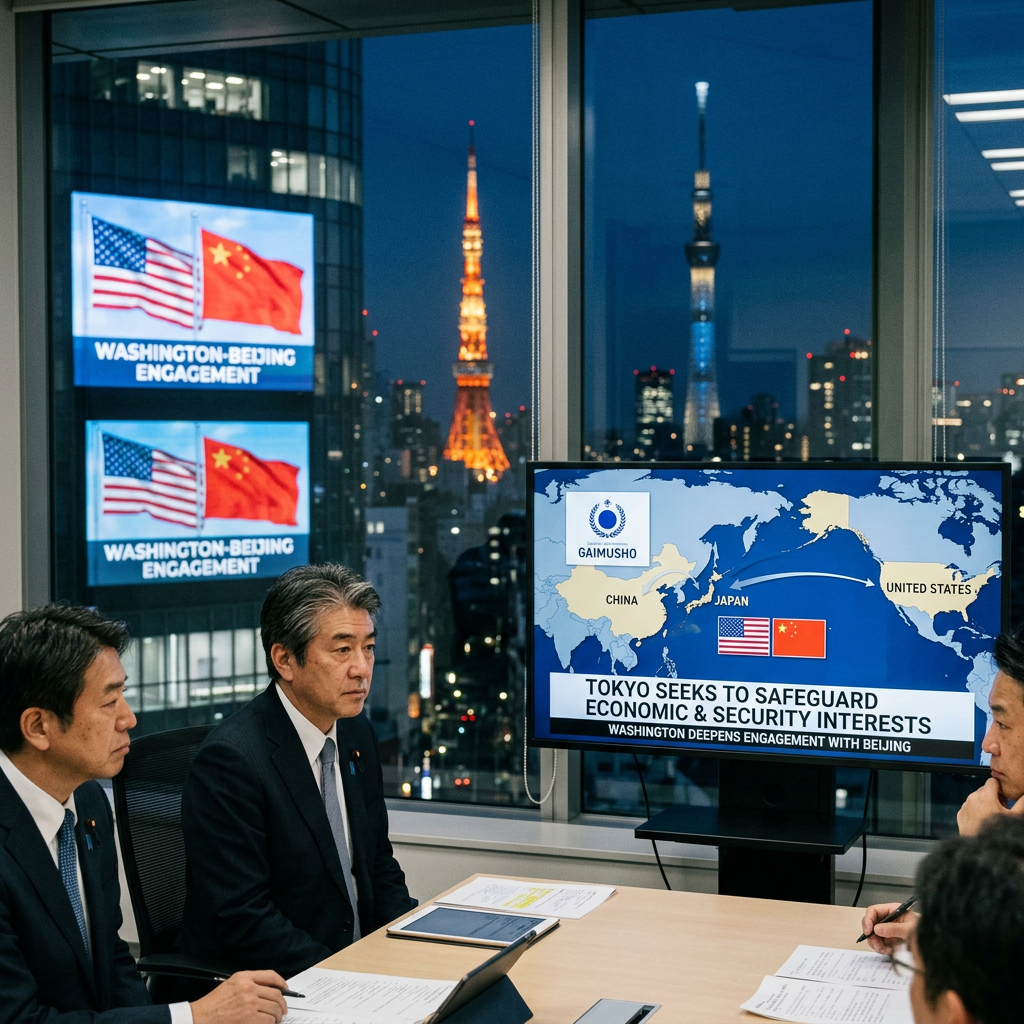
For all the talk of a coming multipolar world, the reality for Japan is simpler: The international system is still shaped above all by the United States and China.
Jennifer Lind, author of “Autocracy 2.0: How China’s Rise Reinvented Tyranny,” argues that only Washington and Beijing combine the economic, military, technological and diplomatic scale required for full great-power status. The 2025 Asia Power Index reaches a similar conclusion: India is rising, Russia remains a nuclear spoiler and Europe matters economically, but only the U.S. and China possess comprehensive power across all key dimensions.
In short, Japan and other middle powers face an enduring bipolar system — and, whether they like it or not, an erratic America in the interregnum between the outgoing order and whatever comes next.
This structural reality matters enormously for Tokyo. Japan remains the world’s fourth-largest economy at roughly $4.1 trillion, but that is only about 22% of China’s roughly $18.3 trillion economy. Even combined with India’s approximately $3.9 trillion economy, the total reaches just 44% of China’s scale.
On defense, Japan’s outlays — about $55 billion — are rising. But even a move to 3% of gross domestic product would amount to roughly $123 billion. That remains well below China’s estimated $292 billion to $314 billion in military spending, according to the Stockholm International Peace Research Institute, and far short of matching China’s 2.35 million active personnel with Japan’s roughly 247,000.
Japan can become more capable and more resilient, but not strategically self-sufficient.
That is why the U.S.-Japan alliance remains indispensable. China’s expanding naval and missile capabilities — including a fleet of roughly 370 ships compared with about 295 for the U.S. Navy — complicate deterrence in the East China Sea and around Taiwan. China’s nuclear arsenal, estimated at about 500 warheads and projected by U.S. assessments to approach 1,000 by 2030, further complicates extended deterrence for Japan and South Korea.
In this environment, Tokyo’s move toward defense spending of 2% of GDP is not militarism. It is overdue burden-sharing within an alliance that remains the only credible foundation of regional deterrence.
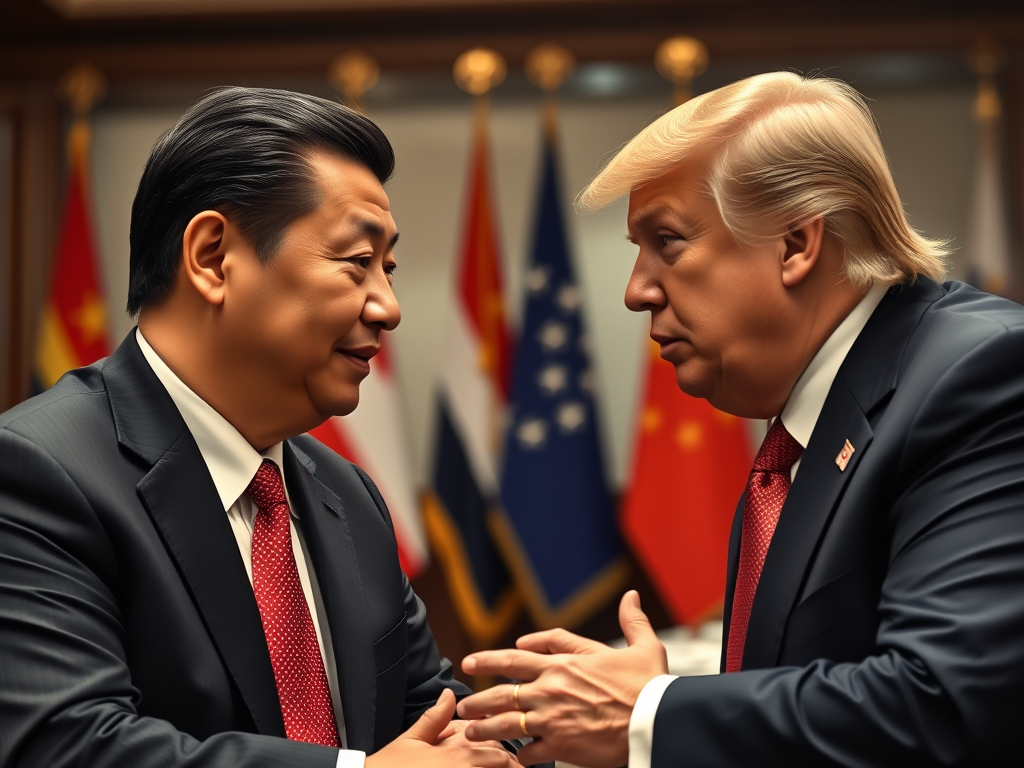
Yet alliance reliance alone is not enough. As argued in my Asia Pacific Foundation policy brief, “Strategic Choices for Middle Powers Navigating U.S.-China Competition,” one lesson of the Trump era is that American power remains enormous, but American predictability has weakened.
The United States still has an economy of roughly $28 trillion, spent about $916 billion on defense in 2025, and remains central to 88% of foreign exchange transactions through the dollar system. But it also carries federal debt of about 123% of GDP, faces deep domestic polarization and has shown a willingness to use tariffs and economic coercion even against allies.
For Japan, this means the alliance must be deepened and broadened, not simply relied upon. Tokyo needs a U.S. relationship that extends beyond military contingencies to include technology, economic security, critical minerals and supply chain resilience.
This is where Japan’s quiet strategy of selective diversification becomes critical.
China remains the largest trading partner for most countries in the region and sits at the center of global production networks. Japan cannot decouple from that reality. But Japanese firms are already shifting from a “build in China for the world” model toward “build in China, by Chinese, for Chinese,” while relocating parts of their supply chains to Southeast and South Asia.
This is not ideological decoupling. It is risk management.
The logic is straightforward. Distrust of China remains a defining feature of regional perceptions, even if it has fluctuated. The ISEAS – Yusof Ishak Institute’s State of Southeast Asia 2026 Survey found China’s trust rating rose to 39.8%, exceeding distrust (35.2%) for the first time since 2019. But that shift reflects not only improved perceptions of Beijing; it also reflects growing concern about Washington’s unpredictability.
Japanese public opinion remains far more pessimistic about China’s trajectory, even while recognizing the importance of economic ties. Across the region, governments are trying to balance continued economic engagement with reduced strategic vulnerability.
That concern is not theoretical. The Australian Strategic Policy Institute documented 152 cases of Chinese coercion affecting 27 countries and the European Union between 2010 and 2020.
Australia faced tariffs of up to 80.5% on barley and as high as 218% on wine following political disputes with Beijing. Canada saw Michael Kovrig and Michael Spavor detained for more than 1,000 days after the arrest of Meng Wanzhou, the chief financial officer and deputy chair of the board of Huawei. Lithuania faced not only bilateral pressure but also broader supply chain disruptions after allowing a Taiwanese representative office to use the name “Taiwan.”
For Japan, these cases underscore a basic truth: Economic interdependence without resilience can become strategic vulnerability.
At the same time, Tokyo should not assume that China’s weaknesses automatically translate into Japanese advantage.
China faces serious structural challenges. Its property sector accounts for roughly 30% of GDP. Local government debt is estimated at between $8 trillion and $13 trillion. Domestic consumption remains around 54% of GDP, compared with about 68% in the United States. Its working-age population could shrink by roughly 200 million by 2050.
Weak soft power, slowing consumption and inefficient state-owned enterprises compound these pressures. But a weaker or more brittle China would not necessarily make Japan safer. It could instead produce greater risk-taking abroad, more coercion or instability in an economy on which Japan still depends.
That is why Japan’s broader diplomacy matters.
Tokyo’s long-standing outreach to Southeast Asia — rooted in the 1977 Fukuda Doctrine, which was based on a speech by then-Prime Minister Takeo Fukuda, and later adapted through “value-oriented diplomacy” — has helped build trust in ways China has struggled to replicate. Some Chinese analysts argue that Japan’s approach seeks to reduce trust in China by emphasizing democratic norms and political affinity.
There is some truth to that. Japan benefits when regional states see it as a more predictable and less coercive partner. But Tokyo should proceed carefully. If its values-based diplomacy is perceived as an ideological campaign against China, it risks alienating Southeast Asian countries that prefer autonomy and strategic hedging.
If, instead, Japan focuses on practical benefits — development assistance, infrastructure, training, health cooperation and predictable rules — it can remain attractive without forcing binary choices.
The strategic answer for Japan is not independence from the alliance, maximal confrontation with China or faith in a multipolar escape from great-power competition. It is a disciplined middle-power strategy within a bipolar system.
That means four things.
First, modernize the alliance and embed Japan more deeply in U.S.-led deterrence while strengthening its own deployable capabilities.
Second, accelerate selective supply chain diversification while recognizing the limits of Southeast and South Asia’s capacity to absorb large-scale shifts.
Third, continue value-oriented diplomacy in Southeast Asia, but keep it practical, inclusive and sensitive to ASEAN preferences.
Fourth, prepare not only for a stronger China but also for a more fragile one. Both scenarios can generate instability.
Japan cannot escape geography or geopolitical reality. But it can shape how those constraints affect its future. In a world defined by U.S.-China rivalry, Tokyo’s task is not to choose between illusion and inevitability. It is to build resilience, preserve strategic agency and ensure it remains a rule-shaper rather than a rule-taker.
First published in the Japan Times April 30th, 2026 (https://www.japantimes.co.jp/commentary/2026/04/30/japan/japans-us-china-balancing-act/)


Leave a Reply