
The age when governments could pretend that trade was about commerce and geopolitics was about power is ending. Tariffs, export controls, sanctions, critical minerals and supply chains have become instruments of statecraft, wielded by the world’s two largest economies in an intensifying struggle over the international order.
There is a name for this: geoeconomics.
At the recent Helsinki Geoeconomics Society Week, private-sector executives, legal experts, policymakers and scholars wrestled with what the term means and why it matters. Stripped of academic jargon, the answer is straightforward: Geoeconomics is the use of economic tools to achieve political and strategic objectives.
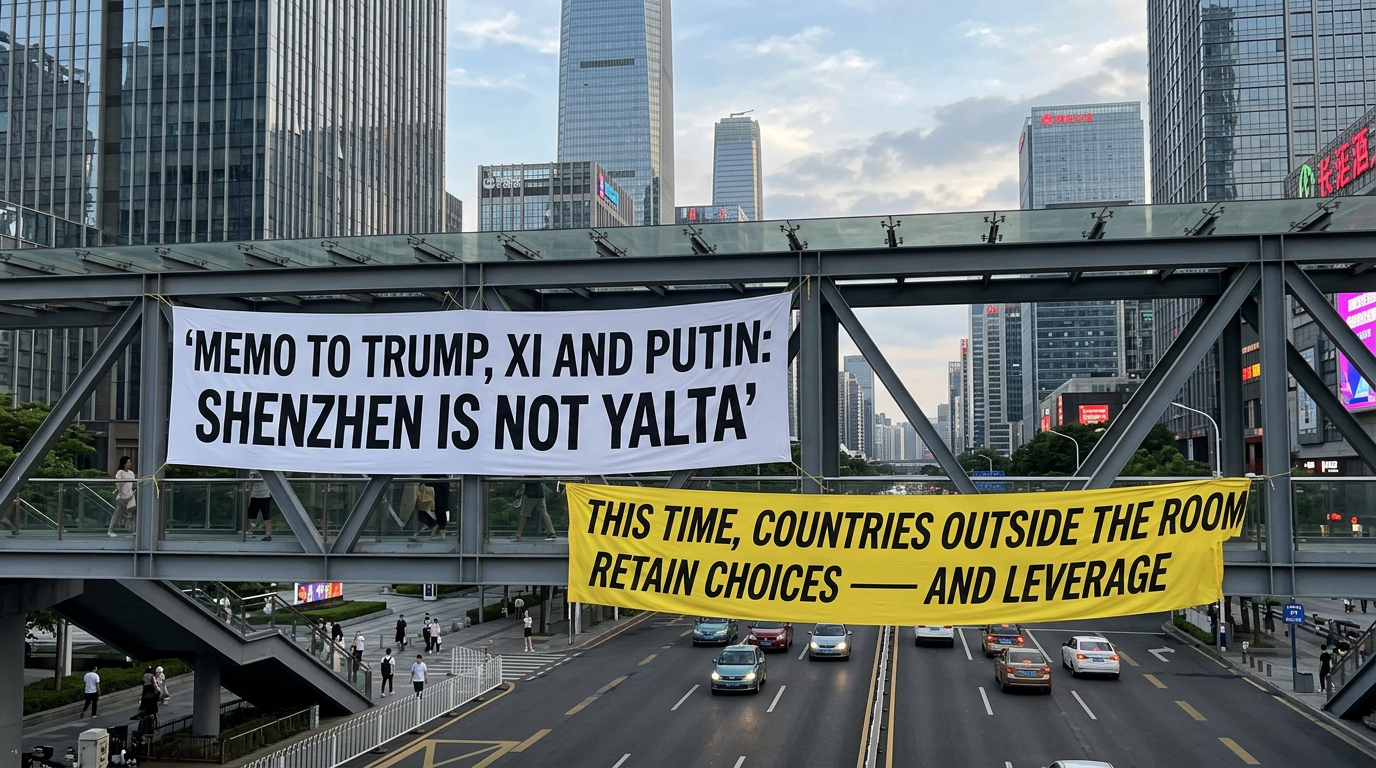
We are living in an increasingly bifurcated world driven by U.S.-China strategic competition, and countries are deploying very different forms of economic statecraft to survive it.
China has become particularly adept at wielding access to its enormous market as leverage. But economic coercion is hardly a Beijing monopoly. The United States has expanded its own coercive toolkit, particularly since U.S. President Donald Trump returned to office in January 2025.
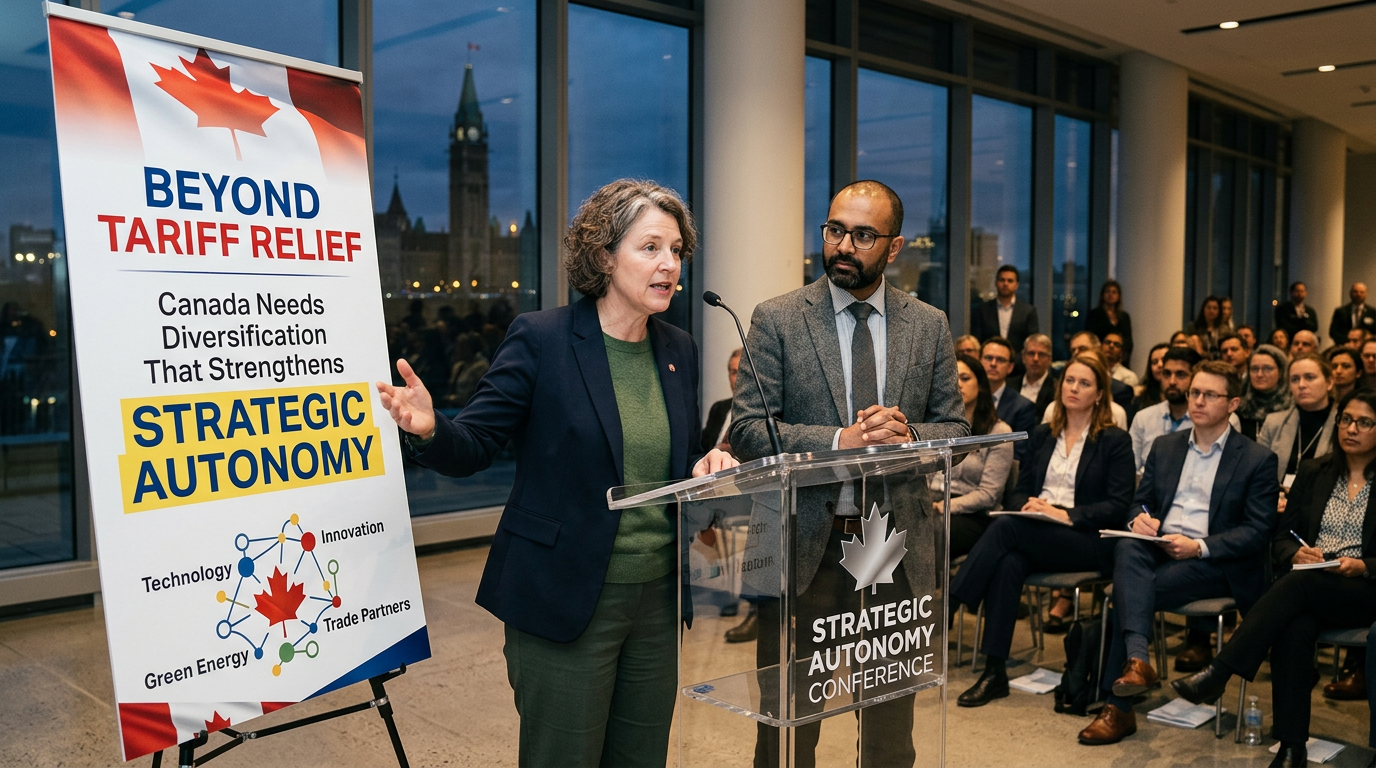
Canada has faced trade barriers and harassment from an often-belligerent White House, which Saturday imposed 50% tariffs on $20 billion of the country’s exports. The European Union recently confronted the threat of 25% U.S. tariffs connected to its stance on Greenland. Japan and other countries have had to navigate the consequences of the U.S.-led economic campaign against Iran, including higher energy costs that have reached American consumers.
Washington, despite its growing reliance on tariffs and sanctions, still operates in an economy where market forces and private companies play the dominant role. The Trump administration, however, has increasingly treated access to the American consumer market as geopolitical leverage. The danger is that a sanction-first, ask-questions-later strategy can inflict collateral damage on American households and allied cohesion as well as its intended targets.
Beijing offers a very different model. China has never surrendered economic planning to market forces. Its five-year plans and industrial policies seek not merely growth but strategic advantage, including an economic order in Asia that can constrain the autonomy of countries dependent on China.
President Xi Jinping has been unusually explicit about this objective. In a 2020 speech, Xi called for China to strengthen foreign production chains’ dependence on the country to create a powerful capacity for deterrence and retaliation. The Belt and Road Initiative has similarly used infrastructure and connectivity to bind economies more closely to China. Under Beijing’s “dual circulation” strategy, China’s huge domestic market also becomes an instrument for attracting foreign capital and technology while reducing China’s own vulnerabilities.
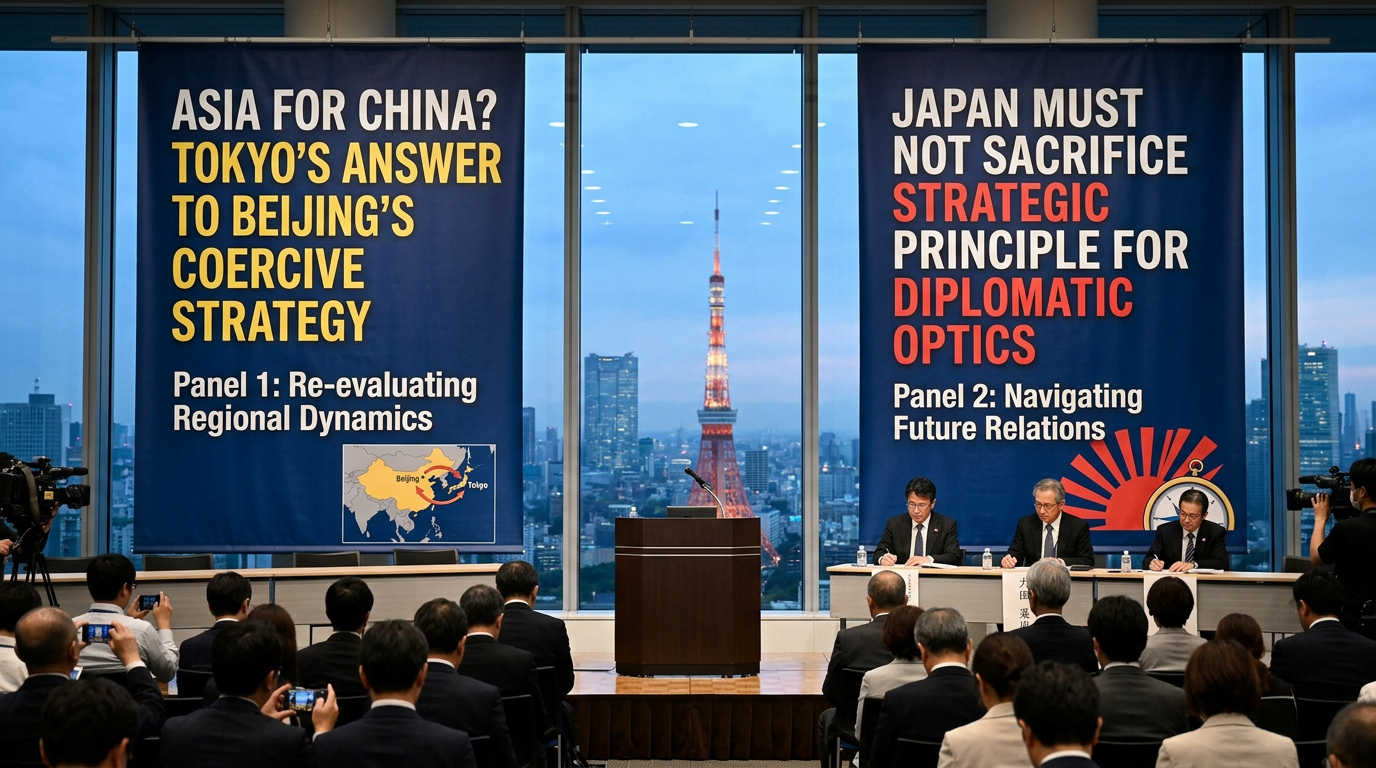
Caught between these two giants is Japan, which has been developing a third approach: “economic security.”
Unlike America’s increasing reliance on tariffs or China’s state-directed model, Japan’s approach emphasizes cooperation between government and the private sector. Tokyo recognizes that businesses cannot navigate today’s geopolitical risks alone. Its strategy seeks to preserve international economic engagement while building greater resilience at home and abroad.
That means selectively diversifying supply chains away from China without attempting wholesale decoupling. It means supporting multilateral trade frameworks such as the Comprehensive and Progressive Agreement for Trans-Pacific Partnership and the Regional Comprehensive Economic Partnership, as well as Japan’s economic partnership agreement with the European Union.
Japan is also investing in infrastructure and connectivity in Southeast Asia and India, offering alternatives to China’s Belt and Road Initiative. Tokyo is strengthening critical mineral partnerships with the United States, Australia and India to reduce dependence on China. In advanced technology, it has courted Taiwan Semiconductor Manufacturing Co. to build semiconductor plants in Kumamoto while investing heavily in Rapidus, Japan’s effort to produce next-generation chips domestically.
But much of the burden of this strategic realignment falls on companies.
Corporate boardrooms, once relatively insulated from foreign policy, are becoming front lines of geoeconomic competition. For decades, multinational companies optimized supply chains for efficiency, lower costs and just-in-time delivery while often discounting geopolitical risk. Now Washington and Beijing are forcing them to consider resilience and national security alongside profitability.
That transition is expensive. Companies cannot simply absorb the costs of sudden export controls, tariffs and retaliatory sanctions. Governments must therefore act not only as regulators but as strategic partners and, in some cases, co-investors.
This is where the American approach can falter. Washington often relies heavily on punitive measures rather than providing businesses with sufficient incentives to make costly transitions. Japan’s model of government-corporate cooperation may offer a more sustainable blueprint for an era of economic fragmentation.
Japan’s approach is driven partly by China’s coercive policies but also by a United States intent on restructuring the global economy. Much as Washington transformed domestic and foreign policy after 9/11 to combat terrorism, it is now trying to reorganize economic relationships to compete with China, Russia, Iran and North Korea.
However crudely parts of this strategy may be implemented, the underlying consensus in Washington extends beyond one administration: Economic relationships involving trade, technology, critical minerals and security increasingly should be aligned among countries with overlapping strategic interests.
For allies such as Japan, this creates a difficult balancing act. Tokyo wants a seat at the table as the United States shapes a new economic order. Yet Japan cannot afford to provoke its neighbors unnecessarily. Geography is inescapable: Japan shares its region with China, Russia and North Korea.
Japan’s geoeconomic strategy must therefore reconcile U.S. priorities with its own national interests. It should preserve strategic autonomy from both Washington and Beijing while encouraging a more multipolar Asian economy that reduces China’s ability to use trade and investment as political leverage.
That requires building up India and Southeast Asia as economic counterweights. It means deepening ties with South Korea, Australia and New Zealand while anchoring the European Union more firmly in the Indo-Pacific’s economic and security architecture. Japan can also contribute to America’s drive for domestic industrial revival without sacrificing its own economic interests.
The “flat world” of frictionless globalization is disappearing. In its place is a rougher landscape of competing economic blocs, protected technologies and fortified supply chains. For Japan, the challenge is not to choose isolation or dependence but to help construct a resilient, multipolar economic order in which middle powers retain room to maneuver.
A Japanese expression captures the determination this will require: ishi ni tatsu ya — an arrow piercing stone. With sufficient concentration and persistence, even a seemingly impossible barrier can be breached.
In the unforgiving new era of geoeconomics, Japan and other middle powers will need precisely that combination of resilience, focus and strategic will.
Stephen R. Nagy is a professor at International Christian University, a senior fellow at the Macdonald-Laurier Institute and a visiting fellow at the Japan Institute for International Affairs. His new book “Japan as a Middle Power State” will be released by Routledge this fall.
First published with the Japan Times August 25th, 2026 (https://www.japantimes.co.jp/commentary/2026/08/25/japan/geoeconomics-japan-us-china-politics-pressure/)

Leave a Reply