In November 2025, Donald Trump and Xi Jinping exchanged phone calls to arrange mutual state visits in 2026. This was a remarkable rapprochement that came mere months after both countries imposed retaliatory tariffs exceeding 100% on each other’s goods.
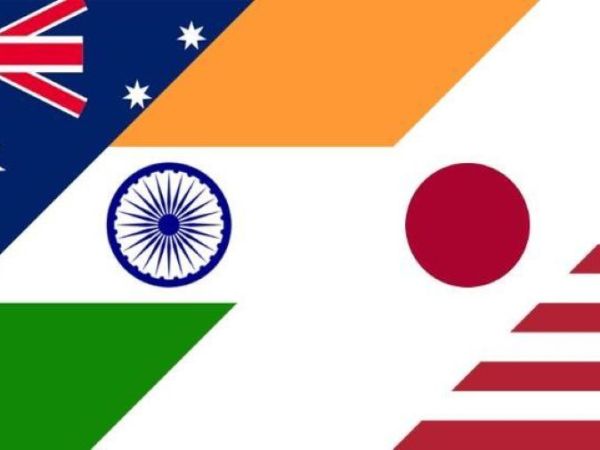
For Quad watchers, this whiplash diplomacy exposed a fundamental vulnerability of informal minilateral partnerships such as the Quadrilateral Security Dialogue (“Quad”). They depend on personal relationships between leaders and they can become hostage to individual caprice, a characteristic of the Trump 2.0 administration.
The 2025 crisis of 2025 for the Quad—consisting of the US, India, Japan, and Australia—a lack of tete-a-tete meetings with Quad leaders or a substantial new initiative demonstrates that without institutional architecture to insulate strategic cooperation from bilateral turbulence, even the most promising partnerships risk irrelevance.
Bilateral shocks without multilateral shock absorbers
The Quad emerged in 2007 as an informal dialogue among democracies sharing concerns about China’s rise. Revived in 2017 by the late PM Abe Shinzo and elevated to leader-level summits in 2021, it deliberately avoided the institutional formality of treaty alliances like NATO. This flexibility was considered a strength. It allowed a heterogenous membership in terms of development, political institutions and power to cooperate without constraining sovereignty. But 2025 revealed the costs of informality.
Case in point, the US-India bilateral breakdown following the application of US tariffs on Modi’s India. In February 2025, Prime Minister Narendra Modi visited Washington hoping to replicate the warmth of Trump’s February 2020 “Namaste Trump” visit to India, which drew 124,000 attendees to Ahmedabad’s Sardar Patel Stadium. Instead, Trump imposed 50 percent tariffs on Indian goods by August. This was double China’s initial tariff rate. Trump’s White House accused New Delhi of unfair trade practices and inadvertently supporting Putin’s war efforts on Ukraine by continuing to purchase oil. The tariffs took effect on August 27, coinciding ironically with Ganesh Chaturthi, the Hindu festival celebrating the remover of obstacles to prosperity.
The proximate cause was Trump’s frustration that India, unlike China, refused to quickly capitulate to tariff pressure. But the deeper damage came from Trump’s unsolicited mediation in the May 2025 India-Pakistan aerial conflict. After Pakistani-based terror group Lashkar-e-Taiba orchestrated attacks through its proxy The Resistance Front, India retaliated with airstrikes at nine locations in Pakistan on May 7. As India gained air superiority, Trump announced a ceasefire on social media before either combatant confirmed it. It forced Indian Foreign Minister S. Jaishankar to issue a written parliamentary statement on June 17 clarifying that “from April 22 to June 17, there was not a single phone call between President Trump and Prime Minister Modi.”
For any Indian government, third-party mediation in Pakistan disputes is politically toxic. It evokes memories of perceived American favoritism toward Pakistan during the Cold War. When Trump subsequently solicited Modi to nominate him for the Nobel Peace Prize during a June 17 phone call from Air Force One, Modi refused and declined Trump’s invitation to visit Washington. The trust deficit became so severe that Modi skipped the October 2025 ASEAN Summit in Kuala Lumpur specifically to avoid Trump, despite ASEAN being a cornerstone of India’s Act East policy.
Space, not face-to-face talks was decided as the most prudent approach to maintain a further deterioration of India-US relations. It allowed Modi to not be trapped into handshakes or Trump pronouncement that he would have to explain to Hindu-nationalists at home still bitter at US demands.
Meanwhile, China secured a 90-day tariff truce with Washington by May 12. Beijing leveraged its control of 70% of global rare-earth production as a bargaining chip. By November, Trump and Xi were planning state visits. The contrast was stark. China’s authoritarian efficiency in dealmaking versus India’s democratic constraints against appearing subordinate.
Personality-driven diplomacy cannot sustain strategic competition
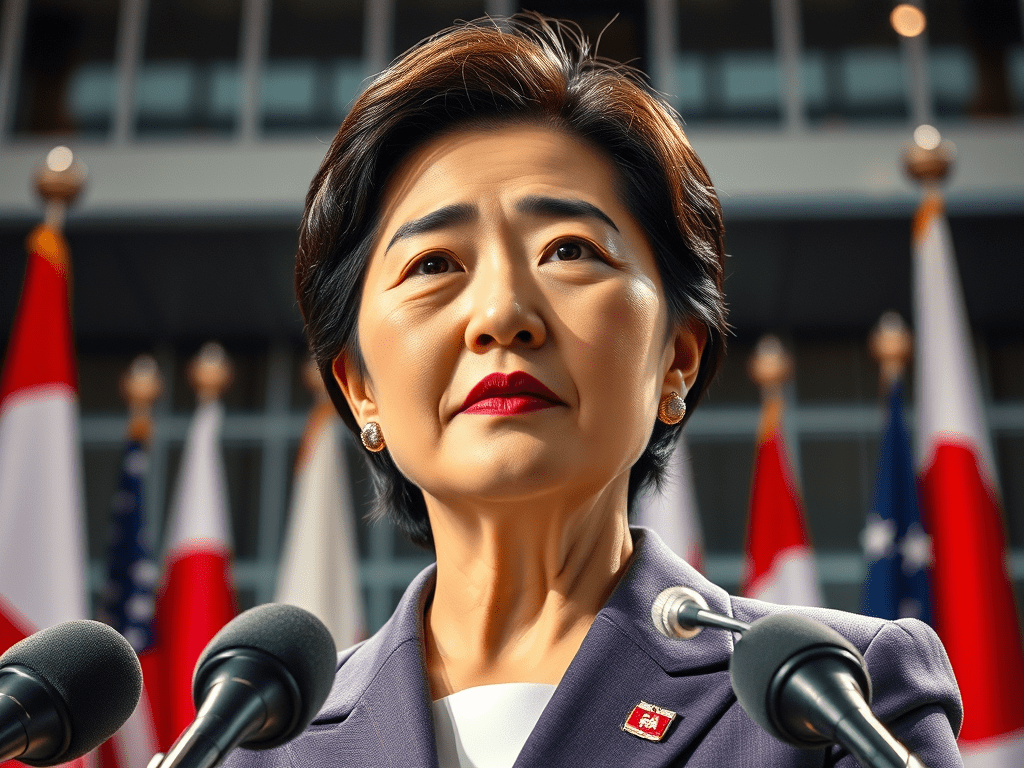
The US-India rupture might have remained a bilateral issue. Instead, it paralyzed Quad diplomacy precisely when other members faced their own crises. Japan’s new Prime Minister Takaichi Sanae, who took office in October 2025 as the country’s first female premier, sparked a manufactured (by China) diplomatic firestorm on Nov. 7 when she told parliament that a Chinese military intervention on Taiwan could constitute a “survival-threatening situation” for Japan that would potentially triggering collective self-defense. Even her mentor, the late Abe Shinzo, had avoided such explicit language until he stepped down as PM for health issues.
Beijing’s reaction was predictably harsh, given Chinese sensitivities about Japan’s 1895-1945 colonial rule of Taiwan, if not predatorial understanding that this was an opportunity to weaken Japan by potentially removing a PM, installing a revolving door of weak or pro-China PMs, and to weaken the Japan-US alliance. Instead of coordinated Quad support for Tokyo, Takaichi found Trump courting Xi. The absence of institutional mechanisms for Quad crisis coordination left Japan diplomatically exposed.
Within the Quad, only Australia has remained largely untouched by crisis (yet), while the other members have cycled from one flashpoint to the next. The cumulative effect is that by late 2025, three of four Quad members were navigating acute bilateral tensions. Despite the challenges, there was no minilateral framework to prevent these disputes from contaminating the partnership. Trump canceled his planned year-end visit to New Delhi for the Quad summit, and by December, the grouping’s momentum had stalled.
Compare this fragility to NATO’s experience during the 1956 Suez Crisis, when Britain and France invaded Egypt without consulting Washington. President Eisenhower forced their withdrawal, creating severe bilateral tensions with London and Paris. Yet NATO’s institutional architecture and its integrated command structure, permanent secretariat, and Article 5 treaty obligations served to insulated the alliance from bilateral ruptures. The European allies were furious at Washington, but NATO endured because strategic cooperation was embedded in institutional muscle memory, not personal rapport.
The Quad has none of this. It operates through rotating chair arrangements, ad hoc working groups, and leader summits scheduled around other diplomatic events. When Modi and Trump’s relationship soured, there was no institutional neutral ground and no Quad secretariat to maintain working-level cooperation, no binding commitments to prevent bilateral disputes from derailing multilateral agendas.
This matters because strategic competition with China is generational, not episodic. Beijing’s approach is patient and institutional. Examples are numerous. The Belt and Road Initiative operate through dozens of multilateral frameworks, the Shanghai Cooperation Organization has a permanent secretariat in Beijing, and the Asian Infrastructure Investment Bank provides institutional ballast for China’s economic statecraft. In contrast, the Quad’s most concrete but arguably limited achievement has been vaccine diplomacy during COVID-19 that was organized through temporary task forces that dissolved after delivery.
Whether the current turbulence will eventually subside into stability or escalate into a geopolitical tsunami remains uncertain. The maxim from the 4th-century BCE Indian treatise on statecraft, the Arthashastra, “a ruler who cannot discern between friend and enemy will soon find his kingdom in ruin”—is being put to the test today, as the Quad partners navigate an increasingly complex and volatile strategic environment. But the 2025 crisis reveals a different dimension of this ancient wisdom that Quad members can identify their shared challenge in China, yet remain unable to institutionalize cooperation in ways that survive leadership transitions and bilateral friction.
Institutional minimums for strategic staying power
The Quad need not become NATO. But it requires three institutional minimums to insulate strategic cooperation from personality-driven disruptions:
First, establish a rotating secretariat. Hosted sequentially in each capital for 18-month terms, a small Quad secretariat (15-20 staff) would maintain working-level continuity, coordinate the 12 existing working groups, and provide neutral ground when bilateral tensions flare.
Second, create crisis consultation protocols. Formalize 48-hour consultation requirements when one member faces acute security challenges such as ensuring Japan’s Taiwan concerns or India’s Pakistan conflicts receive coordinated Quad input before unilateral actions. This doesn’t constrain sovereignty; NATO’s Article 4 consultations operate similarly.
Third, develop economic interdependence mechanisms. Establish a Quad Technology Security Fund for joint semiconductor, AI, and quantum research for creating institutional constituencies in each country invested in cooperation. TSMC’s Kumamoto fab in Japan, built with government subsidies, demonstrates how industrial policy can anchor partnerships. The purpose is simple, creating indispensability in the Quad in a way that benefits each member but also an America First US Quad member.
None of this eliminates the importance of personal chemistry between leaders. But institutions provide guardrails when chemistry fails. The lesson of 2025 is clear for the Quad and in an era of authoritarian assertiveness and democratic volatility, informal partnerships are insufficient. The Quad must choose between institutional evolution and strategic irrelevance.
This article was first published on December 16, 2025, at the Pacific Forum.
Dr. Stephen R. Nagy (nagy@icu.ac.jp) is Professor of Politics and International Studies at the International Christian University in Tokyo, Senior Fellow and China Project Lead at the Macdonald Laurie Institute (MLI)), and Director of Policy Studies at YCAPS.
Dr. Saroj Kumar Rath (sarojkumarratha@cvs.du.ac.in) is an Assistant Professor at the University of Delhi. His research focuses on India’s foreign policy, maritime security, and regional cooperation, particularly the evolution of India–Japan strategic relations.


![[Short] Quad shifts toward public good provision](https://nagystephen.com/wp-content/uploads/2024/09/isdp-ok-1.jpg?w=1200&h=900&crop=1)




 nagystephen.com
Leave a comment