
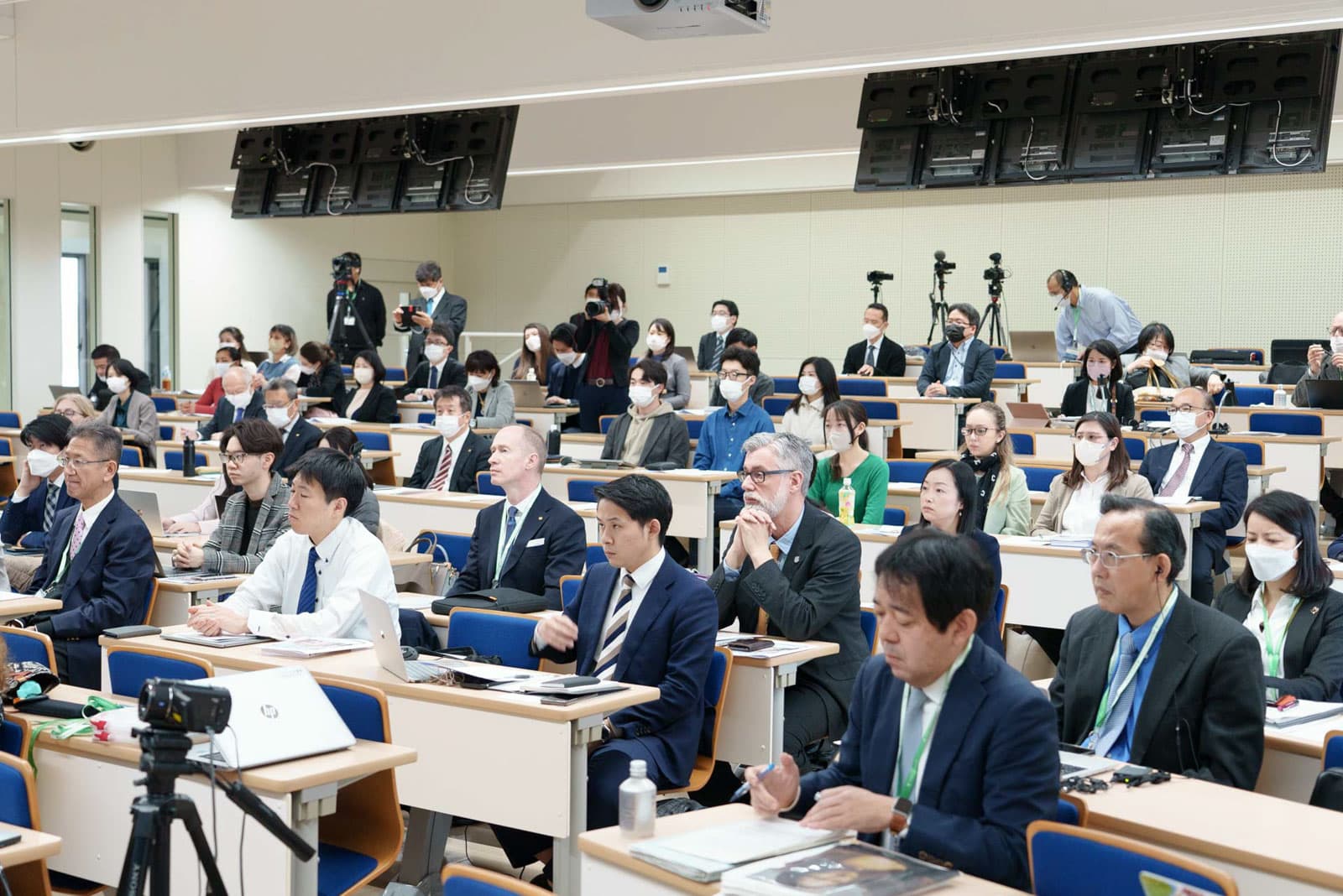
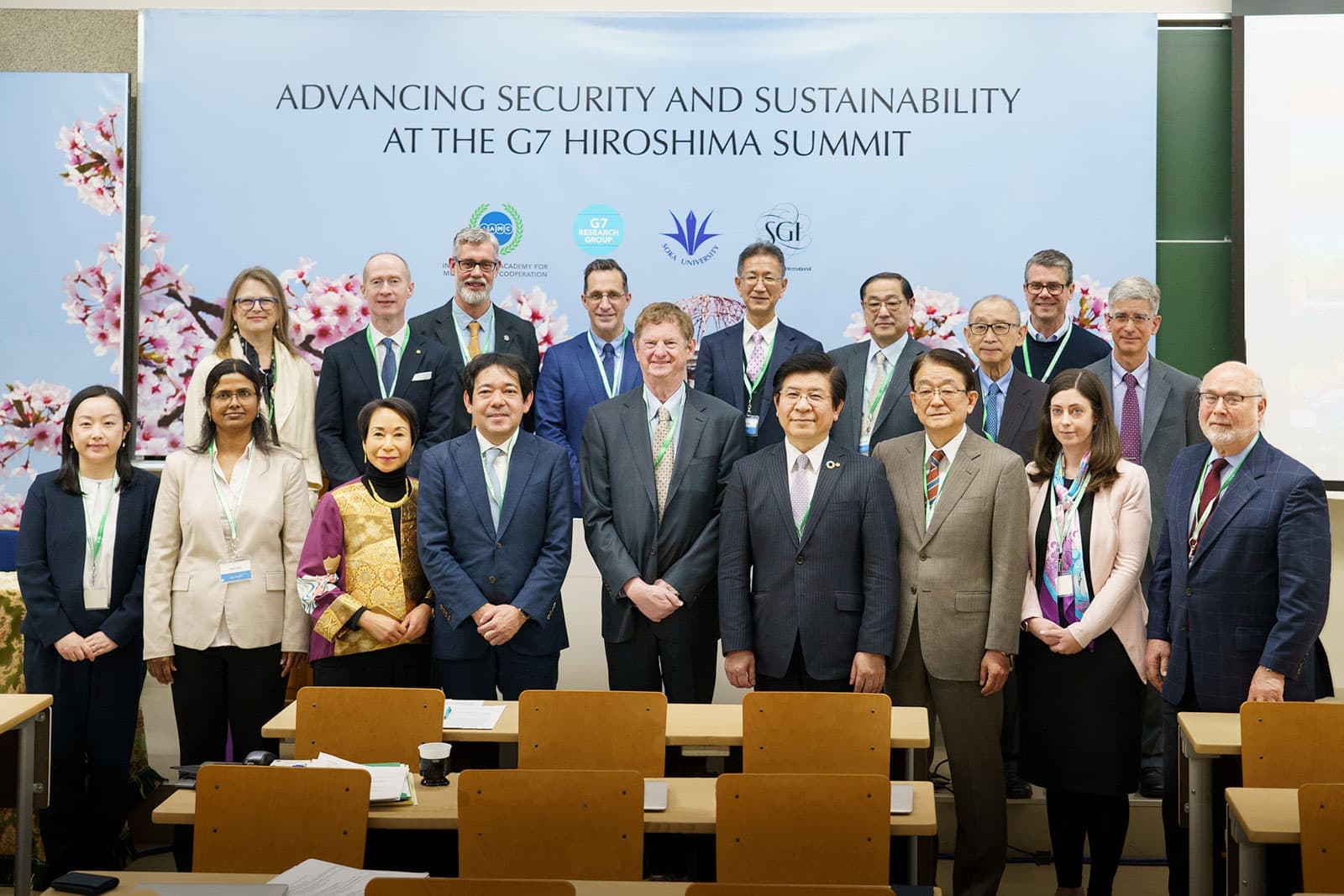
My presentation at Soka University in March 2023
KEY POINTS
Japan’s Leadership and Agenda Setting
The G7 provides Japan as the host nation with an opportunity to emphasize themes that it believes are important for fellow members. With Prime Minister Fumio Kishida leading this year’s summit in Hiroshima, his personal background and the city’s historical significance as the first to experience an atomic bomb will be central to the agenda. This includes highlighting the dangers of weapons of mass destruction and North Korea’s nuclear proliferation, as well as broader trends in the international community.
Great powers are increasingly moving away from denuclearization, opting instead to expand their nuclear arsenals for defense. For instance, just last week, President Putin announced plans to place tactical nuclear weapons in Belarus in response to what he perceives as NATO expansion and aggression. Meanwhile, China is committing to expanding its nuclear missile stockpile to 1,500 by 2035. This situation is particularly significant for countries like Japan, which are at the forefront of a highly dynamic and potentially dangerous region.
Furthermore, discussions in South Korea are shifting toward acquiring a nuclear deterrent against North Korea, which has serious implications for Japan’s security considerations. This context underscores why issues of denuclearization and weapons of mass destruction are central to this year’s G7 agenda, and it is essential to approach this topic with a layered understanding in terms of domestic, regional, and international dynamics.
It’s also important to recognize Japan’s consistent stance on denuclearization. For instance, during the June 2022 Shangri-La Dialogue, Prime Minister Kishida articulated his vision for peace, emphasizing a commitment to denuclearization. Most recently, Japan’s new National Security Strategy reaffirms its adherence to the three non-nuclear principles. The G7’s role in promoting denuclearization is part of Japan’s long-term strategy, which it remains deeply invested in.
Additionally, Japan is keen on shaping broader dynamics. If we examine the guest list for the G7, we notice the significance of countries like South Korea, Australia, and India. India is projected to become one of the largest economies within the next decade, while South Korea plays a critical role in supply chains.
The recent Yoon-Kishida Summit highlighted how these nations, through strategic synergy, can provide significant public goods, whether bilaterally, trilaterally within the U.S.-Japan-South Korea context, or through the United Nations.
Japan’s advocacy for their inclusion in the summit reflects its understanding of the G7’s future direction and the key players it should engage with.
The inclusion of Pacific Island nations in the G7 invitation list illustrates Japan’s recognition of the need to incorporate diverse stakeholders into the G7 to shape its agenda, particularly regarding environmental issues and climate change. The COVID-19 pandemic has heightened the importance of resilience in these areas, especially as the invasion of Ukraine has impacted supply chains and food security. Economic security is a crucial component of this discussion.
Selective multilateralism
Tensions are rising between multilateral frameworks such as the G7, G20, ASEAN, and the EU, as certain countries actively seek to undermine these institutions, leading to fractured cooperation. Consequently, we are witnessing the emergence of alternative multilateral collaborations, such as the Quad and trade agreements like the Comprehensive and Progressive Agreement for Trans-Pacific Partnership (CPTPP).
While multilateral cooperation is essential for addressing climate change, denuclearization, and post-pandemic global economic recovery, we must also acknowledge the challenges posed by states that aim to weaken international institutions and the rule of law. This raises critical questions about the G7’s direction: who should be included, and how should it balance multilateral versus mini-lateral cooperation?
The G7 serves as an interesting venue for countries like Japan to deliver strong messages to regional disruptors. For example, Japan utilized the G7 platform to issue a joint communiqué criticizing the National Security Law in Hong Kong. Similar trends have emerged regarding military exercises around Taiwan and Russia’s invasion of Ukraine. The G7 provides Japan with a useful tool for expressing concerns without directly criticizing specific states, and I believe this approach will continue to be valuable.
Convergences and Divergences of G7
Regarding convergences, there is significant alignment between Japan and other G7 countries on security and economic issues. Many of these nations, including the EU, Canada, and Germany, have adopted Indo-Pacific strategies that emphasize a rules-based order, economic resilience, and environmental changes.
Japan has been at the forefront of advocating for these principles for over a decade, helping to educate other G7 members on their importance.
Moreover, there is broad consensus on the implications of Russia’s invasion of Ukraine for the rules-based order. This theme resonates throughout the G7, especially as authoritarian states attempt to rewrite the international rules. An important takeaway is how we manage states that challenge the existing system and whether the G7 can effectively ensure that the rules remain intact or are updated to reflect our interests.
In summary, while there are significant convergences on security and economic issues, the G7 must navigate the complexities of selective multilateralism moving forward.
The role of the United States
The role of the United States is crucial, not only for Japan’s future but for all other G7 countries as well. As we observed during the previous U.S. administration, there were significant challenges in maintaining a unified stance on various issues.
Looking ahead to the 2024 elections, we may face another disruptor in the White House, which raises important questions about how G7 countries will manage their relationship with the United States.
Will we seek to find common ground for cooperation, allowing the U.S. to take a leadership role that aligns with our interests? Or will we act collectively to influence and redirect U.S. policy? This will largely depend on who occupies the White House in 2024. The G7, including Japan, plays a vital role in ensuring that U.S. decisions benefit not only its own interests but also those of the G7 members.
During the Trump administration, Japan took on a special role in countering some of the U.S.’s unorthodox approaches to global challenges. It is essential for Japan to collaborate with other G7 members to ensure that the G7 functions in ways that support not just its members but also the broader global community—this includes engaging stakeholders like South Korea, India, Australia, and Pacific Island nations.



Related Posts



 nagystephen.com
Leave a comment