
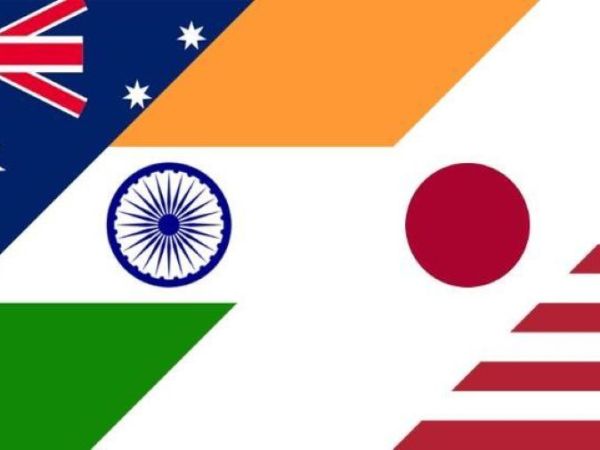
I speak at the Institute for Security & Development Policy (ISDP) webinar on “South Korea, India, and the Emerging Quad Plus Calculus.”
When considering the Quad from various perspectives – be it in Tokyo, Canberra, Washington, or Delhi – it becomes clear that there are distinct views on its significance. We’ve observed the Quad evolve, indicating that member countries are not fully harmonized in their activities, particularly in the realm of security. This divergence suggests that the Quad might be better suited to address public good provision.
What concrete deliverables has the Quad achieved thus far?
While we’ve discussed various initiatives, identifying sustained and repeated concrete outcomes remains challenging. To date, I don’t think we have a solid track record that suggests we can rely on the Quad effectively.
Based on the existing outcomes and initiatives, where might South Korea fit in? This question is crucial. Over the past four to five years, the Quad has shifted towards public good provision, significantly influenced by ASEAN’s concerns about a security-oriented focus. India’s position has also steered the Quad in this direction, which doesn’t always align with the priorities of Tokyo, Canberra, or Washington.
Looking ahead, the Quad’s direction will likely be shaped by China’s actions. If China becomes more assertive in the region—pressing its interests in the Taiwan Strait or towards the Philippines – we might see the Quad expand. However, currently, India does not appear inclined to enhance its security presence in the South China Sea or the East China Sea, areas that are of particular concern to Japan.
When considering South Korea’s participation alongside India, we should explore functional plug-in cooperation. Various areas such as maritime security, supply chains, and the digital economy present opportunities for South Korea to contribute to concrete initiatives. Yet, this ties back to my earlier question about the Quad’s tangible outcomes.
Another point to consider is whether there is a more regional focus where South Korea could add value, particularly in maritime domain awareness activities in the Sea of Japan, Pacific Islands, or the South China Sea, while allowing other activities in the West and the Indian Ocean to follow a different collaborative model. A regional approach could help align South Korea’s assets with the current Quad members.
However, I’m uncertain how Japan views South Korea’s involvement in ocean matters. They may prefer increased South Korean participation in addressing North Korea but could be hesitant about broader regional security cooperation.
In terms of public good provision, South Korea can indeed play a role, particularly in resilient supply chain initiatives and environmental policies. There’s also potential for collaboration on policies for Pacific Island nations to address existential environmental challenges.
Divergences among Quad members
We’ve seen a shift from the Moon Administration to the Yoon Administration, with South Korea becoming more globally engaged. Despite historical tensions with Japan, there’s a mature decision to handle these issues diplomatically.
Is the Yoon Administration sustainable? I’m unsure. The Modi Administration appears sustainable, but its current direction is less aligned with the liberal values that other Quad members might prefer. India’s stance on issues such as rule of law and its position on Russia complicate perceptions of its reliability.
South Korea, being economically vulnerable, might find that ad hoc cooperation within the Quad could expose it to risks. India, with its different economic integration and susceptibility to coercion, presents a distinct starting point for collaboration.
Finally, regarding the geographic scope of cooperation, should we spread ourselves too thin, or focus on areas where we can genuinely add value? South Korea could enhance maritime domain awareness initiatives and consolidate sea lines of communication in the eastern Indo-Pacific. Meanwhile, other Quad members might be better positioned to engage with the EU or specific EU members regarding issues in the Western Indian Ocean or the Red Sea.
In summary, we need to address the diverse understandings of the Quad among its members, evaluate the concrete initiatives that have been accomplished, and consider how China’s actions will influence the Quad’s future. Domestic politics in both India and South Korea will also play a significant role in shaping their ability to participate meaningfully.
My YouTube Playlist on the Quad and the Indo-Pacific
My Audio Playlist on the Quad and the Indo-Pacific
Related Posts


![[The Reality of Middle Power] US and China: “Superpowers” and “Multiple Weak Powers” on Fuji BS’ Prime NEWS](https://nagystephen.com/wp-content/uploads/2026/03/image-7.png?w=1024)
 nagystephen.com
Leave a comment