Limited by Article 9 of the Japanese Constitution and a trust deficit in East Asia following its Imperial period, Japan’s post-WW 2 engagement in the Southeast Asian region was primarily through overseas development aid (ODA) and foreign direct investment (FDI). ODA represented the first pillar of post-WW 2 diplomacy in the region through the provision of various kinds of loans and assistance to build infrastructure in the region.
This infrastructure was dual purpose. It was meant to contribute to development of the region through creating the foundational infrastructure and connectivity necessary to build a modern economy in the region. At the same time, the infrastructure was also used as a platform for the insertion of Japanese businesses in the region for manufacturing when possible and resource exploitation.
The second pillar of Japanese foreign policy within the region in the post-WW 2 period focused on imports of natural and energy resources to feed Japan’s rapidly growing economy at least until the early 1990s. This post-WW 2 behavior by the Japanese was initially seen by the Southeast Asian states as rapacious yet needed exploitation to rapidly develop their economies. Eventually though, criticisms of Japanese practices in the region waned as ODA and FDI deployed in the region
became known for their commitment to comprehensive development, investment in communities and relationships, and for their transparency.
Subsequently, Japan’s reputation became one of being an essential partner to the region and Tokyo began to see itself as having the responsibility to contribute to the region’s development as part of its national interests but also its unique brand of development diplomacy as highlight in consecutive editions of The State of Southeast Asia, 2022 Survey Report by the ISEAS-Yusof Ishak Institute.
Within this context, this paper aims to examine Japan-Southeast Asia relations through the lens of investing in security and strategic autonomy built on a shared Free and Open Indo-Pacific (FOIP) vision as China increases its economic, diplomatic and security influence in the region. This was recently articulated but Prime Minister Kishida Fumio at the June 2022 Shangri-la Dialogue. In short, Japan and Southeast Asia’s security concerns in the South China Sea (SCS) can no longer be seen in isolation and required a more proactive and realistic approach to cooperation in the region.
Read more:
- [Is the attack on Iran illegal or legal?] Middle powers unable to speak out against the US
- [The Reality of Middle Power] US and China: “Superpowers” and “Multiple Weak Powers” on Fuji BS’ Prime NEWS
- Takaichi needs a new blueprint for a lasting U.S. alliance
- これが味方と敵がつけた辛辣な”通信簿”…海外に映った「日本初女性宰相・高市早苗」の正体と器「実像」が正確に伝えられない
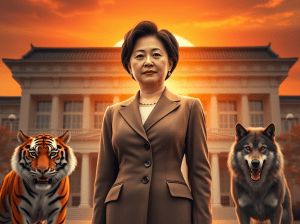
- Keeping the Chinese ‘tiger’ and U.S. ‘wolf’ at bay
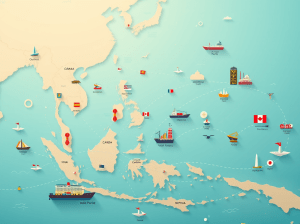
- Canada’s new Indo-Pacific calculus – Beyond the old Atlantic order: Stephen Nagy and Saroj Kumar Rath for Inside Policy
![[The Reality of Middle Power] US and China: “Superpowers” and “Multiple Weak Powers” on Fuji BS’ Prime NEWS](https://nagystephen.com/wp-content/uploads/2026/03/image-7.png?w=1024)
 nagystephen.com
Leave a comment