As Canadian Prime Minister Mark Carney touched down in Canberra this week, the optics are predictable: two liberal middle powers, Commonwealth cousins, clasping hands across the Pacific to champion a rules-based order that feels increasingly fragile. For Carney, whose government is reeling from the erratic protectionism of the second Trump administration, the trip is a desperate search for diversification. He is looking for a “third way”, a coalition of middle powers to offset the crushing weight of American unilateralism and Chinese coercion.
But in the harsh light of the 2026 geopolitical reality, Carney is likely to find that the road to Canberra actually runs through Washington.
Canada’s ambition is understandable. With President Trump’s Department of War issuing a National Defence Strategy that explicitly demands the “Trump Corollary” in the Western Hemisphere, essentially treating Canada as a security dependency rather than a partner, Ottawa needs friends. Carney has pledged to double Canada’s non-US exports within a decade to escape the “predatory hegemony” described by scholars like Stephen Walt. Australia, with its booming critical minerals sector and strategic location, seems the perfect partner.
However, the view from the Lodge in Canberra is starkly different. While the Albanese government will offer warm toasts and polite memoranda, Australia has no bandwidth for a middle-power alliance that does not directly serve its primary existential imperative, keeping the United States anchored in the Indo-Pacific.
The core argument limiting Canada’s outreach is structural. We are living in what C. Raja Mohan calls the “multipolar delusion.” The world is not truly multipolar; it is unipolar, with the United States exercising unchecked power, and a rising China challenging it. In this environment, Australia has made a calculated, irrevocable bet on American hard power. Through AUKUS and the expansion of US rotational forces, Canberra has integrated its security architecture with Washington’s to a degree Ottawa has historically resisted.
For Australia, a partnership with Canada is only valuable if it strengthens the US alliance network. Canberra is loath to expend diplomatic capital on initiatives that Washington might view as a distraction or, worse, a globalist critique of American policy. The 2026 US National Defence Strategy is brutal in its assessment of allies who free-ride. Australia has responded by increasing defence spending, although well short of US demands. Canada, despite Carney’s recent scrambles, is still viewed in defence circles as a laggard playing catch-up. Until Canada proves it is a serious hard-power asset to the US alliance system, specifically in the Arctic and NORAD modernisation, Australia will view it as a security liability, not a force multiplier.
Furthermore, Carney’s visit complicates the delicate, high-wire act the Albanese government is performing with Beijing. Since 2022, Canberra has pursued a strategy of stabilisation. It is a pragmatic, transactional détente. As noted by strategic analysts, Australia has moved past the “wolf warrior” era not by capitulating, but by being consistent, disciplined, and avoiding unnecessary provocation.
Canada, by contrast, often brings a brand of moralising diplomacy that Canberra currently finds inconvenient. Ottawa’s approach to China has oscillated between engagement and vocal condemnation, often lacking the disciplined leverage. In my own writings, I have suggested it is required for managing Beijing in 2026. Australia is wary of Canada’s tendency to use multilateral forums for performative progressive rhetoric. Canberra does not want a Canadian Prime Minister using an Australian platform to launch ideological broadsides against Beijing that could upset the fragile trade truce Australia has painstakingly rebuilt.
The reality is that Australia cannot afford to be part of a “middle power” bloc that antagonises China without the explicit backing of the United States. If Canada wants to engage Australia on China, it must do so within the strict confines of selective cooperation and risk management, not grand moral crusades or implicit criticism of President Trump or the US.
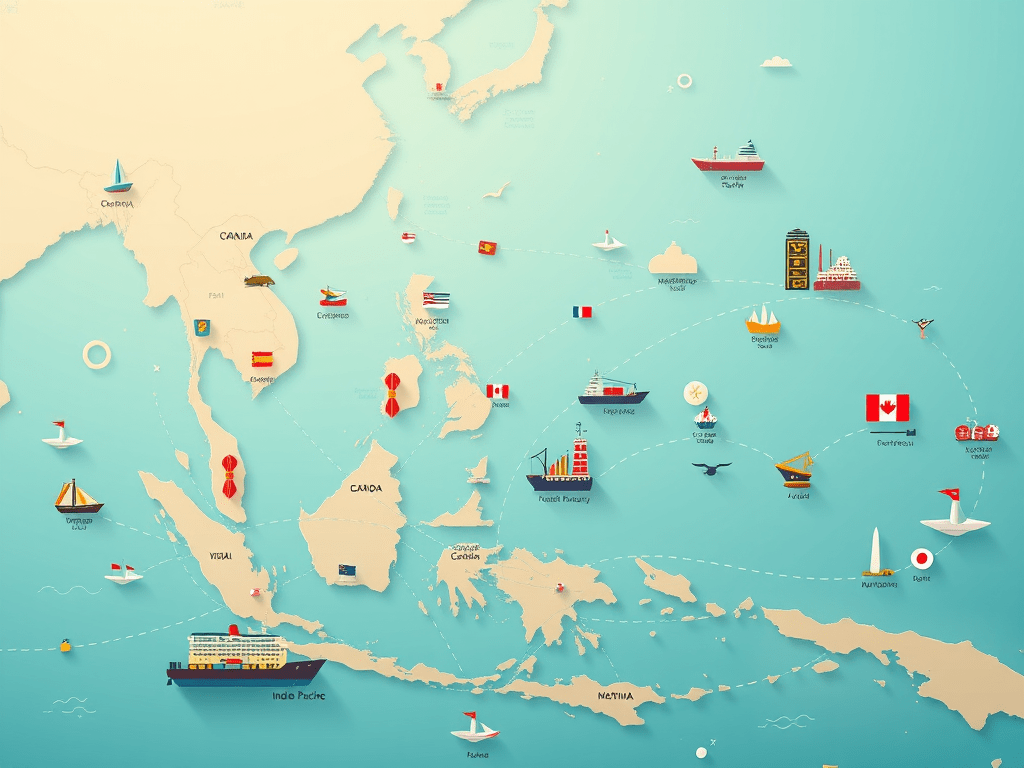
There is also the economic dimension. Carney wants to sell Canada as a resource superpower. But in the Indo-Pacific, Canada is a latecomer. The supply chains for critical minerals and energy are already being hardened into vertical silos dominated by the US and its Tier-1 allies. Australia is already inside the tent; Canada is knocking on the door, asking to be let in while simultaneously complaining about the doorman (the United States).
This is the tragedy of modern middle-power diplomacy. In a world defined by the “simultaneity problem”, the risk of concurrent conflicts in Europe, the Middle East, and Asia, there is no room for a third pole. There is the American system, the Chinese system, and the void.
If Prime Minister Carney wants to succeed in Australia, he must shed the illusion that Canada and Australia are peers operating in a vacuum. They are not. Australia is a frontline state in the Indo-Pacific security architecture; Canada is a hemispheric neighbour of a volatile superpower.
Canberra will welcome Canadian investment and intelligence sharing, particularly regarding foreign interference. But it will not sign up for any initiative that dilutes its focus on the US alliance or unnecessarily pokes the dragon in Beijing. The message Carney will receive, perhaps delivered politely over Australian wine, is simple: If you want to matter in the Indo-Pacific, fix your relationship with Washington first. In 2026, there is no detour around the hegemon.
Stephen R. Nagy is professor of politics and international studies at the International Christian University. Concurrently, he holds appointments as a senior fellow and China project lead at the Macdonald-Laurier Institute and a visiting fellow at the Japan Institute for International Affairs. The titles of his forthcoming books are Japan as a Middle Power State: Navigating Ideological and Systemic Divides and Get Over It and Move On: How to Run a Global Business in the Emerging World Order.
First published with AsiaLink, University of Melbourne March 5th, 2026
https://asialink.unimelb.edu.au/diplomacy/insights/carneys-australian-pivot-hits-hard-reality-american-world/

 nagystephen.com
Leave a comment