Managing China in 2026: Discipline, Leverage, and Guardrails
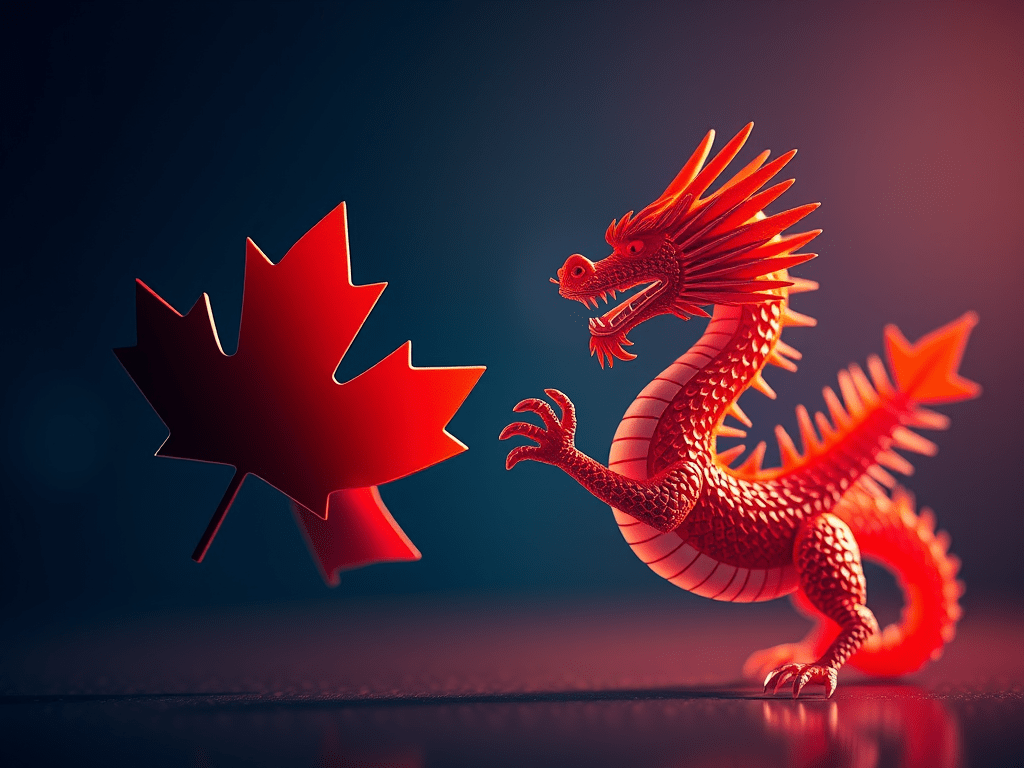
Canada should manage China in 2026 with disciplined, sequenced engagement—protecting core alliance equities with the United States while keeping narrow, interest-based channels with Beijing open.
First, Ottawa must treat CUSMA and the U.S. market as structural realities, not as one option among many. With the agreement under review, Canada should remove ambiguity: no FTA track with China, full transparency with Washington on any China-related commercial understandings, and clear enforcement that Canada will not become a transshipment route for Chinese goods into the U.S. The objective is de-escalation and predictability, not Davos applause.
Second, Canada should shift from “strategic partnership” language to “selective cooperation + risk management.” China is simultaneously a market and—per Canada’s own Indo-Pacific Strategy—an “increasingly disruptive global power.” Engagement should focus on non-strategic sectors (agri-food, consular cases, student mobility, climate where feasible), while erecting firm guardrails in critical minerals, advanced tech, data, and dual-use research.
Third, Ottawa should build leverage before engagement by tightening partnerships with Japan, South Korea, Australia, the EU, and Southeast Asian states—on supply chains, standards, and economic security. In practice: deepen CPTPP coordination, expand minilateral resilience arrangements, and pursue “plug-in” cooperation on maritime domain awareness, sanctions evasion, and critical inputs.
Fourth, Canada needs domestic democratic resilience as foreign policy: fully implement and enforce the foreign influence transparency registry, strengthen research security and university disclosure rules, and create actionable channels between intelligence assessments and political decision-making. If interference vulnerabilities persist, allies will discount Canada as a security partner, and Beijing will continue to exploit permissive seams.
Finally, Ottawa should communicate a simple doctrine: engage where interests overlap, deter where interests collide, and never trade continental security for short-term market relief.
In short: talk less grandly, align more carefully, diversify patiently, and engage China only where Canada can absorb coercion and still say no.
Dr. Stephen Nagy received his PhD in International Relations/Studies from Waseda University in 2008. His main affiliation is as Professor at the International Christian University, Tokyo. He is also a fellow at the Canadian Global Affairs Institute (CGAI); a visiting fellow with the Japan Institute for International Affairs (JIIA); a senior fellow at the MacDonald Laurier Institute (MLI); and a senior fellow with the East Asia Security Centre (EASC).

 nagystephen.com
Leave a comment