As the two titans clash, Tokyo emerges as Washington’s indispensable ally
U.S. President Donald Trump’s characteristically effusive assessment of his Oct. 30 meeting on the sidelines of the Asia-Pacific Economic Cooperation with Chinese leader Xi Jinping as a “12 out of 10” has dominated post-summit analysis.
Yet the prevailing focus on bilateral theatrics obscures a more consequential development. The 90-minute encounter in South Korea represents more than another chapter in Sino-American rivalry; it marks a strategic inflection point that positions Japan as Washington’s irreplaceable anchor in an increasingly contested Indo-Pacific theater.
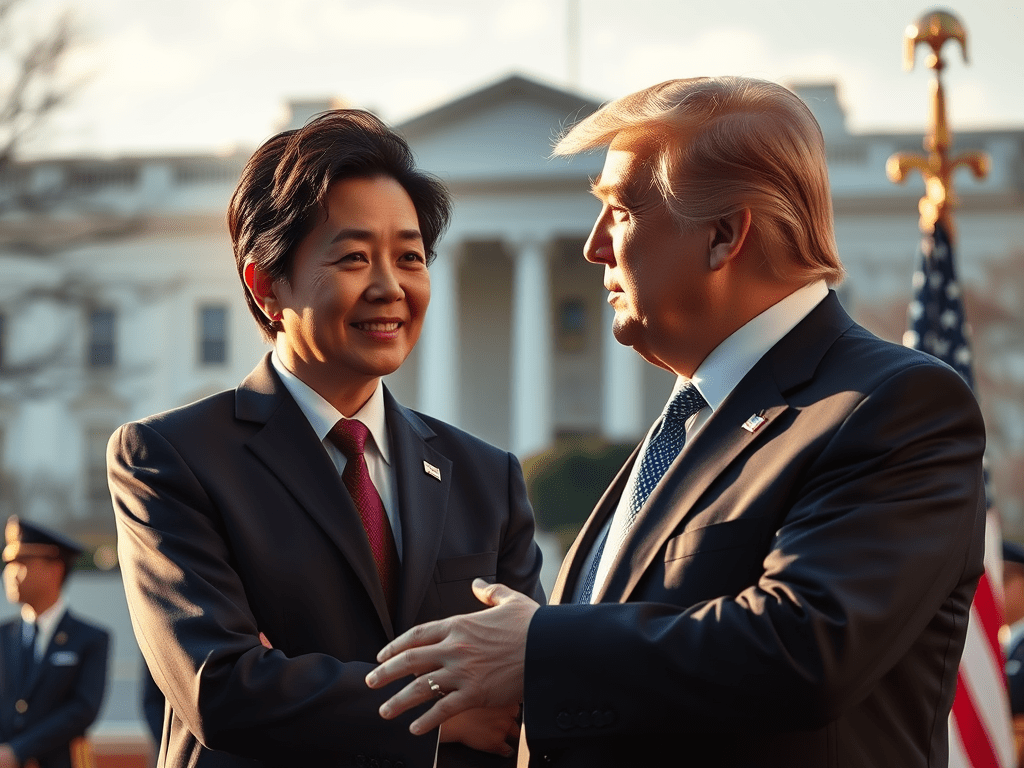
Prime Minister Sanae Takaichi understood this perfectly. Just days before the Trump-Xi tete-a-tete, she had hosted Trump in Tokyo from Oct. 27-29. Their meeting, which both leaders hailed as launching a “new golden age” of cooperation, wasn’t mere diplomatic pleasantry. It was strategic positioning, with Takaichi ensuring Japan’s centrality in Trump’s Indo-Pacific strategy before he faced Xi.
The summit’s core exchange reveals the strategic calculus at play. Beijing’s temporary suspension of rare-earth export controls, critical materials commanding 80% market share in defense and technology applications came at the price of U.S. tariff concessions. Xi’s leverage appeared formidable, a demonstrated capacity to constrain Western supply chains paired with Trump’s seemingly erratic messaging on nuclear policy.
Yet this surface reading misinterprets both the precedent and the implications. China’s willingness to weaponize commercial dependencies rather than projecting strength exposed the fragility of its economic statecraft. The one-year pause represents neither magnanimity nor tactical brilliance, but rather Beijing’s recognition that sustained restrictions would accelerate precisely the supply-chain diversification it seeks to prevent.
Tokyo and Washington were preparing for Beijing’s rare-earth bazooka. On Oct. 28, Trump and Takaichi signed the United States-Japan Framework for Securing the Supply of Critical Minerals and Rare Earths through Mining and Processing. But that wasn’t the only breakthrough. In hindsight, the summit illuminated three realities that make Japan’s position uniquely powerful:
First, China’s economic miracle is stumbling. The Rhodium Group’s analysis suggests Chinese growth is between 2.4% and 2.8%, far below official claims of 5%. Youth unemployment exceeds 20%. Demographics are devastating as China’s population declined for the third straight year.
Japan knows this trajectory intimately. It faced similar challenges in the 1990s such as asset bubbles, an aging society and slowing growth. But the nation adapted modestly through innovation, efficiency and global integration. China’s authoritarian system makes such adaptation far harder.
Second, America’s Indo-Pacific strategy requires capabilities only Japan provides. The U.S. military depends on Japanese bases for regional projection. American companies need Japanese technology for advanced semiconductors. Washington’s submarine industrial base cannot meet the Australia-United Kingdom-United States (AUKUS) security commitments without Japanese components. Geography made Japan important; capability makes it indispensable.
Third, and most critically, Japan offers what former Singaporean leader Lee Kuan Yew called the ability to “draw on a talent pool of 7 billion.” Despite demographic challenges, Japan remains a magnet for Asian talent seeking alternatives to Chinese authoritarianism. Its rule of law, technological prowess and cultural soft power create options China cannot match.
Takaichi grasps these advantages with unusual clarity. Japan’s first female prime minister brings a realist, Japan-first edge that resonates with Trump — but paired with strategic sophistication. Their summit produced concrete results including expanded intelligence sharing, joint rare-earth processing ventures and a revolutionary agreement on next-generation fighter development.
The contrast with China’s approach is stark. Beijing’s “Made in China 2025” economic development plan, launched a decade ago, pursued technological self-sufficiency through massive state investment. Results have been mixed: impressive capabilities in targeted sectors, but at staggering cost; local governments funded redundant projects; state enterprises accumulated crushing debt; China built 10 semiconductor fabs where two would suffice, all bleeding money while competing for scarce talent.
Japan chose differently. Rather than pursuing autarky, it deepened integration with democratic allies. Tokyo’s semiconductor strategy illustrates this perfectly. The country dominates crucial niches such as photoresists, silicon wafers, manufacturing equipment that neither America nor China can easily replicate. When Washington restricted semiconductor exports to China, Japanese companies became even more vital to both sides.
This interdependence provides leverage. During the Takaichi-Trump summit, Japan secured guarantees about technology sharing that previous administrations couldn’t obtain. The joint fighter project will integrate Japanese and U.S. systems at unprecedented levels. Intelligence cooperation will extend beyond traditional security to economic and technological domains.
But Japan’s opportunity extends beyond bilateral ties. “The Quad” — America, Japan, Australia and India — has evolved from a security dialogue to a comprehensive partnership. Japan’s leadership in areas like hydrogen technology, robotics and health care innovation makes it the group’s technological anchor. As supply chains reorganize away from China, Japan’s manufacturing expertise and Indo-Pacific networks become invaluable.
The numbers tell the story. As economist Alexandra Sakaki, deputy head of the German Institute for International and Security Affairs’ Asia Research Division, has noted, Japanese investment in Southeast Asia exceeded $35 billion last year, surpassing China for the first time since 2013. The Philippines chose Japanese railway technology over cheaper Chinese alternatives. Vietnam welcomed Japanese semiconductor facilities. Even traditional Chinese partners like Thailand increasingly prefer Japanese quality and reliability.
Nuclear policy represents another shift. Trump’s confusing statement about weapons testing was largely bluster; no major power has tested since the 1990s. But it highlighted evolving security dynamics. China’s nuclear buildup and North Korean provocations create pressure for Japan to reconsider its nonnuclear principles. Takaichi, more realistic about security challenges than her predecessors, has hinted at hosting American nuclear weapons. The taboo hasn’t broken, but it’s cracking.
This carries risks. China’s economic fragility makes it dangerous. As growth slows and legitimacy erodes, Beijing may gamble on external aggression. Taiwan is the obvious flash point, and Japan could inevitably be drawn in. Chinese missiles can reach every Japanese city. Economic retaliation could be severe.
Yet Japan has advantages China lacks. Its alliance with the U.S. provides security guarantees. Its technological sophistication enables rapid adaptation. Most importantly, its democratic resilience allows course corrections that China’s rigid system cannot manage.
The summit’s aftermath reveals the emerging architecture: America provides military power and market scale; Japan offers technological excellence and regional knowledge; Australia supplies resources and geographic reach; and India adds demographic dynamism and market potential. Together, they’re building alternatives to Chinese dominance, not through confrontation but through better options.
Takaichi’s strategy reflects this reality. Unlike some predecessors who sought balance between Washington and Beijing, she’s making a clear choice. But it’s not blind alignment. Japan extracts concrete benefits including technology access, security guarantees and economic opportunities. The “new golden age” has specific meaning — an equal partnership replacing outdated patron-client dynamics.
For China, this represents a strategic nightmare. Japan’s example shows that Indo-Pacific countries can prosper without Beijing’s patronage. Worse, it demonstrates that American partnerships offer better terms than Chinese dominance. Every Japanese success story, from high-speed rail in India to semiconductor facilities in Taiwan, undermines China’s narrative of inevitable ascendance.
The irony is exquisite. China’s rare-earth threats, meant to demonstrate leverage, instead accelerated the very partnerships Beijing feared. Trump’s unpredictability, seemingly a weakness, created space for allies like Japan to shape American strategy. Xi’s tactical victory in South Korea may prove a strategic defeat.
As 2025 unfolds, the pattern is clear. The Trump-Xi summit didn’t resolve U.S.-China competition, it clarified the stakes. In this clarified landscape, Japan’s position strengthens daily. Not as a passive ally but as an active architect of the emerging order. Takaichi’s summit with Trump wasn’t just successful diplomacy. It was Tokyo’s declaration that in the contest between democratic dynamism and authoritarian control, Japan has chosen its side and intends to help it win.
The lesson from South Korea isn’t about superpower summitry. It’s about how middle powers become indispensable when great powers collide. Japan has been preparing for this moment since Commodore Matthew Perry’s black ships arrived in 1853. This time, Tokyo may hold the Trump card.
This article was first published on November 5, 2025, at The Japan Times.
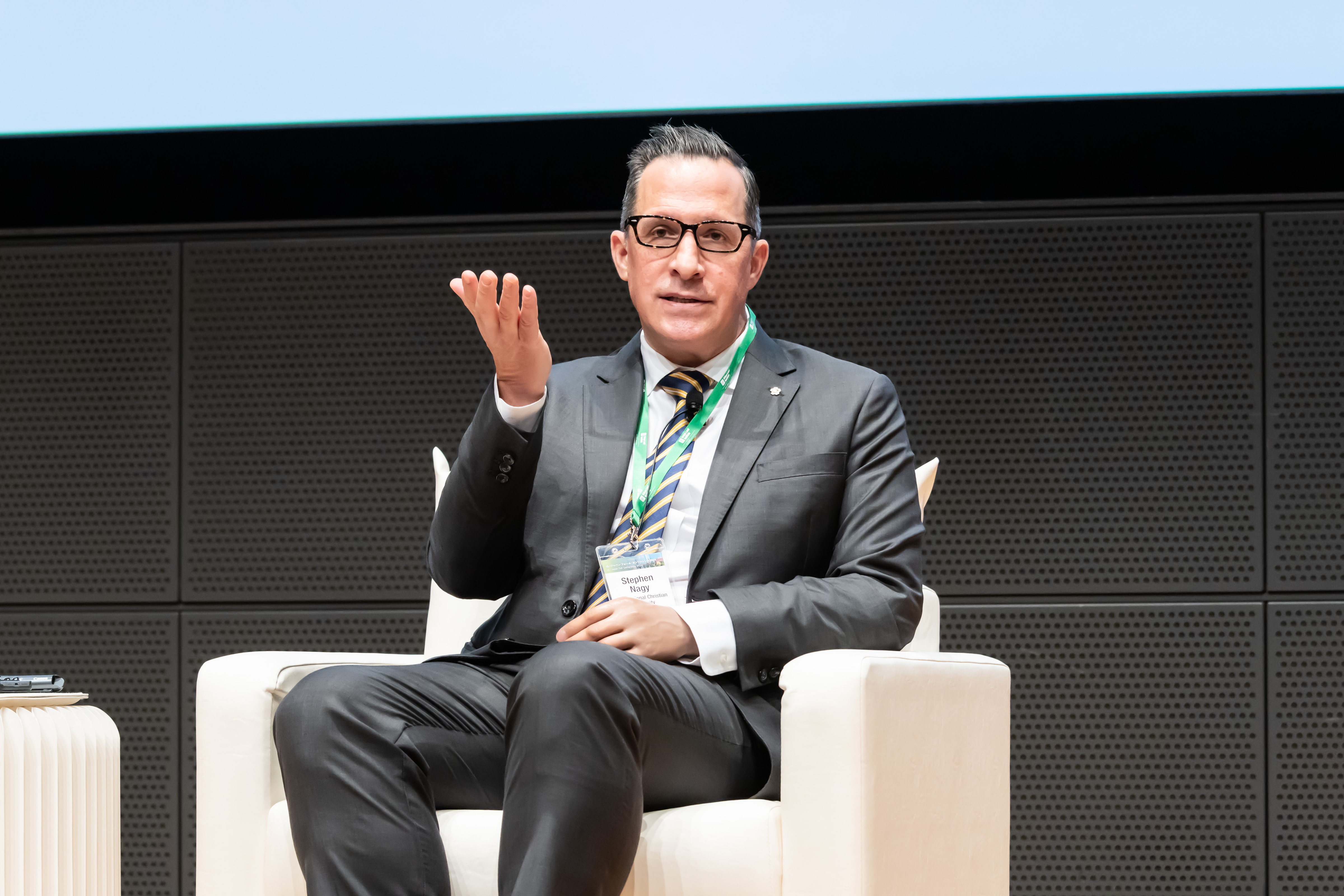
![[The Reality of Middle Power] US and China: “Superpowers” and “Multiple Weak Powers” on Fuji BS’ Prime NEWS](https://nagystephen.com/wp-content/uploads/2026/03/image-7.png?w=1024)
 nagystephen.com
Leave a comment