
Abstract
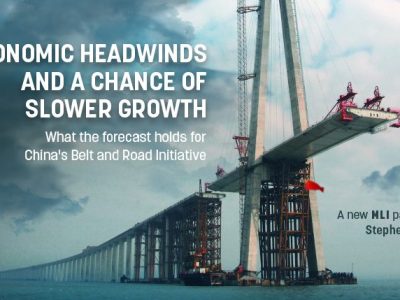
In the build-up to the 20th Party Congress, a series of essays emerged focusing on Xi Jinping cementing a third term as General Secretary of the Communist Party of China and his future plans for China. These essays dwelled on the question of whether China has peaked, or will it continue to rise and what each scenario would mean for relations between China and the world. This paper aims to migrate away from this question and focus on the consequences of China failing and what that means for the world. To achieve this objective, this paper uses the lens of soft power paucity, impotent partnerships and economic fragility to argue that the slowing, fragmentation, or regression of China’s socio-economic development would have negative consequences for global economic stability and growth due to its central position in the global production network. Based on this argument, the author wishes to resituate the discussion about “peak China” to one that attempts to understand the global implications of a stagnant China.
Introduction
With General Secretary Xi Jinping having consolidated his third term at the 20th National Party Congress of the Chinese Communist Party (CCP) and the installation of loyalists to the Politburo Standing Committee, there is greater clarity as to the ideological nature of Xi’s leadership for the foreseeable future. In the build-up to the 20th Party Congress, a series of essays emerged focusing on Xi Jinping cementing a third term as General Secretary of the Communist Party of China (CPC) and his future plans for China. These essays dwelled on the question of whether China has peaked or will it continue to rise? These lines of enquiry were raised in relation to what each scenario would mean for relations with China and the world?
The questions in themselves represent opposite ends of the spectrum in terms of thinking about the direction of China, where it is going and what it means for U.S.-China strategic competition and global order. Notwithstanding their importance and analytical rigor, what about the consequences of China failing and what it means for the world?
China failing could entail many scenarios including its socio-economic development significantly slowed, fragmented, or regressing because of a financial collapse, bursting of the property bubble or some other disruption such as the COVID-19 induced economic slowdown. The consequences of these scenarios would not be limited to China. The Middle Kingdom is the home to the lion share of the world’s global production network, the biggest trading partner for all its neighbors, and as seen during the COVID-19 pandemic, a disruption of supply chains within China reverberates globally causing inflation, shortages of goods, and economic turmoil.
On the one hand, Hal Brands in his April 2022 Foreign Policy essay ‘The Dangers of China’s Decline’ highlighted the dangers associated with a slowing Chinese economy. His argument is centered on China’s socio-economic development miracle fading and its leaders becoming more inclined to take risks. Brands stresses that Chinese leaders aim to lock in as many strategic gains as possible in the next 10 years. Their hope, according to Brands, is that they improve the favorability of China’s external environment and its place in the international economy as the world becomes more constrained by domestic economic, political, and social contradictions.
Oriana Skylar Mastro and Derek Scissors, in contrast, in their August 2022 Foreign Affairs essay ‘China Hasn’t Reached the Peak of Its Power: Why Beijing Can Afford to Bide Its Time’ argue that China hasn’t reached the peak of its power and as a result China can afford to bide its time when it comes to Taiwan. They offer words of caution for those that see China’s demise through the inevitability of its impending demographic crunch.
This paper aims to migrate away from the question of whether China has peaked or will it continue to rise to a focus on the consequences of China failing and what that means for the world. To achieve this objective, this paper uses the lens of soft power paucity, impotent partnerships and economic fragility to argue that the slowing, fragmentation, or regression of China’s socio-economic development would have negative consequences for global economic stability and growth due to its central position in the global production network. Based on this argument, the author wishes to resituate the discussion about “peak China” to one that attempts to understand the global implications of a stagnant China.
Read the full paper:
My YouTube Playlist on China and the Indo-Pacific
Related Posts




![[The Reality of Middle Power] US and China: “Superpowers” and “Multiple Weak Powers” on Fuji BS’ Prime NEWS](https://nagystephen.com/wp-content/uploads/2026/03/image-7.png?w=1024)
 nagystephen.com
Leave a comment