
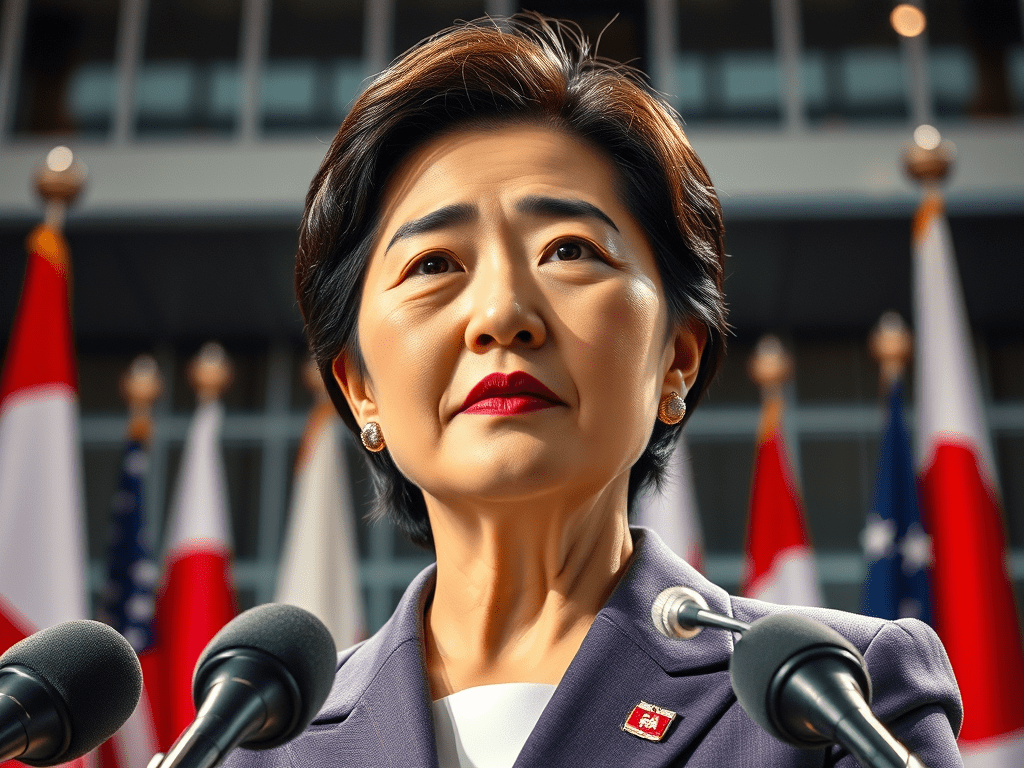
Japan’s Liberal Democratic Party has chosen Sanae Takaichi as its new leader, positioning her to become the nation’s first female prime minister at a critical juncture in global politics.
Former economic security minister Sanae Takaichi emerged victorious in the Liberal Democratic Party’s (LDP) leadership contest on October 4, 2025, putting her on course to become Japan’s first female prime minister. With President Trump’s visit to Japan looming, and the APEC summit in South Korea immediately following, Takaichi faces an unprecedented opportunity to redefine Japan’s international standing.
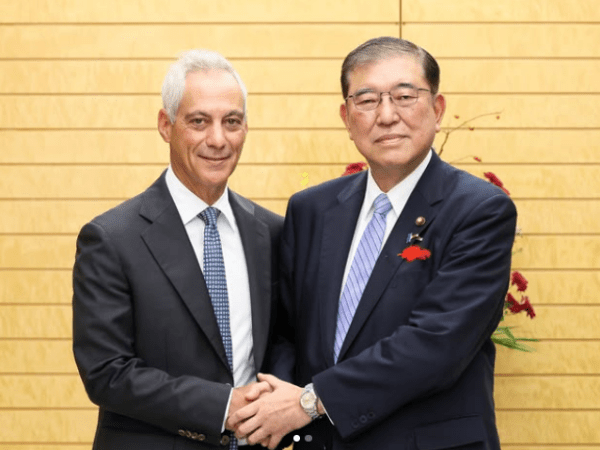
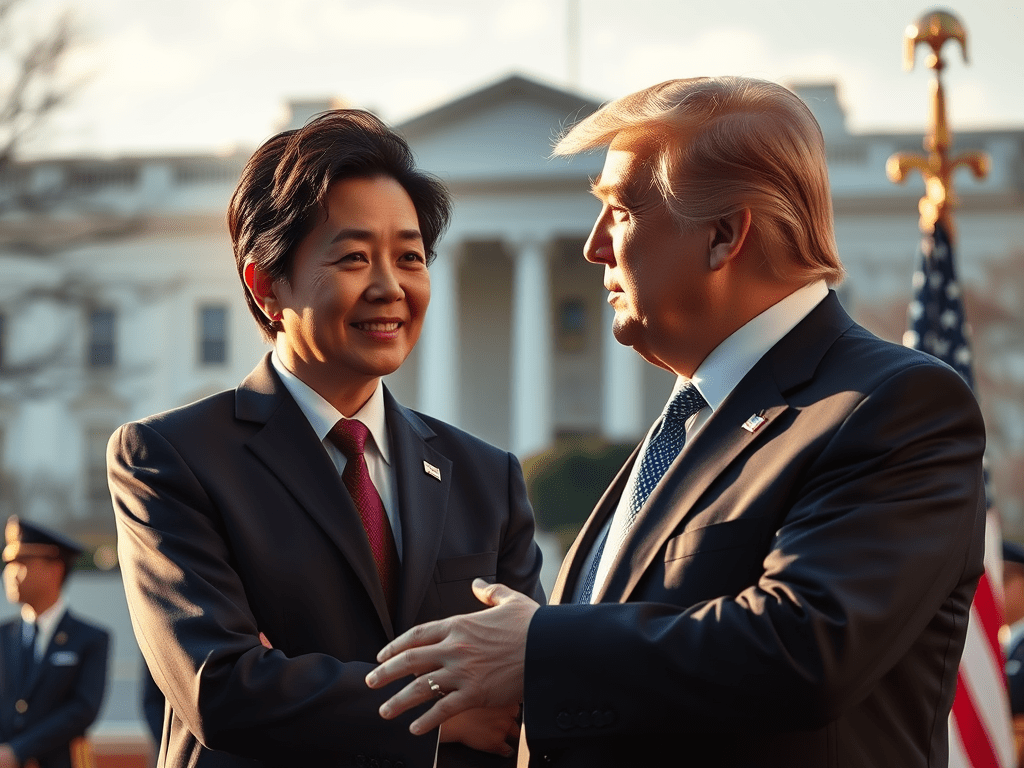
The timing could not be more fortuitous. The winner will soon face a diplomatic test. First, a summit with U.S. President Donald Trump, who could demand that Japan increase its defense spending or could see continuity between the late PM Abe Sinzo and Takaichi bringing associated good relations. A meeting is planned for October 27th, 2025. After that, Trump will travel to the Asia-Pacific Economic Cooperation (APEC) summit in South Korea starting Oct. 31. Unlike her predecessor Shigeru Ishiba, whose brief tenure saw Japan’s foreign policy credibility diminish and the U.S.-Japan alliance suffer strains, Takaichi can leverage her conservative credentials and strategic vision to forge a stronger partnership with the Trump administration.
That is good for Japan but it will also be welcomed by ASEAN countries, India, South Korea and many other states who view strong Japan-US relations important for regional stability and leadership.
An admirer of former British Prime Minister Margaret Thatcher, Takaichi is a protege of former Japanese Prime Minister Shinzo Abe’s conservative vision, positioning her uniquely to understand Trump’s transactional approach to alliances. Takaichi said ensuring the Japan-U.S. alliance is her top diplomatic priority. “It is essential to … confirm the reinforcement of the Japan-U.S. alliance,” she said. This clarity of purpose, combined with her willingness to increase defense spending and strengthen regional security frameworks, offers Trump exactly what he seeks from America’s allies.
As the late Prime Minister Abe’s protégé, Takaichi possesses a unique advantage in building rapport with Trump. Abe Shinzo was known as the Trump whisperer, his closest friend on the international stage, but that didn’t stop heavy tariffs on aluminum and steel products. Flattering, placating, and kowtowing only seem to spark escalating demands while defiance risks retaliation. However, Takaichi can leverage this inherited relationship differently. She will likely leverage their mutual regard for Abe, with whom Trump shared a particularly close rapport in his first term, to strengthen the alliance and bolster her diplomatic credibility.
Rather than simply following Abe’s playbook of personal chemistry, Takaichi should focus on substantive deliverables that align with Trump’s priorities. As a protégé of former Prime Minister Shinzo Abe, Takaichi presumably will try to build on his blueprint for Japanese strategy based on economic revitalization, enhanced defense capabilities, and strong ties with the United States and other like-minded countries.
Her immediate task will be to replicate the personal rapport Abe established with President Trump, who is expected to visit Japan during a swing through Asia at the end of October. Her connection with Abe and general alignment with his policies should help in that regard.
She might nudge Trump to develop a comprehensive agenda for defense cooperation, which was hijacked by bilateral trade negotiations and has not developed beyond a short joint statement Ishiba issued with Trump back in February. Trump could stress increased burden sharing from Japan, including the budget for covering costs related to the U.S. military presence in Japan (host-nation support), and Takaichi’s commitment to defense could be an asset to those discussions.
In defense production and strategy, Japan and the U.S. are already laying groundwork for revolutionary cooperation. Basically, the US will be working with Japan in a “bilateral chip technology partnership” in an effort to bolster manufacturing for 2nm chips as early as 2025.
This semiconductor alliance represents a perfect example of how Takaichi can deepen U.S.-Japan ties beyond traditional security arrangements. Japan’s support for its semiconductor sector is a “national project” designed to “ensure Japan remains strategically essential and strategically independent amid the conflict for technological hegemony between the United States and China.” This initiative involves investing 0.71% of Japan’s gross domestic product (GDP) (25.7 billion U.S. dollars or 3.9 trillion Japanese yen) between 2022 and 2025.
The semiconductor partnership demonstrates how defense cooperation extends into critical technology domains. The Japanese government’s new promotional effort in semiconductors involves financial support for other U.S.-Japan manufacturing collaborations in Japan.
The government is providing 46.5 billion yen ($320 million) to the U.S. firm Micron Technology, which owns and operates production facilities in Japan, to manufacture DRAMs. Micron established a manufacturing presence in Japan in 2012, when it purchased the bankrupt Japanese DRAM maker Elpida Memories.
Japanese government funding is reportedly being directed toward the expansion of a Micron fab in Hiroshima to make the company’s new high-capacity low-power 1-beta DRAM, the highest-density DRAM yet produced. Takaichi should present this collaboration as a model for future partnerships, emphasizing how joint investment in critical technologies serves both nations’ security interests.
The momentum behind South Korea-Japan rapprochement must continue, and Takaichi appears committed to this crucial bilateral relationship. She stressed the importance of their cooperation through three-way frameworks that also include regional partners such as South Korea, Australia and the Philippines, pledging Japan’s greater role in achieving a free and open Indo-Pacific. This trilateral approach with Washington and Seoul forms the backbone of regional security architecture against revisionist powers.
In a bold move that could reshape regional economics, Takaichi should seize the current visit of India’s Prime Minister Modi to advocate for India’s inclusion in APEC. As the world’s fifth-largest economy and a crucial counterweight to China, India’s membership would strengthen the organization’s relevance and provide Japan with another strategic partner in balancing Beijing’s influence.
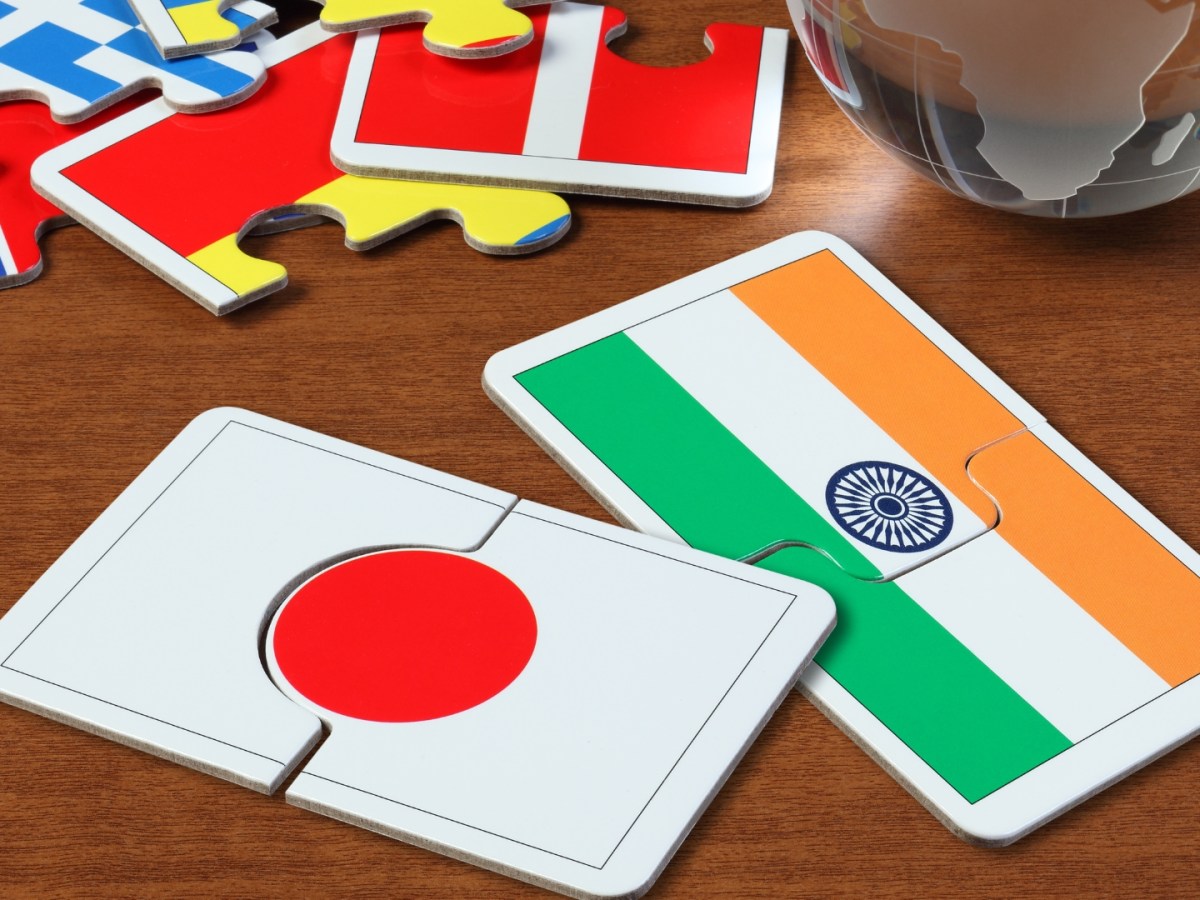
India represents a critical pillar in Japan’s Indo-Pacific strategy. Indian Defence Minister Rajnath Singh and Japanese Defense Minister Gen Nakatani met in New Delhi in May 2025 to discuss “the growing importance and necessity of enhancing cooperation,” Japan’s Defense Ministry stated.
They highlighted the importance of “protecting sea lines of communication aiming to ensure the security of sea lanes, which is vital for not only Japan and India but also for the region and international community.”
The nations, members of the Quadrilateral partnership with Australia and the United States, are concerned by China’s increasing assertiveness across the region. The nations, which elevated their ties to a Special Strategic and Global Partnership in 2014, also are cooperating in defense equipment and technology initiatives as each bolsters its defense manufacturing base. Projects include uncrewed ground vehicles and robotics, as well as Japan’s planned transfer to India of stealth antenna systems for naval vessels.
In China, Takaichi must navigate carefully while maintaining the principled stance established by her mentor Abe. She has taken strong positions on national security and regularly visits Yasukuni Shrine, which Japan’s neighbors view as controversial. Political watchers note that her historical perspectives may complicate ties with Beijing and Seoul. However, she must express willingness to engage Beijing constructively while investing in resilience and deterrence capabilities.
Rather than acting as an alarmist on China, Takaichi should work to build China literacy with President Trump about the complexity of the geopolitical and geoeconomic environment of the Indo-Pacific. Using her security credentials, she can communicate that reshaping the region to be decentered from China represents a better strategy than direct confrontation. This approach requires sophisticated understanding of regional dynamics and the ability to articulate how collective action by like-minded nations can create alternative centers of economic and strategic gravity.
Takaichi should emphasize how technological cooperation, particularly in semiconductors, serves as both an economic opportunity and a strategic imperative. The benefit of 2nm over, let’s say, 5nm chips used for the Apple M1 chips, is the reduced power consumption along with speedier processing. The report also says that the size of the chips can “determine the performance of military hardware as well, including fighter jets and missiles. In that light, 2nm chips are directly linked to national security.” By framing technological advancement as essential to both prosperity and security, she can appeal to Trump’s focus on American competitiveness while advancing Japan’s interests.
Her Taiwan position should be unambiguous. Japan supports a one-China policy as defined by Japan, and any reunification between mainland China and Taiwan must occur peacefully through mutual agreement. Takaichi has favored revising Japan’s pacifist postwar constitution and suggested this year that Japan could form a “quasi-security alliance” with Taiwan. While maintaining this principled stance, she must avoid provocative statements that could derail broader diplomatic objectives.
With APEC members from ASEAN, Canada, South America, and Oceania present at the summit, Takaichi needs to communicate that Japan remains committed to APEC principles while acknowledging the realities of disruptive trade practices in the global economy.
As Vina Nadjibulla of the Asia-Pacific Foundation, Canada argues, it has been China “that was the first mover in unsettling the global economic order—by pursuing an unbalanced, export-led growth model; subsidizing overcapacity in sectors such as steel, solar, batteries, and EVs; protecting its domestic market; manipulating its currency to boost exports; and leveraging state pressure and forced technology and intellectual-property transfers to move up the value chain.”
Domestically, real change demands addressing Japan’s demographic crisis, persistent inflation, and gender inequality. The next Liberal-Democratic Party leader will face such challenges as restoring political stability, addressing economic pressures, including inflation and a weakened yen, dealing with demographic decline. Forming strategic partnerships with Yuichiro Tamaki’s Democratic Party for the People to leverage technology in reducing governance costs represents a pragmatic start.
On foreign workers, the numbers tell their own story. More than 4 million foreign workers now legally reside in Japan, a number that continues growing as both the business federation and LDP recognize no viable alternative exists to address vast labor shortages across all economic sectors. Japan aligns with global trends on illegal migration while acknowledging that foreign labor remains inevitable, though an Australian-style immigration system is not.
Takaichi faces criticism before even assuming office. She would be wise to avoid self-inflicted wounds like repeated Yasukuni Shrine visits, inflammatory comments on Taiwan’s independence, or relitigating historical grievances about comfort women or Nanjing. “I have thrown away my own work-life balance and I will work, work, work,” Takaichi said in her victory speech. This work ethic should focus on improving economic conditions for businesses and ordinary Japanese residents, strengthening the U.S.-Japan alliance, and continuing investments in ASEAN, India, the EU, and other middle-power partnerships.
While the current U.S. administration certainly disrupts traditional diplomatic norms, Japan must remember that China initiated the unraveling of the global economic order through unfair trade practices and state-sponsored market manipulation. Takaichi’s response must be strategic engagement with Beijing while building resilience against economic coercion.
If elected prime minister, Takaichi said she would travel overseas more regularly than her predecessor to spread the word that “Japan is Back!” This message resonates beyond mere rhetoric. By embracing pragmatism over ideology, focusing on economic revitalization rather than historical grievances, and strengthening alliances while maintaining principled positions, Takaichi can become the transformative prime minister Japan needs. Her success will depend not on ideological purity but on pragmatic leadership that addresses both domestic challenges and international opportunities with equal vigor.
To become a long-serving prime minister with sustained influence, Takaichi must carefully navigate both opportunities and pitfalls that could define or derail her tenure. The opportunities are substantial. Japan’s economic recovery presents fertile ground for structural reforms that previous leaders have struggled to implement. With public support for addressing demographic challenges at an all-time high, she can champion innovative solutions including AI-driven productivity enhancements, flexible immigration frameworks tailored to specific sectors, and workplace reforms that genuinely advance women’s economic participation—not merely as rhetoric but as economic necessity.
Her conservative credentials paradoxically provide political cover for pragmatic compromises. Where progressive leaders might face resistance, Takaichi can leverage her support base to pursue necessary but unpopular reforms, much as Nixon went to China. The current geopolitical realignment offers Japan unprecedented leverage to shape regional architecture, positioning itself as the indispensable bridge between American interests and Asian realities.
However, the pitfalls are equally significant. Historical revisionism remains her Achilles’ heel. Each Yasukuni visit or inflammatory statement about wartime history not only damages regional relationships but undermines Japan’s soft power and moral authority precisely when it needs them most. The temptation to appease her nationalist base through symbolic gestures must be resisted in favor of substantive policy achievements.
Ideological rigidity poses another danger. The world’s fifth-largest economy requires flexible, evidence-based policymaking, not doctrine. Success demands coalition-building across party lines, engaging pragmatic opposition voices, and avoiding the polarization that has shortened many Japanese premierships. Her gender offers historic symbolism, but tokenism without substantive reform would squander this opportunity.
Ultimately, Takaichi’s longevity will depend on delivering tangible improvements to Japanese living standards while maintaining regional stability. By prioritizing economic revitalization over historical grievances, building inclusive coalitions over ideological purity, and demonstrating that conservative principles can adapt to 21st-century realities, she can transcend the revolving door of Japanese politics and emerge as a transformative leader for a pivotal era.
This analysis was first published on October 17, 2025, at the World Geostrategic Insights.












![[The Reality of Middle Power] US and China: “Superpowers” and “Multiple Weak Powers” on Fuji BS’ Prime NEWS](https://nagystephen.com/wp-content/uploads/2026/03/image-7.png?w=1024)
 nagystephen.com
Leave a comment