
When senior American officials visit Tokyo, their briefing materials likely reflect a fundamental split in how Western experts interpret Japan.
This divide between scholars trained during the Cold War and those who entered the field after 2000 profoundly shapes policy debates about America’s most important Asian ally.
Understanding this analytical schism is crucial as Japan navigates constitutional reform, regional security challenges, and potential leadership transitions. The roots of this divide trace to the formative experiences of different scholarly generations.
Japanologists trained between the 1970s and 1990s studied under professors who witnessed Japan’s wartime aggression and postwar transformation. This historical context created an analytical framework emphasizing vigilance against militaristic revival. When these scholars examine contemporary Japanese politics, they often see echoes of the 1930s where others might see normal democratic evolution.
Consider how different generations interpret Japan’s recent defense policy changes embodied in the 2022 National Security Strategy (NSS). When Tokyo announced plans to increase defense spending to 2% of GDP by 2027, many scholars and commentators from the older cohort expressed concern about abandoning pacifism.
Gerald Curtis of Columbia University, a veteran and esteemed Japan watcher, has consistently warned about the risks of Japan’s changing security posture.
Kenneth Pyle has written extensively about Japan’s struggle with its national identity and the tensions between pacifism and realism. Yet this spending level remains below the NATO target, and Japan would still allocate less to defense than South Korea, Australia, or most European democracies.
Younger analysts like Adam Liff at Indiana University contextualize this increase against China’s military budget growing from approximately $70 billion in 2004 to over $300 billion today, while Japan’s remained essentially flat until recently. This generational lens particularly colors interpretations of Japanese conservative politics.
Older scholars express alarm about organizations like Nippon Kaigi. Jeff Kingston at Temple University has written critically about the organization’s influence on Japanese politics.
Conversely, my own research has found that while Nippon Kaigi includes many conservative politicians, characterizing it as controlling Japanese democracy oversimplifies the LDP’s complex factional dynamics and diverse policy debates.
The historical memory debate exemplifies these competing frameworks. When Prime Minister Abe visited Yasukuni Shrine in 2013, scholars like Alexis Dudden strongly condemned it as historical revisionism.
Korean scholars including Park Cheol-hee of Seoul National University expressed deep concern about Japan’s historical trajectory. Yet when Abe issued Japan’s comprehensive acknowledgment of wartime responsibility on the 70th anniversary of WWII’s end explicitly recognizing “aggression,” “colonial rule,” and offering “heartfelt apology” younger scholars like Mireya Solís at Brookings noted that this reflected a more nuanced approach to historical reconciliation.
Japanese scholars themselves reflect this divide. Older academics tend to be more skeptical of constitutional revision, viewing it through the lens of Japan’s militaristic past.
In contrast, younger Japanese scholars like Yoko Iwama at the National Graduate Institute for Policy Studies view constitutional reform as necessary adaptation to regional security threats. They argue that Japan’s evolving security posture reflects democratic deliberation rather than authoritarian manipulation.
This analytical divide extends to assessments of Japanese democracy itself. The older generation often portrays Japan’s political system as fundamentally dysfunctional, citing the LDP’s near-continuous rule since 1955 as evidence. The party was out of power only during 1993-1996 and 2009-2012. T.J. Pempel and others have written about structural issues in Japanese democracy. Yet younger analysts point out that the LDP has maintained power primarily through winning elections and adapting to voter preferences, suggesting a functioning if imperfect democracy.
Chinese scholars also reflect generational differences. Older scholars often view Japan’s security evolution through the lens of historical militarism, while younger Chinese academics increasingly analyze Japan’s policies through contemporary security frameworks. This shift is evident in recent Chinese academic conferences where younger scholars present more nuanced views of Japan’s security policies.
The practical implications became clear during alliance negotiations over collective self-defense. Different interpretations of Japan’s constitutional constraints created friction between those viewing changes as dangerous precedents and those seeing necessary modernization.
The recent events highlight these divisions such as Komeito’s departure from the ruling coalition in October 2025 has been interpreted differently across generations. Older scholars see democratic crisis and potential collapse of the LDP, while younger analysts view it as normal political realignment.
Younger scholars bring perspectives shaped by Japan’s constructive post-Cold War role. They’ve observed Japanese peacekeepers in Cambodia, disaster relief efforts, and extensive development assistance. When analyzing constitutional revision, they see rational responses to North Korean nuclear weapons and Chinese military modernization rather than militaristic revival.
Some younger Korean scholars increasingly view Japan as a necessary security partner despite historical grievances. Even the former President Yoon Suk-yul voiced the view that Japan’s security build up is a natural byproduct of the increasingly severe security environment.
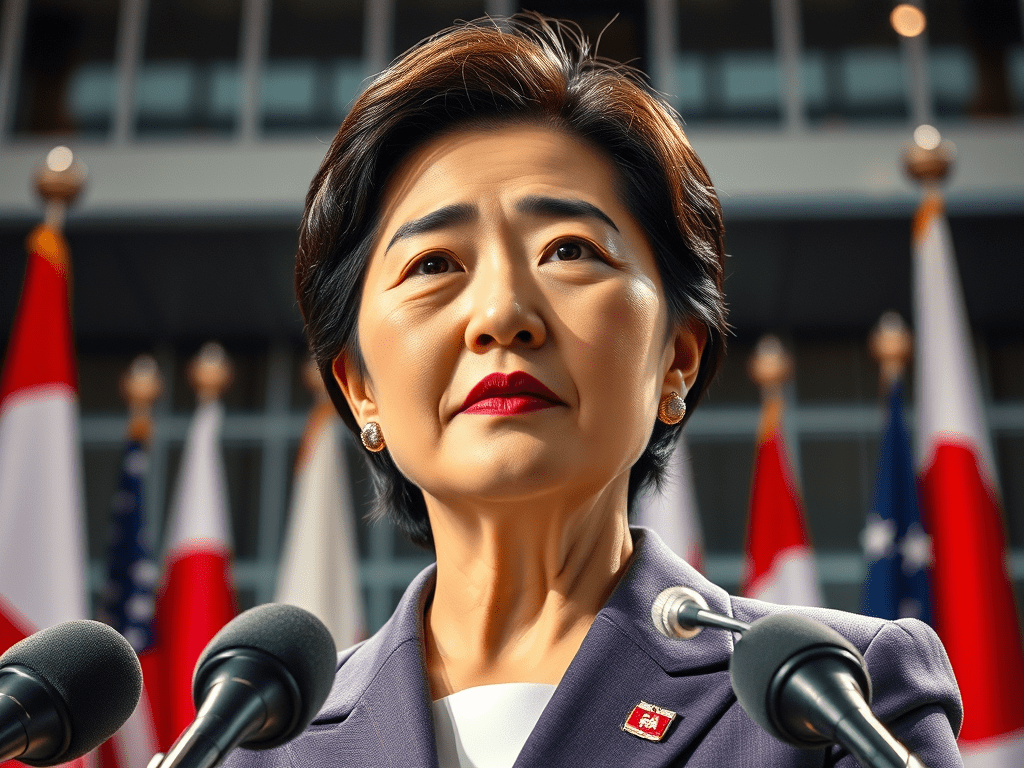
This generation interprets political figures through contemporary rather than historical lenses. While older scholars focus on Takaichi Sanae’s conservative associations and visits to Yasukuni, younger analysts emphasize her potential as Japan’s first female prime minister and her concrete policy proposals on economic security and demographic challenges.
The evidence increasingly supports more nuanced interpretations. Japan maintains relatively low defense spending. Constitutional revision proposals focus primarily on clarifying the Self-Defense Forces’ legal status.
Public opinion consistently shows Japanese opposition to nuclear weapons and offensive capabilities while supporting legitimate defense needs.
Mainstream Japanese society has largely internalized historical responsibility through education, museums, and public discourse. More could be done but we must recognize a democratic society has many views unlike one party states that force a single narrative for political purposes.
This doesn’t mean abandoning all concerns. Japan faces real challenges requiring careful analysis. Demographic decline, economic stagnation, gender inequality and regional tensions are serious. But analyzing these through outdated frameworks of inevitable militaristic revival or democratic dysfunction obscures rather than clarifies. As one Japanese diplomat recently observed, some Western analysis seems frozen in time, unable to recognize how Japan has evolved.
For policymakers navigating this divide, the challenge is determining which analytical framework better explains current realities. When every defense reform is interpreted as militarism or every conservative electoral victory as democratic failure, ideological commitments may be overriding empirical observation.
As Japan faces mounting regional challenges and potential leadership transitions, accurate understanding based on contemporary evidence rather than historical analogies becomes essential. The generational divide in Japanese studies will persist, but policy decisions must reflect current realities, not the ghosts of the past.
This article was first published on October 14, 2025, at the World Geostrategic Insights.














![[The Reality of Middle Power] US and China: “Superpowers” and “Multiple Weak Powers” on Fuji BS’ Prime NEWS](https://nagystephen.com/wp-content/uploads/2026/03/image-7.png?w=1024)
 nagystephen.com
Leave a comment