
The unraveling of the 26-year coalition between Japan’s Liberal Democratic Party and Komeito represents more than a routine political realignment. It exposes the fundamental weakness plaguing Japanese democracy: It has an opposition ecosystem that prioritizes blocking conservative leadership over advancing coherent policy alternatives.
As Sanae Takaichi positions herself for the prime ministership, the emerging opposition coalition threatens to return the country to the revolving-door leadership that squandered the nation’s potential throughout the “lost decades” characterized by deflation and low growth since the early 1990s.
Meanwhile, Japan has struggled to translate its economic weight into strategic influence. Komeito’s departure from the ruling coalition illuminates why. For over a quarter-century, this Buddhist-affiliated party acted less as a governing partner than as an institutional brake on decisive policymaking.
While Japan faced demographic collapse, wage stagnation and an increasingly assertive China, Komeito fixated on symbolic issues such as Yasukuni Shrine visits, constitutional revision debates and performative gestures toward multiculturalism and social integration of foreign nationals while actively diluting policies addressing existential threats.
The numbers tell the story. During Komeito’s coalition tenure, Japan’s working-age population shrank by 13 million. Real wages remained essentially flat for three decades.
According to the Stockholm International Peace Research Institute, China’s military budget grew from one-third to more than four times Japan’s defense spending. Yet throughout this period, Komeito consistently opposed meaningful reforms to address these challenges, preferring to maintain what one senior Ministry of Economy, Trade and Industry official privately described to me as a “veto without vision” approach to governance.
Komeito’s accommodationist stance toward Beijing in particular undermined Japan’s security interests. While informed LDP security specialists pushed for enhanced deterrence capabilities and deeper U.S. alliance integration, Komeito advocated for “dialogue” and “mutual understanding” — diplomatic niceties that Beijing interpreted as weakness. The party’s resistance to defense spending increases, opposition to collective self-defense legislation and insistence on maintaining extensive economic ties despite mounting security concerns effectively gave China a vote in Japanese security policy.
Now, as Komeito pivots toward joining a hodgepodge opposition alliance with the Constitutional Democratic Party of Japan and potentially Yuichiro Tamaki’s Democratic Party for the People (DPP), we must ask: What exactly does this coalition propose to do differently?
Having watched numerous CDP policy briefings and reviewed their platforms, the answer remains frustratingly vague. Beyond opposing constitutional revision and promising to “protect democracy” (by the way, Japan has regular elections, peaceful transfers of power and robust rule-of-law), their economic proposals amount to repackaged spending promises without funding mechanisms and their security policies oscillate between naive pacifism and tactical ambiguity.
The CDP traces its roots to the Democratic Party of Japan, which briefly held power from 2009 to 2012 — a period that offers little reassurance. Their mishandling of the Fukushima crisis, diplomatic fumbles with Washington, and economic policy confusion contributed to Japan’s continued stagnation. Senior bureaucrats I’ve interviewed from that era uniformly describe the DPJ as unprepared for governance, more comfortable in perpetual opposition than wielding executive authority.
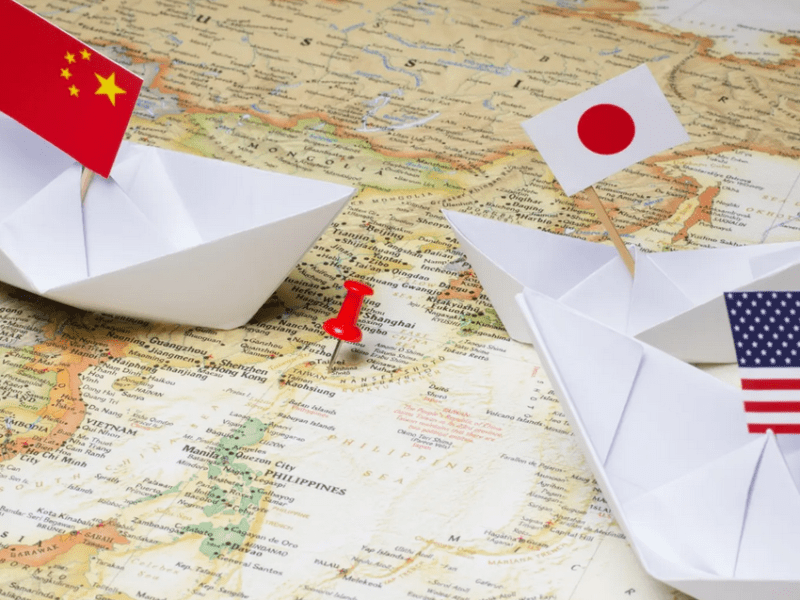
The proposed opposition coalition’s timing couldn’t be worse for Japan’s national interests. As U.S.-China competition intensifies, Taiwan tensions escalate and North Korea advances its nuclear capabilities, Japan needs stable, strategic leadership. The global economic headwinds, including persistent inflation to supply-chain vulnerabilities, require coherent industrial policy, not political paralysis. Yet this opposition alliance promises precisely the kind of weak, consensus-seeking government that international partners have learned to work around rather than with.
Consider the coalition’s inherent contradictions. The DPP advocates for aggressive fiscal stimulus and tax cuts. Komeito traditionally supports fiscal restraint and expanded welfare spending (please explain to me how you can do this). The CDP wants to phase out nuclear power while somehow achieving carbon neutrality. How would these parties reconcile such fundamental disagreements? The likely answer is they wouldn’t. Instead, Japan would face policy gridlock punctuated by lowest-common-denominator compromises that satisfy no one and solve nothing.
Takaichi, whatever her limitations, at least offers policy clarity. Her economic security agenda addresses real vulnerabilities in Japan’s supply chains and sea lines of communication. Her defense proposals realistically acknowledge the changed security environment. Her approach to China resonates with her mentor, former Prime Minister Abe Shinzo — firm but not needlessly provocative, reflecting strategic realism rather than wishful thinking. Most importantly, she understands that Japan’s demographic crisis requires immediate, dramatic action, not incremental tinkering.
The path forward requires building a different coalition. It should be based on shared policy objectives rather than simple opposition to conservative leadership. Nippon Ishin no Kai and elements of the DPP could provide Takaichi with partners willing to support necessary but politically difficult reforms. Both parties have demonstrated pragmatism on defense issues and economic revitalization. Unlike Komeito, they recognize that Japan’s strategic challenges require strategic responses, not moral posturing.
International observers often express puzzlement at Japan’s political dysfunction. How can a nation with such sophisticated businesses, technology and human capital produce such mediocre political leadership? The answer lies partly in an opposition culture that prioritizes ideological purity and procedural obstruction over practical governance. Also, an almost religious approach to consensus making results in public policy that embodies what rational-choice theory describes as policies “of the lowest common denominator,” a euphemism for doing something of little substance.
The emerging anti-Takaichi coalition represents this tendency at its worst: a marriage of convenience united only by what it opposes, lacking any coherent vision for what it supports.
Japan cannot afford another period of revolving-door prime ministers. The 2006-2012 era, when the country cycled through six leaders in six years, devastated Japan’s international credibility and policy continuity. As one Southeast Asian foreign minister told me then, “We stopped taking Japanese initiatives seriously because we knew the next prime minister would reverse them.” Prime Minister Abe did much to reverse this during his tenure, however the proposed opposition coalition virtually guarantees a return to such instability.
The tragedy is that Japan possesses all the elements necessary for national renewal including technological prowess, an educated workforce, substantial financial resources and strong alliances. What it lacks is political leadership capable of mobilizing these assets toward coherent objectives. Komeito’s 26-year coalition tenure demonstrates how junior partners can paralyze governance through principled obstructionism. The emerging opposition coalition threatens to institutionalize such paralysis.
As Japan faces its most challenging security environment since 1945 and deepening economic headwinds, the luxury of ineffective governance has expired. The question isn’t whether Takaichi represents ideal leadership, it’s whether Japan can afford another coalition defined by what it prevents rather than what it achieves. History suggests the answer is no.
This article was first published on October 15, 2025, at The Japan Times.














![[The Reality of Middle Power] US and China: “Superpowers” and “Multiple Weak Powers” on Fuji BS’ Prime NEWS](https://nagystephen.com/wp-content/uploads/2026/03/image-7.png?w=1024)
 nagystephen.com
Leave a comment