
Former economic security minister Sanae Takaichi emerged victorious in the Liberal Democratic Party leadership contest Saturday, putting her on course to become Japan’s first female prime minister and providing her with an unprecedented opportunity to redefine the country’s international standing.
With U.S. President Donald Trump’s planned visit to Japan in late October and the Asia-Pacific Economic Cooperation summit in South Korea immediately afterward, Takaichi’s arrival on the international scene could not have come at a more crucial time. She will soon face several key diplomatic tests.
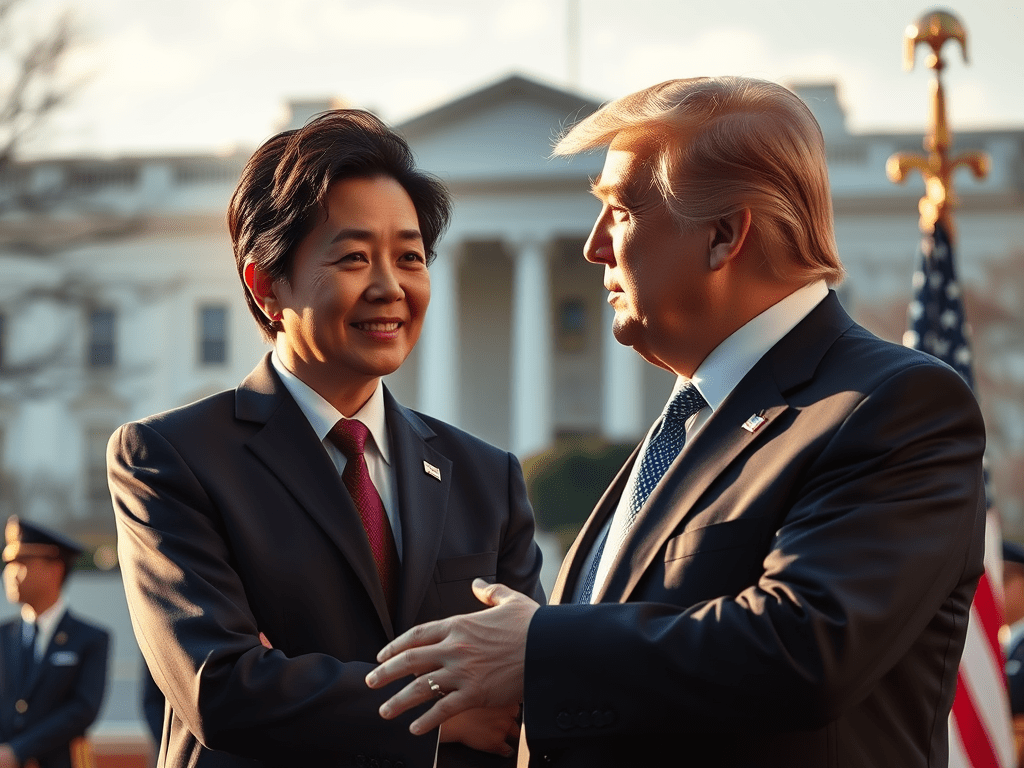
First, will be the summit with Trump, who could demand that Japan increase its defense spending or attempt to strike up a friendship with Takaichi as the protege of the late Prime Minister Shinzo Abe, with whom he had a good relationship.
Immediately following the Tokyo summit, Trump will arrive at the APEC summit in South Korea. Unlike her predecessor, Prime Minister Shigeru Ishiba, whose brief tenure saw Japan’s foreign-policy credibility diminish and the U.S.-Japan alliance suffer strains, Takaichi can leverage her conservative credentials and strategic vision to forge a stronger partnership with the American administration.
An admirer of former British Prime Minister Margaret Thatcher, Takaichi is an adherent to Abe’s pragmatic yet conservative vision, positioning her to better understand and perhaps respond to Trump’s transactional approach to alliances. Takaichi has made it clear that strengthening the Japan-U.S. alliance is her top diplomatic priority, calling it “essential.”
This clarity of purpose, combined with her willingness to increase defense spending and strengthen regional security frameworks, offers Trump exactly what he seeks from America’s allies, which may go a long way toward better relations.
Meanwhile, the momentum behind South Korea-Japan rapprochement must continue and Takaichi appears committed to this vital bilateral relationship. She’s stressed the importance of their cooperation through three-way frameworks that also include regional partners such as South Korea, Australia and the Philippines, pledging a greater role for Japan in achieving a free and open Indo-Pacific. Indeed, she’s long understood that a trilateral approach with Washington and Seoul forms the backbone of regional security architecture against revisionist powers.
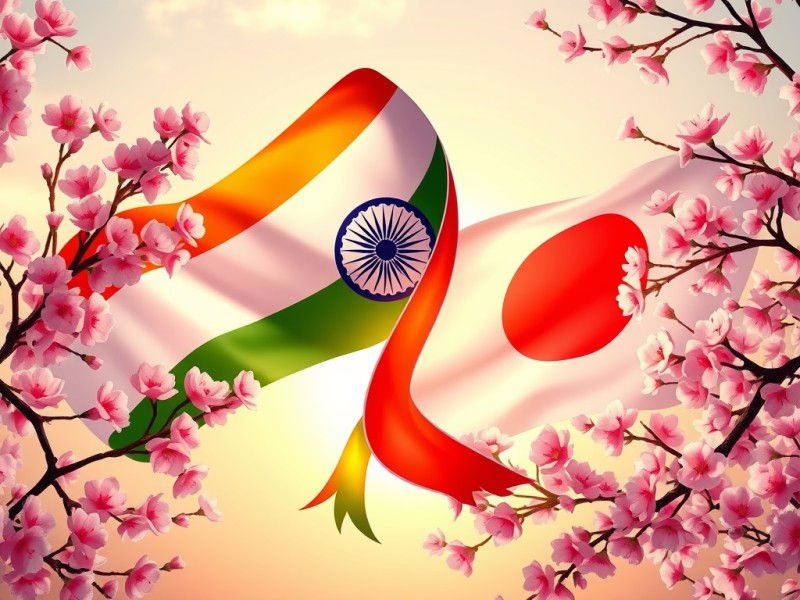
In a bold move that could reshape regional economics, Takaichi should recognize the fact that Indian Prime Minister Narendra Modi chose not to attend last month’s so-called Peace Parade in Beijing marking the end of World War II — reportedly out of consideration for Tokyo and concerns over sustaining “the Quad” cooperative framework, which comprises India, Japan, the U.S. and Australia.
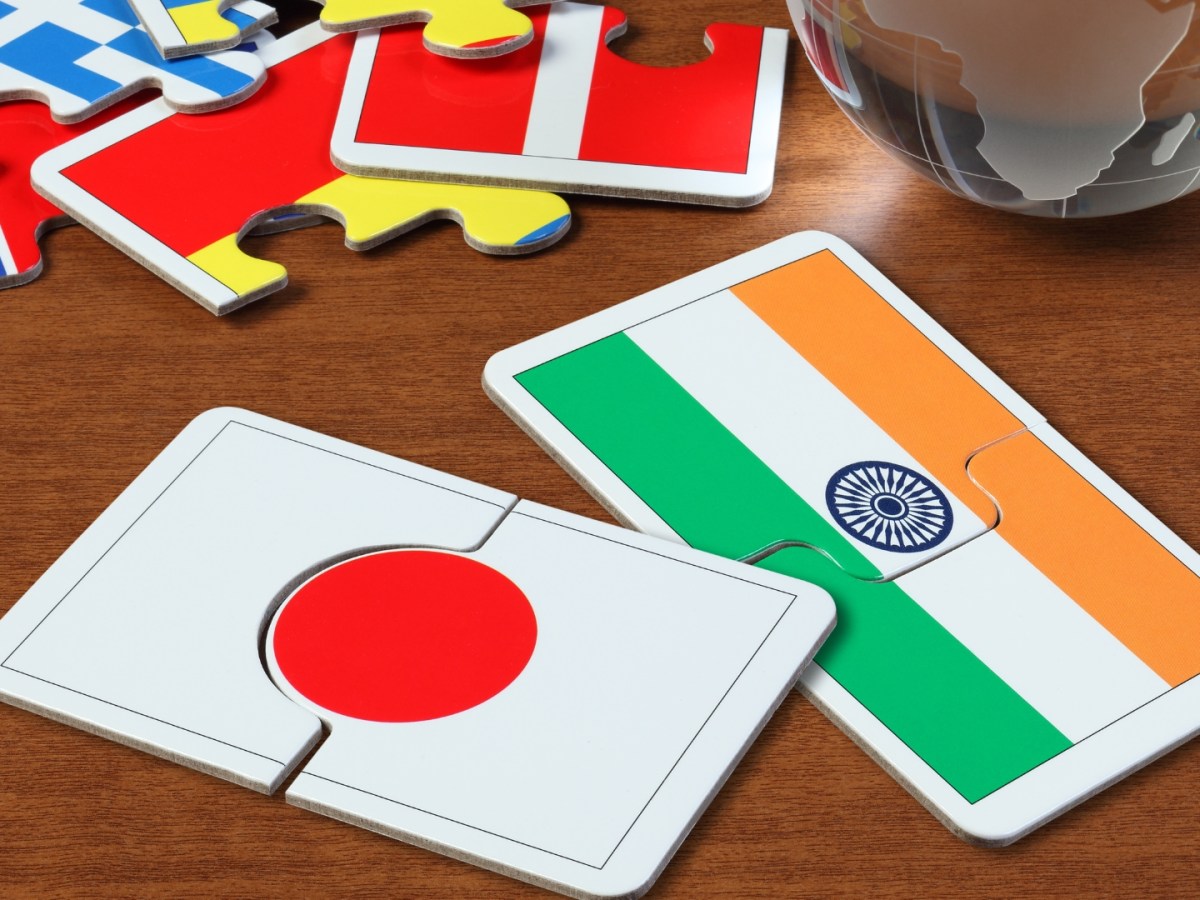
Takaichi should use her arrival on the international scene and political momentum to advocate for India’s inclusion in APEC. As the world’s fifth-largest economy and a crucial counterweight to China, India’s membership would strengthen the organization’s relevance and provide Japan with another strategic partner in balancing Beijing’s influence.
On China, Takaichi must navigate carefully while maintaining the principled stance established by her mentor, Abe. In some quarters, she is seen as a wartime history revisionist and China hawk. She regularly visits Yasukuni Shrine, which some of Japan’s neighbors consider a symbol of militarism. And she has said she will continue to visit the shrine as prime minister. Her views on these matters could complicate ties with Beijing and Seoul. But more importantly, as prime minister, she must make clear her willingness to engage Beijing constructively while actively working to increase Japan’s resilience and deterrence capabilities.
Her Taiwan position should be unambiguous. Japan supports a one-China policy as defined by Japan not the Chinese Communist Party, and any unification between mainland China and Taiwan must occur peacefully through mutual agreement. Takaichi also favors revising the nation’s pacifist postwar Constitution and suggested this year that Japan could form a “quasi-security alliance” with Taiwan. While maintaining this principled stance, she must avoid provocative statements that could derail broader diplomatic objectives.
With members from ASEAN, Canada, South America and Oceania present at the APEC summit next month, Takaichi needs to communicate that Japan remains committed to the Asia-Pacific forum’s principles while acknowledging the realities of disruptive trade practices in the global economy.
As Vina Nadjibulla of the Asia-Pacific Foundation of Canada has argued, China “was the first mover in unsettling the global economic order — by pursuing an unbalanced, export-led growth model; subsidizing overcapacity in sectors such as steel, solar, batteries and EVs; protecting its domestic market; manipulating its currency to boost exports; and leveraging state pressure and forced technology and intellectual-property transfers to move up the value chain.”
Domestically, real change demands addressing Japan’s demographic crisis, persistent inflation and gender inequality. The next prime minister will face such challenges as restoring political stability; addressing mounting economic pressures, including inflation and a weakened yen; as well as demographic decline.
On workers from overseas in Japan, the numbers tell their own story. More than 4 million working foreign nationals now legally reside in Japan, a number that continues growing as both the business federation and LDP recognize no viable alternative exists to address vast labor shortages across all economic sectors. Japan aligns with global trends on illegal immigration while acknowledging that foreign labor remains inevitable, though an Australian-style “points-based” immigration system is not.
Not surprisingly, Takaichi faces strong headwinds even before assuming office. She would be wise to avoid self-inflicted wounds like repeated Yasukuni visits, inflammatory comments on Taiwan’s independence or relitigating historical grievances about”comfort women,”women who suffered under Japan’s military brothel system before and during World War IIor the Japanese Imperial Army’s actions in Nanjing, China. “I have thrown away my own work-life balance and I will work, work, work,” Takaichi said in her victory speech. This work ethic should focus on improving economic conditions for businesses and ordinary residents, strengthening the U.S.-Japan alliance and continuing investments in ASEAN, India, the EU, and other middle-power partnerships. She should expect the same of all members of her party and the government.
A final suggestion for the incoming prime minister: While the current U.S. administration certainly disrupts traditional diplomatic norms, Japan must remember that China initiated the unraveling of the global economic order through unfair trade practices and state-sponsored market manipulation. Takaichi’s response must be strategic engagement with Beijing while resisting economic coercion with the help of the U.S. and other strategic partners.
As prime minister, Takaichi said she would travel overseas more regularly than her predecessor to spread the word that “Japan is back!” This message resonates beyond mere rhetoric: by embracing pragmatism over ideology, focusing on economic revitalization rather than historical grievances and strengthening alliances while maintaining principled positions. Takaichi can become the transformative prime minister Japan needs. Her success will depend not on ideological purity but on pragmatic leadership that addresses both domestic challenges and international opportunities with equal vigor.
This article was first published on October 8, 2025, at The Japan Times.









![[The Reality of Middle Power] US and China: “Superpowers” and “Multiple Weak Powers” on Fuji BS’ Prime NEWS](https://nagystephen.com/wp-content/uploads/2026/03/image-7.png?w=1024)
 nagystephen.com
Leave a comment