
Prime Minister Ishiba Shigeru’s decision to remain in office following his coalition’s historic electoral rebuke risks plunging Japan back into the debilitating cycle of revolving-door leadership that weakened the nation’s international standing for nearly a decade.
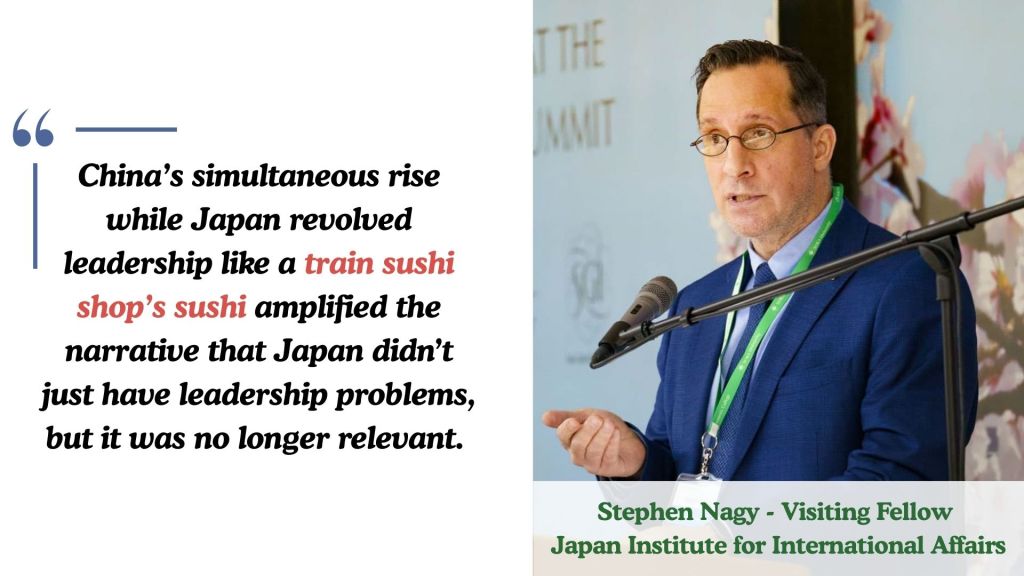
The parallels to Japan’s “lost political decade” are unmistakable. Between Prime Minister Koizumi Junichiro’s departure in 2006 and Abe Shinzo’s return to power in 2012, Japan cycled through six prime ministers in as many years. During private diplomatic gatherings in that era, foreign leaders would jest with barely concealed disdain that they needn’t bother memorizing the Japanese prime minister’s name, as a new face would inevitably appear at the next summit. Such mockery reflected a harsh reality that Japan’s influence in international forums had diminished to the point where it struggled to advance even its most vital interests.
Prime Minister Ishiba’s Liberal Democratic Party and its coalition partner Komeito have just suffered their worst electoral performance since 2009, losing their parliamentary majority for the first time in 15 years. This verdict from Japanese voters could not be clearer. Yet rather than heeding this democratic rebuke, Ishiba appears determined to cobble together a minority government, setting the stage for precisely the kind of political instability that Japan can least afford in today’s precarious geopolitical environment.
The international implications of Japan’s potential return to political instability extend far beyond diplomatic protocol. During my recent consultations with senior officials across the Indo-Pacific, a consistent concern emerged that Japan’s internal political turmoil could create openings for strategic competitors to exploit. Beijing and Moscow have already demonstrated sophisticated capabilities in what intelligence communities term “wedge politics”, systematic efforts to fracture alliances and partnerships during periods of political transition.
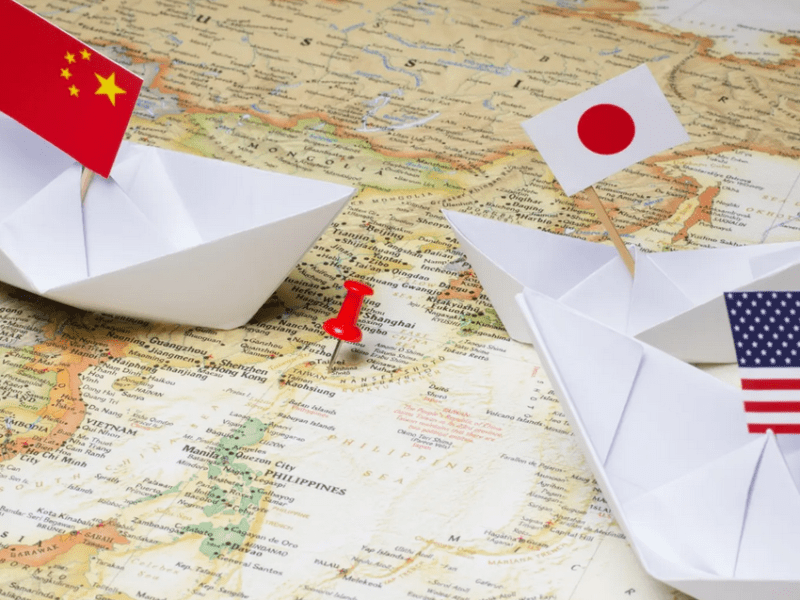
China’s approach is particularly concerning. During Japan’s previous period of political instability, Beijing successfully advanced territorial claims in the East China Sea while Tokyo’s attention was consumed by domestic political maneuvering. Today, with an even more assertive China and the added complexity of potential shifts in U.S. leadership, the risks are exponentially greater. Chinese state media and diplomatic channels have already begun amplifying narratives designed to create distance between Japan and its allies, particularly emphasizing themes of American and Trump unpredictability and the dangers of over-dependence on Washington.
Russia, despite its current preoccupation with Ukraine, maintains active information operations targeting Japanese public opinion. These campaigns, which scholars such as Jean-Christophe Boucher, an Associate Professor at the School of Public Policy and at the Department of Political Science at the University of Calgary, has tracked extensively, exploit political uncertainty to advance false narratives about everything from energy security to historical grievances. The goal is not necessarily to win Japanese support for Russian positions but to create sufficient confusion and doubt that coherent policymaking becomes impossible.
North Korea, too, watches Japan’s political stability with keen interest. Pyongyang has consistently timed its most provocative actions—missile tests, nuclear developments, abduction issue manipulations—to coincide with periods of Japanese political weakness. A return to revolving-door premierships would likely embolden Kim Jong Un’s regime to escalate tensions, calculating that a politically weakened Japan would struggle to respond effectively.
The domestic challenges facing Japan demand sustained, coherent leadership that can implement long-term solutions rather than short-term political fixes. Consider the interconnected crises of stagnant wages and persistent inflation—a toxic combination eroding middle-class stability. Addressing this requires not just monetary policy adjustments but comprehensive labor market reforms, corporate governance changes, and strategic investments in productivity enhancement. Such reforms typically require years to implement and even longer to show results. How can any administration pursue such policies knowing it may not survive beyond the next no-confidence vote?
Japan’s demographic crisis similarly demands political continuity. With the world’s most rapidly aging society and a birthrate that recently fell below 1.3, Japan needs bold, sustained policies that go beyond incremental adjustments. This includes smart changes to immigration policy, comprehensive support for working families, and fundamental reimagining of elder care systems. These societally transformative policies require the kind of political capital that only comes from stable, legitimate governance.
Gender inequality—where Japan ranks 125th globally despite being the world’s third-largest economy—represents another challenge requiring sustained political commitment. Ishiba’s efforts to increase the number of public toilets are needed but laughable. Meaningful progress demands not just legislative changes but cultural transformation in corporate practices, educational systems, and social norms. Previous attempts at reform have consistently faltered during periods of political instability, as successive short-term administrations prioritized immediate political survival over long-term social change.
The Japan-U.S. alliance, the cornerstone of Japanese security for seven decades, faces unprecedented challenges that demand steady leadership. With potential changes in U.S. administration and evolving American strategic priorities, Japan needs a prime minister who can build personal relationships with U.S. leaders, navigate complex alliance management issues, and articulate a compelling vision for the partnership’s future. The alliance’s strength has always depended on personal chemistry between leaders—something impossible to develop with constantly changing Japanese leadership.
Prime Minister Ishiba undoubtedly entered office with sincere intentions to address these challenges. His policy proposals on defense modernization, economic revitalization, and regional diplomacy reflect serious thought and genuine commitment to Japan’s interests. However, good intentions cannot overcome political mathematics. Leading without a parliamentary majority, facing internal party dissent, and lacking public mandate, Ishiba cannot provide the stable leadership Japan desperately needs.
The path forward is clear, though politically painful. Prime Minister Ishiba should recognize that his highest service to Japan would be facilitating a transition to stable coalition leadership with clear parliamentary support. This need not mean political chaos. Japan’s political parties have matured considerably since the revolving-door era. A grand coalition incorporating elements from across the political spectrum—potentially including the Constitutional Democratic Party and other opposition forces—could provide the stability needed to address Japan’s challenges.
Such a coalition should prioritize several immediate actions:
First, establish a minimum four-year governing compact with agreed policy priorities, preventing the short-termism that plagued previous weak governments.
Second, implement emergency measures to address cost-of-living pressures while developing longer-term productivity and wage growth strategies.
Third, launch a comprehensive demographic response plan with bipartisan support, ensuring continuity regardless of future political changes.
Fourth, strengthen alliance management mechanisms, including establishing a permanent high-level channel with Washington that transcends individual leadership changes.
Japan stands at a critical juncture. It can either slide back into the political instability that diminished its international influence and domestic dynamism, or it can choose the harder but necessary path of stable, legitimate governance. Prime Minister Ishiba’s resignation would not represent failure but rather statesmanship—recognizing that Japan’s needs transcend any individual’s political ambitions.
Having witnessed Japan’s remarkable resilience through multiple crises, I remain optimistic about its future. But that optimism depends on Japanese leaders making difficult choices today to ensure stable governance tomorrow. The alternative—another period of revolving-door leadership while China rises, demographics worsen, and alliances strain—is a luxury Japan simply cannot afford.
The world needs a stable, confident Japan as a pillar of the liberal international order. Prime Minister Ishiba can best serve that need by stepping aside and enabling the formation of a government with the legitimacy and longevity to lead Japan through the challenging years ahead.
(The views expressed in this article belong only to the author and do not necessarily reflect the views of World Geostrategic Insights).









![[The Reality of Middle Power] US and China: “Superpowers” and “Multiple Weak Powers” on Fuji BS’ Prime NEWS](https://nagystephen.com/wp-content/uploads/2026/03/image-7.png?w=1024)
 nagystephen.com
Leave a comment