
As Washington reels from last week’s shooting of conservative influencer Charlie Kirk in Utah and signals a possible retreat to the Western Hemisphere, America’s Indo-Pacific allies face an uncomfortable reality: The region’s two largest democracies, Japan and India, can either step up to keep the U.S. engaged or watch China methodically fill the vacuum (which it is already doing gleefully).
But here’s the strategic jujitsu: Rather than begging Washington to stay, Tokyo and New Delhi hold the cards to make U.S. engagement irresistible.
The math is brutal. Neither Japan nor India possesses the military heft to counter China independently. Europe, despite recent overtures, lacks the naval assets to project power past the Suez. As Ashley Tellis noted in Foreign Affairs, there’s simply no substitute for American carrier strike groups in the Indo-Pacific. Yet passive dependence on U.S. goodwill is a losing strategy, especially as domestic crises compete for Washington’s attention.
Alternatives? Create partnerships so commercially attractive, affordable and strategically valuable that walking away becomes unthinkable, even for an administration focused on “America First.”
Start with energy. India’s Russian oil imports have jumped from less than 2% to nearly 40% of total consumption since the Ukraine invasion became a diplomatic headache for Washington.
Japan and India could see opportunity where others see crisis. Japanese companies like Mitsubishi already hold substantial stakes in global LNG projects, including 15% of Canada’s first major LNG export facility, which begins production in 2025. While current plans direct this Canadian LNG to Japan and other Indo-Pacific markets, the infrastructure and expertise Japanese firms are developing create potential for future triangular arrangements.
Japanese trading houses have decades of experience financing energy projects and managing complex supply chains. Rather than abstract proposals, these represent concrete capabilities that could be leveraged to help India diversify away from Russian oil while creating profitable opportunities for North American producers.
Why should Washington care? Because every barrel of Canadian LNG that reaches India is one less purchased from Russia, one more profit for North American producers and proof that allies can solve their own problems while advancing U.S. interests.
“The Quad” offers another model worth scaling. Born from the 2004 tsunami response, revived in 2017 to counter China, the grouping found its groove again during COVID-19. The vaccine initiative that was proposed by Japan, manufactured in India, financed by Japan and the U.S. and distributed by Australia delivered over 250 million doses across Southeast Asia. Now the same framework is tackling semiconductors. The May 2023 Quad summit established working groups linking Japanese equipment manufacturers, Indian assembly operations, Australian mineral suppliers and American chip designers. India’s Micron Technology facility, announced in June 2023 with support from Japanese partners, will produce memory chips by 2025.
Critics might argue this duplicates existing supply chains. They miss the point. Geographic diversification isn’t inefficiency; it’s insurance.
Indonesia presents the next test case. The archipelago nation produces over 40% of global nickel but sends most of it to Chinese smelters. A Japanese consortium is negotiating alternative processing arrangements, potentially funded by Indian infrastructure funds and Australian mining expertise. This isn’t altruism. It’s hard-nosed commercial logic that happens to align with strategic imperatives.
Some will object that minilateral frameworks exclude Washington and could therefore accelerate U.S. withdrawal. The opposite is true. These partnerships create entry points for U.S. participation without requiring U.S. leadership or funding upfront. They’re platforms, not closed clubs. This is efficient and in line with MAGA voters who want the U.S. administration to focus on the homeland.
Consider defense production. The Ukraine conflict exposed the West’s ammunition problems; monthly Ukrainian artillery consumption exceeds annual U.S. production. Japan’s December 2023 decision to export Patriot missiles to the U.S. cracked open decades of defense-industrial isolation. Indian ordnance factories, which already produce 155-mm artillery shells for their own military, have been expanding production to meet growing export demand. While there’s potential for future cooperation involving Japanese and South Korean manufacturing expertise, such arrangements remain aspirational rather than established fact.
AUKUS, despite its Australia-U.K.-U.S. membership, demonstrates how exclusive groupings can become inclusive platforms. AUKUS Pillar II’s focus on quantum computing, AI and hypersonics creates natural collaboration points. Japanese firms lead in quantum research and Indian engineers dominate global AI talent pools. Excluding them makes little strategic sense.
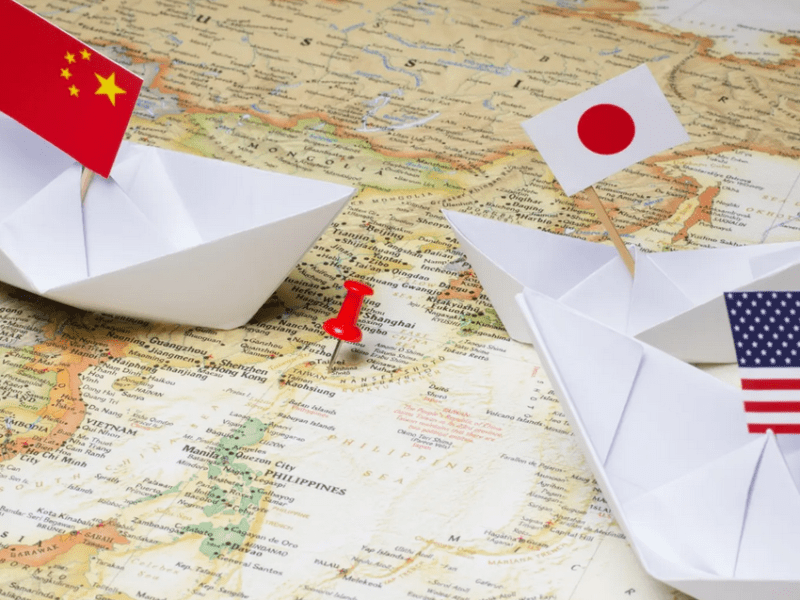
The counterargument is that regional initiatives might encourage U.S. withdrawal. If allies can manage without America, why should Washington stay engaged? This misreads both the region’s power dynamics and U.S. interests. China’s economy is larger than Japan’s and India’s combined. Its military modernization proceeds at a pace neither democracy can match alone. Regional partnerships multiply U.S. influence precisely because they can’t replace it.
Moreover, the numbers tell their own story. U.S. trade with Indo-Pacific nations reached $2.28 trillion in 2022, roughly double that with Latin America and the Caribbean ($1.01 trillion in 2023). Supply chains for everything from iPhones to antibiotics run through the Indo-Pacific. Walking away means ceding not just strategic position but economic prosperity.
None of this guarantees sustained U.S. engagement. Domestic politics are unpredictable; the appeal of hemispheric retrenchment is real. But Japan and India can shift the odds by making engagement profitable, practical and politically sustainable.
The alternative is hoping Washington’s better angels prevail while doing nothing invites strategic disaster, especially as the current administration seems determined to transform the U.S. domestically and internationally.
China won’t wait for America to sort out its domestic challenges. Each month of U.S. distraction sees more infrastructure built, more countries pulled into Beijing’s orbit and more facts established on the ground.
The solution isn’t to match China project for project or to create anti-Beijing blocs that force nations to choose sides. It’s to build frameworks so commercially compelling and strategically sensible that participation becomes inevitable for regional states and for America itself.
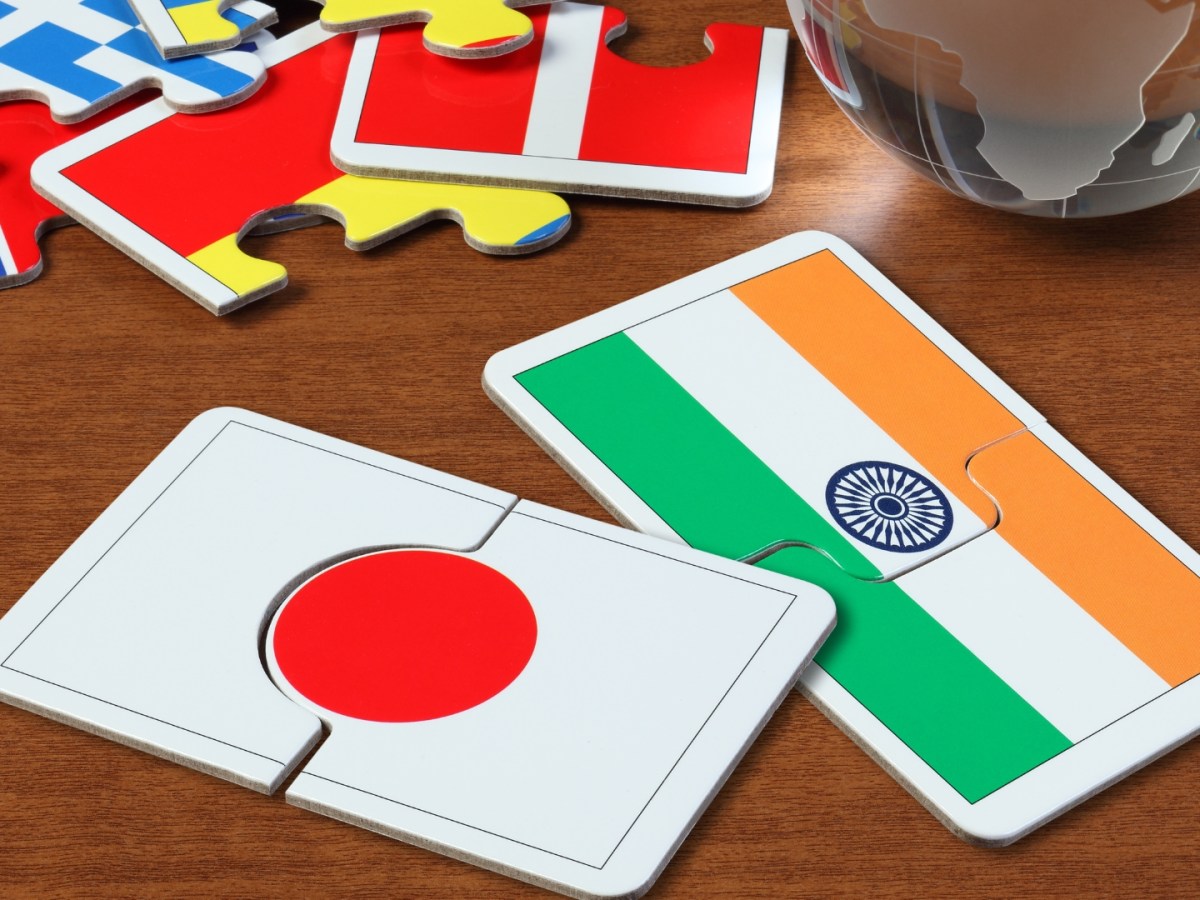
Japan and India are uniquely positioned to lead this effort. Japan brings capital, technology and diplomatic finesse. India offers scale, markets and manufacturing capacity. Together, they represent democratic alternatives to Chinese development models and authoritarian governance.
The moment demands more than strategic patience or diplomatic niceties. It requires allies willing to create facts on the ground, including commercial, technological and security that make American engagement not an act of charity but one of clear self-interest.
Washington faces many choices in the coming months. Japan and India can’t control those decisions. But they can make one thing crystal clear — the choice between shaping the Indo-Pacific’s future alongside capable, prosperous allies or watching China shape it alone. Smart money bets on engagement. Smarter allies make that bet irresistible.
This article was first published on September 17, 2025, at The Japan Times.














![[The Reality of Middle Power] US and China: “Superpowers” and “Multiple Weak Powers” on Fuji BS’ Prime NEWS](https://nagystephen.com/wp-content/uploads/2026/03/image-7.png?w=1024)
 nagystephen.com
Leave a comment