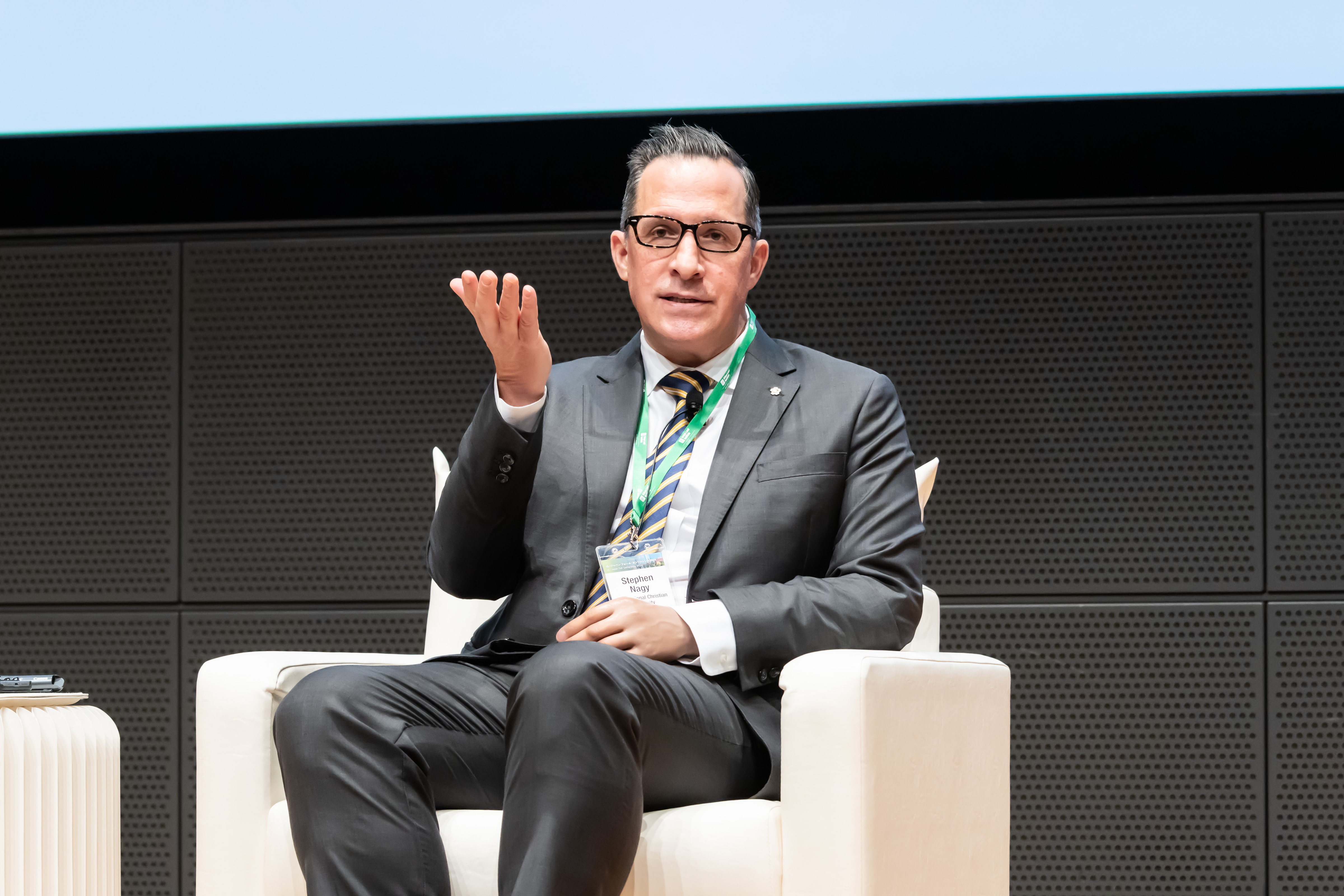
Question: China has kicked off the two Sessions meeting in Beijing with an announcement to increase its defense spending by 7.2%. What does this mean for Taiwan and the region?
Stephen Nagy: Over the past 20 years, China has consistently increased its defense spending by about 10% annually. While 7.2% of the current GDP is slightly lower than that trend, it remains a significant increase with real implications for peace and stability across the Taiwan Strait. This increase will impact the types of military assets China acquires to pursue reunification on its own terms.
China is expected to focus its defense spending on modernizing the People’s Liberation Army (PLA) and acquiring advanced capabilities to handle modern warfare. In light of Russia’s invasion of Ukraine, China will likely invest heavily in drones and frontline military technologies. However, this increase in defense spending should also be viewed within the broader context of U.S.-China competition. With Donald Trump reaffirming his commitment to strengthening the United States’ military presence and securing peace through strength, it is likely that U.S. resources will be redirected from Europe to the Indo-Pacific, further intensifying regional tensions.
Question: Is China’s 5% GDP growth target for 2025 realistic amid global challenges?
Stephen Nagy: Unfortunately—or perhaps fortunately—this target is unlikely to be achieved. According to credible research groups such as the Rhodium Group, Gavekal Dragonomics, and the Peterson Institute for International Economics, 5% growth is not feasible. These independent research institutions estimate that China’s actual growth rate is closer to 2-3%, facing significant headwinds.
One major challenge is the additional 10% tariffs on Chinese products, which were implemented this week by President Trump. These tariffs will put further pressure on China’s economy, making the 5% target even more unrealistic.
Question: Will Chinese Premier Li Qiang’s stimulus measures be enough to boost the economy?
Stephen Nagy: Under President Xi Jinping, there has been a firm commitment to prioritizing political control over economic fundamentals. Rather than addressing the structural issues within China’s economy, political considerations continue to drive policy decisions.
As a result, even if Premier Li Qiang introduces additional stimulus measures, they will likely have only a limited impact. While extra spending may encourage some short-term consumer activity, it does not resolve the fundamental economic challenges that China faces. Without sustainable, long-term reforms, China’s economy will continue to struggle to achieve meaningful growth.
![[The Reality of Middle Power] US and China: “Superpowers” and “Multiple Weak Powers” on Fuji BS’ Prime NEWS](https://nagystephen.com/wp-content/uploads/2026/03/image-7.png?w=1024)
 nagystephen.com
Leave a comment