
Question: In what specific ways do Xi Jinping’s global vision and the post-World War II rules-based order clash in terms of values, norms, and governance structures? What are the key areas of tension and contradiction?
Stephen Nagy: I think when we look at China and the Chinese Communist Party under Xi Jinping versus earlier leadership, it’s important to understand both the continuity in vision and the subtle differences. The Chinese Communist Party has consistently viewed the current international system as not fully representing China’s interests or those of the developing world. They see the norms and values embedded in international institutions, such as international law’s emphasis on human rights, democracy, and the rule of law, as somewhat alien to Chinese civilization and contradictory to the Communist Party’s vision of development.
From their perspective, the ideal world order prioritizes state sovereignty, allowing each country to define its own approach to development, human rights, democracy, and the rule of law. In this view, the concept of universal values is dismissed because such values would limit the power of the Party and political leaders in China, which they perceive as a threat to their sovereignty. While this vision has been consistent for decades, Xi Jinping has intensified the rhetoric and determination to shape a world order where sovereignty is the primary principle governing state interactions, with minimal rules restricting state behavior.
Question: Can international institutions evolve to accommodate China’s aspirations without compromising fundamental principles of human rights, democracy, and the rule of law? What would be the potential trade-offs and risks?
Stephen Nagy: This is the core contradiction in Xi Jinping’s approach to the global order. On the one hand, China claims that the current system does not reflect its values and interests. On the other hand, it has been actively involved in international rulemaking and has benefited significantly from the existing system. China has collaborated with the United States on initiatives like the Paris Climate Accords, participated in global counterterrorism efforts, and engaged in financial regulations targeting illicit activities. Moreover, it remains an active member of key international institutions, such as the World Trade Organization (WTO), the World Health Organization (WHO), and the United Nations, where it is one of the largest contributors to UN peacekeeping missions.
China wants to reshape the global system while continuing to reap its benefits. Can the system evolve to include China’s perspectives? Yes, but only through dialogue and compromise, not through economic coercion or a “might is right” approach. Over the past decade, China has employed coercion, gray-zone tactics, and hybrid strategies to reshape regional security structures and redefine international institutions’ positions on issues like human rights and democracy. The key question remains: does Beijing intend to reshape the international system through constructive engagement, or will it take a subversive approach that undermines existing institutions?
Question: What specific lessons can Canada draw from Japan’s middle-power responses to China, and how can they be adapted to build effective and constructive relations?
Stephen Nagy: Most importantly, Canada’s political leaders—whether it be Justin Trudeau or a potential future leader—must adopt a disciplined, nuanced approach when communicating with and about China. Japanese leaders have mastered this balance. They consistently emphasize their desire for a stable, constructive relationship with China. When discussing sensitive issues like Taiwan, they focus on peace and stability across the Taiwan Strait without making provocative statements about Taiwan’s independence or its status as a nation-state. However, this does not mean that discussions on these issues do not occur behind closed doors.
The Japanese strategy revolves around engagement, resilience, and deterrence. There is no future for Japan’s economy without economic ties to China. In 2023, trade between the two countries reached 391 billion USD, making economic interdependence undeniable. Japan engages China through mechanisms like the Regional Comprehensive Economic Partnership (RCEP) and environmental cooperation initiatives. It even considers trilateral free trade agreements involving China, Japan, and South Korea, while recognizing that China and Taiwan have both applied for Comprehensive and Progressive Agreement for Trans-Pacific Partnership (CPTPP) membership.
At the same time, Japan strengthens its economic resilience by expanding partnerships beyond China. It has established economic and infrastructure agreements with the EU, reciprocal access agreements with Australia and the UK, and aims to expand the TPP. These steps ensure that Japan is not overly dependent on China, reducing the risk of economic coercion. In addition, Japan invests heavily in deterrence. Its 2022 National Security Strategy focuses on strengthening alliances with the United States, Australia, and the UK, engaging in mili-lateral frameworks like the Quad, and acquiring counter-strike capabilities to bolster defense.
This strategic balance—engagement, resilience, and deterrence—combined with disciplined and nuanced leadership, allows Japan to engage with China while also dissuading aggressive economic or military actions. Canada should take note.
Question: How might a non-zero-sum approach be implemented in managing China’s expansionist ambitions and ideological differences? What concrete steps can Canada take to build trust and cooperation?
Stephen Nagy: At present, China is a highly contentious issue in Canadian politics due to allegations of political interference and threats against public figures. These are serious concerns, but Canada’s short-term and long-term strategies must be distinct.
In the short term, building trust through cooperation in less contentious areas—such as environmental initiatives—may be effective. The Kunming-Montreal Biodiversity Summit fostered productive communication, and similar engagements could serve as trust-building mechanisms. Educational exchanges should also be expanded, ensuring that Canada develops deeper expertise on China within a broader Indo-Pacific context.
Canada must also strengthen its alliances with Japan, South Korea, and Southeast Asian nations, as these countries have extensive experience in balancing economic and political ties with China. Additionally, de-escalating political rhetoric without compromising on key principles—such as peace and stability in the Taiwan Strait—can help create a more pragmatic diplomatic approach.
Furthermore, Canada should diversify its trade and economic partnerships to reduce vulnerabilities to economic coercion. Japan’s multi-layered trade strategy, involving agreements like the TPP, RCEP, and EU-Japan Economic Partnership, is a strong model. Canada should follow suit by developing robust alternative trade relationships.
Question: Are there areas where Canada and Japan can enhance their partnership, especially in balancing engagement with and deterrence of China?
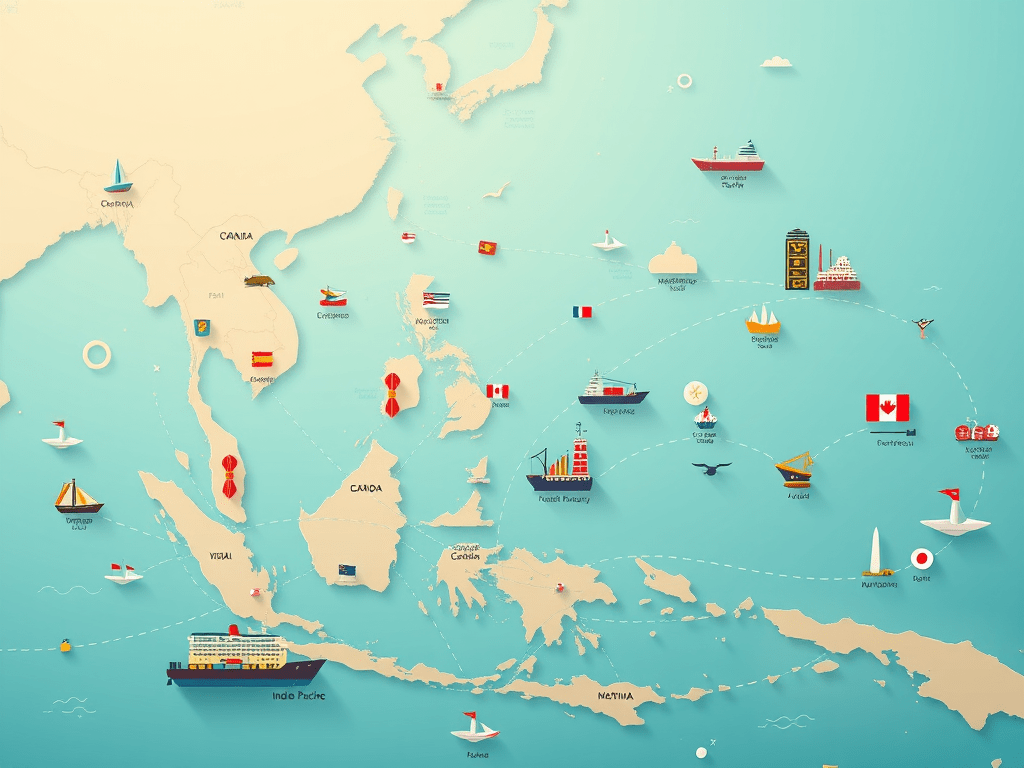
Stephen Nagy: The Six-Point Joint Action Plan, announced by Foreign Minister Mélanie Joly in 2022, laid a foundation for deeper Canada-Japan cooperation in areas such as maritime security, peacekeeping, trade, environmental collaboration, and supply chains. With the Indo-Pacific Strategy, Canada has further specified areas of engagement with Japan, South Korea, and Southeast Asia.
More can be done, particularly in trade advocacy to expand agreements like the CPTPP and reinforce security cooperation. Given Canada’s limited naval resources, its best contribution may not be in deploying multiple ships but rather enhancing regional capabilities. This could involve sending military personnel to share expertise, particularly in areas where Canada has strengths, such as NATO operations, NORAD, and sanctions enforcement.
Canada should also explore its role in Taiwan’s deterrence strategy to ensure that cross-strait relations remain peaceful. Diplomatic efforts should not be overlooked—Canada has previously hosted multilateral discussions, such as the 2018 Vancouver Summit on North Korea’s denuclearization, demonstrating its capacity to convene meaningful dialogue.
Finally, Canada’s comparative advantages lie in energy and critical minerals. By working with Japan and South Korea to secure supply chains for critical minerals and energy, Canada can position itself as a leader in resource security. This is an area where Canada has historically under-performed but has immense potential to become a global energy and critical minerals powerhouse.
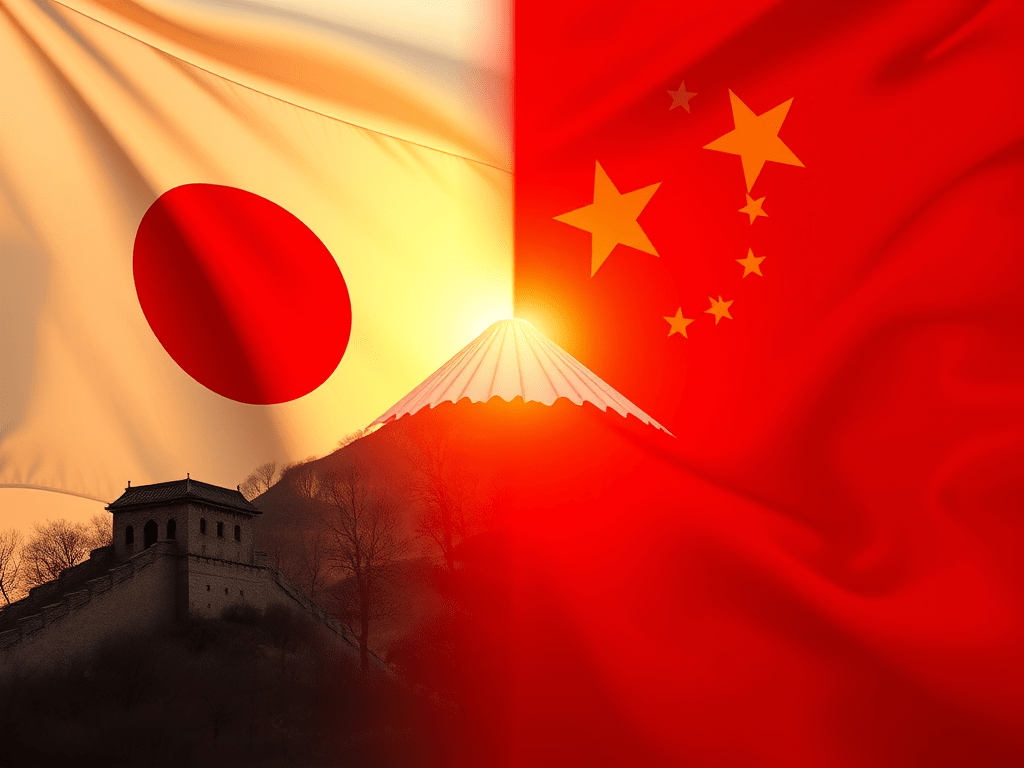
In brief, Japan’s strategic approach—balancing engagement with resilience and deterrence—offers valuable lessons for Canada. By fostering constructive diplomatic dialogue, diversifying trade partnerships, and strengthening deterrence measures, Canada can engage with China effectively while safeguarding its national interests. As global dynamics continue to shift, Canada must leverage its unique strengths to ensure stability in its Indo-Pacific engagements.
 nagystephen.com
Leave a comment