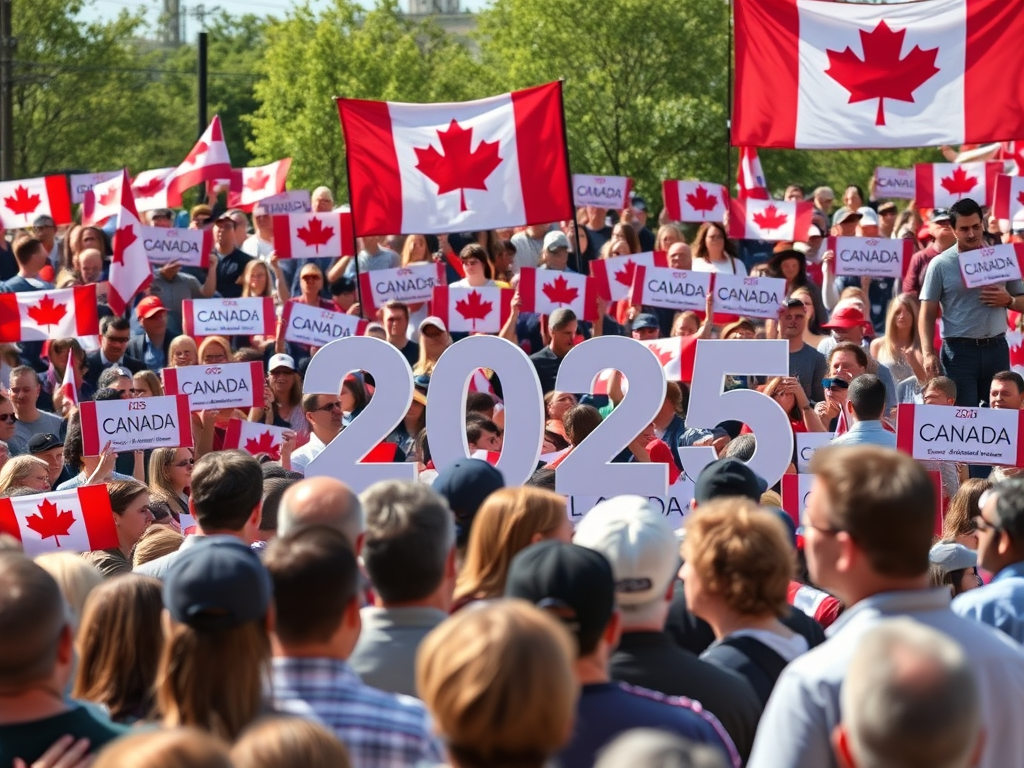
As Canada approaches its pivotal federal election on April 28, the outcome will hold consequences far beyond its borders.
For a nation that has long punched above its weight in international affairs, the question isn’t merely who will govern, but whether Canada can reclaim its standing as a reliable and fundamentally revamped middle power after a decade of diminished influence and economic underperformance.
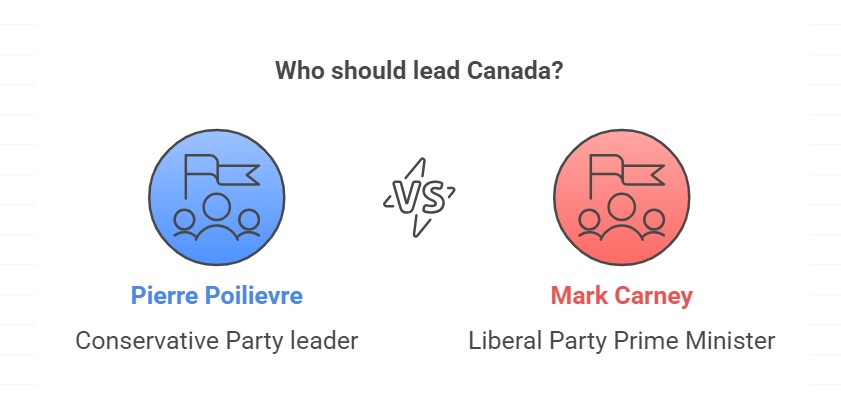
This election has effectively become a binary choice between Conservative Party leader Pierre Poilievre and the unelected Prime Minister Mark Carney of the Liberal Party. Their contrasting backgrounds and visions present Canadians with a stark decision about their country’s direction at a moment when global instability demands clarity of purpose.
The problem is neither candidate is explaining to Canadian voters that it isn’t U.S. President Donald Trump that is the root problem of Canada’s economic, political and identity challenges, but successive governments in Ottawa, regardless of their political affiliation. The past 10 years of rule under former Prime Minister Justin Trudeau just made it worse.
What seemed like a foregone conclusion six months ago has become a competitive race. The Conservatives’ commanding 22-point lead has narrowed to a statistical tie, with both major parties hovering around 34% to 36% support. This dramatic shift coincided with Trump’s general tariffs in February, followed by his steel and aluminum tariffs in mid-March and with Carney’s emergence as Liberal leader after Trudeau’s controversial parliamentary prorogation.
The timing of Trudeau’s departure — during escalating trade tensions with the United States — speaks volumes about the priorities that have characterized his governance. By suspending Parliament precisely when a unified national response to American tariffs was most urgent, Trudeau placed partisan renewal above national interest, a fitting capstone to a tenure marked by similar calculations.
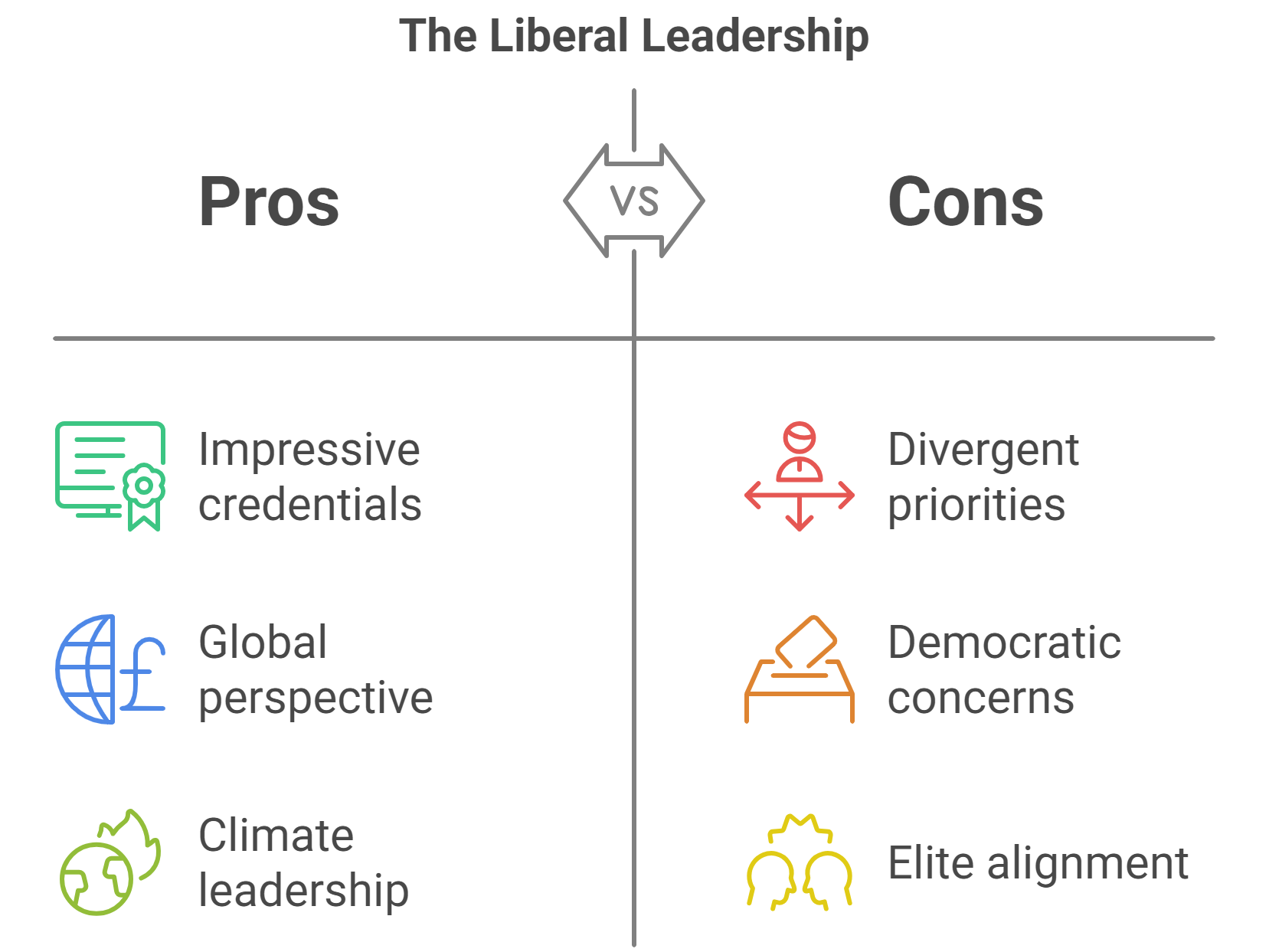
The Liberal standard-bearer brings impressive credentials but troubling democratic deficiencies. With his Harvard and Oxford educations, Goldman Sachs experience and leadership roles at both the Bank of Canada and the Bank of England, Carney embodies the transnational policy elite whose preferences often diverge from those of ordinary citizens.
His chairmanship of the Glasgow Financial Alliance for Net Zero mobilized trillions toward climate goals but raises questions about his priorities. While global climate initiatives advanced, middle-class Canadians struggled. Despite seeing around 12% to 15% gross domestic product growth between 2015 and 2024, median household income saw only modest gains in real terms.
More concerning is Carney’s path to power. Without facing voters, he assumed national leadership through an internal Liberal Party process involving roughly 140,000 members — barely 0.4% of the Canadian population. This democratic deficiency compounds the impression of a leader who is more comfortable in Davos, Switzerland, than in Saskatoon, Saskatchewan.
The Conservative leader presents an equally complex profile. Having entered Parliament at age 25 in 2004, Poilievre possesses a granular understanding of governmental machinery after two decades in political life, including service as the minister for democratic reform.
His diagnosis of Canada’s structural challenges is compelling. Labor productivity has declined annually since 2016, housing prices have increased 87% over a decade and immigration levels reaching 500,000 annually have strained infrastructure and services. Where Poilievre falls short is demonstrating that his policy prescriptions reflect more than theoretical understanding of market mechanics without practical implementation experience.
Having never worked outside politics, Poilievre must convince voters that he can translate sharp opposition rhetoric into effective governance. His parliamentary career shows institutional knowledge but offers limited evidence of executive competence or consensus-building ability.
For many voters facing the economic consequences of Trump’s tariffs, there is uncertainty how Poilievre’s track record would enable him to find common ground with the American president.

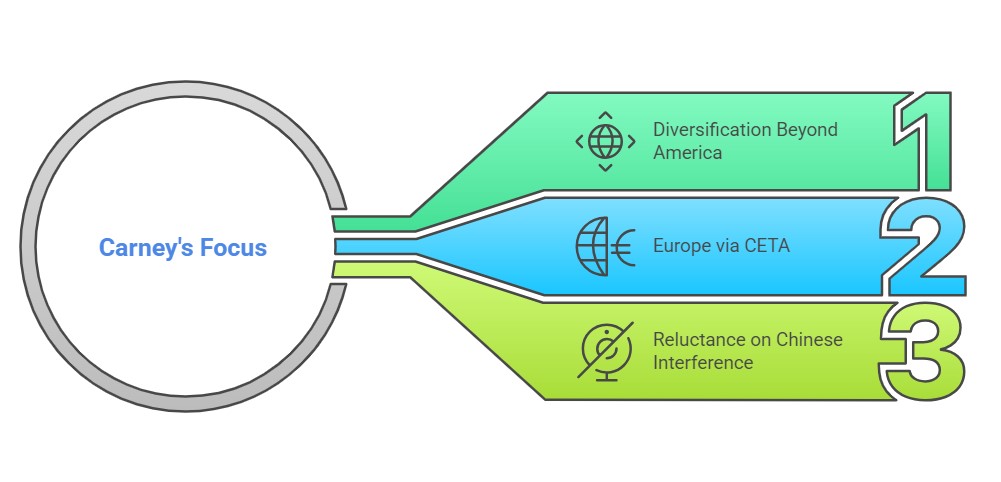
Neither candidate has articulated a clear and detailed vision for Canada’s global role. Carney emphasizes diversification beyond the American market, particularly toward Europe through the Comprehensive Economic and Trade Agreement. This approach faces mathematical constraints — even doubling EU trade would offset only a fraction of potential U.S. market disruption given that 77% of Canadian exports flow southward.
More troubling is Carney’s reluctance to address Chinese foreign interference operations documented in parliamentary intelligence reports. This reticence suggests continuity with Trudeau’s overly accommodating approach to China, which has damaged Canada’s credibility with allies with many seeing Ottawa and the Liberal Party deeply compromised by interference from Beijing.
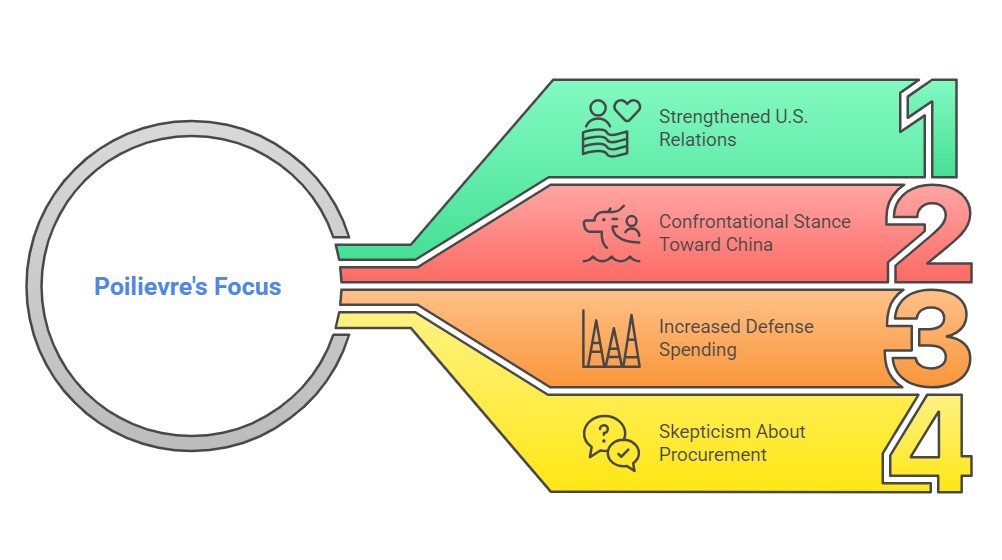
Poilievre advocates strengthened U.S. relations and a more confrontational stance toward authoritarian regimes, especially China. His promises to increase defense spending to accommodate NATO’s 2% target would mark a welcome departure from Canada’s chronic security free-riding. However, skepticism is warranted given Canada’s notorious procurement delays and the significant resources required to reverse a decade of military underinvestment.
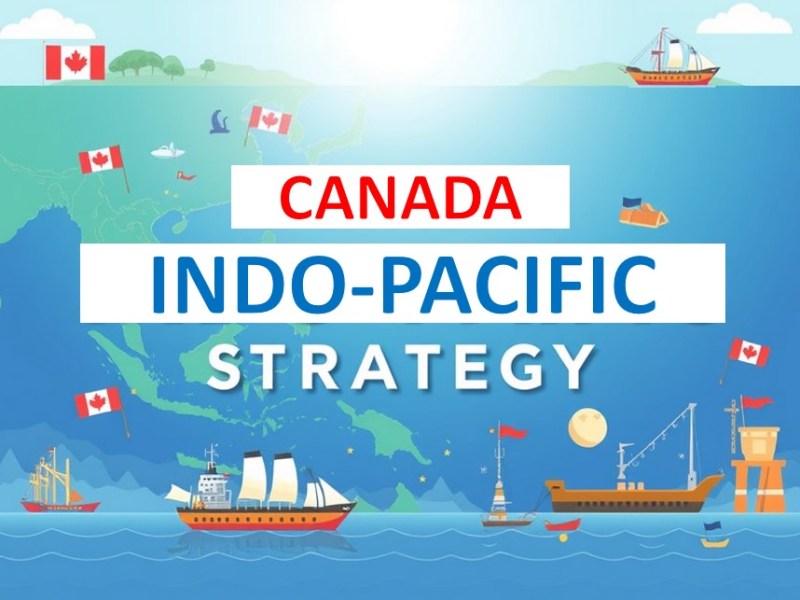
For Japan and other Indo-Pacific partners, Canada’s election carries significant implications for regional security architecture. Under Trudeau, Canada’s “Indo-Pacific Strategy” was long on rhetoric but short on meaningful military presence or economic engagement. While Japan invested substantially in regional security frameworks and supply chain resilience, Canada remained a peripheral player despite its Pacific geography.
Tokyo has watched with concern as Canada’s defense spending has remained stubbornly below 1.4% of GDP while regional tensions escalated. The bright spot for Japan (and others in the region) has been the increased Canadian naval presence in Asian waters, transits of the Taiwan Strait and continued sanctions evasion operations in the Sea of Japan as it pertains to North Korea.
Japanese officials privately hope for a Canadian government — regardless of party — that will match rhetorical commitments with tangible military capabilities and consistent diplomatic engagement. Whether it’s strengthening implementation of the Comprehensive and Progressive Agreement for Trans-Pacific Partnership, countering economic coercion or bolstering maritime security, Canada’s Indo-Pacific allies need a partner whose actions match its words.
Canada should approach the region not through the lens of domestic values, but with a national-interest strategy that acknowledges the serious challenges posed by China, Russia and North Korea.
Whoever emerges victorious faces an imperative to govern for the entire nation, not merely the urban corridors of Eastern Canada and Vancouver that traditionally dominate policy considerations. The perception that Ottawa prioritizes downtown Toronto over rural Alberta or Montreal over Saskatchewan has deepened regional alienation to dangerous levels.
The next prime minister must recognize that resource development in the Western provinces, manufacturing in Ontario and maritime industries in Atlantic Canada are not competing interests but complementary components of national prosperity. This requires moving beyond the divisive identity politics and regional favoritism that have characterized recent governance.
Perhaps no task is more urgent than restoring Canada’s damaged international standing. Under Trudeau, allies witnessed embarrassing diplomatic gaffes, military procurement failures and inconsistent foreign policy positions that undermined the nation’s reputation as a serious actor.
From the disastrous India trip that damaged bilateral relations to the continued mismanagement of Canada-China relations, the past 10 years have not been the exception but part of a broader pattern. Furthermore, the failure to meet NATO defense spending commitments while lecturing allies on global values has created a perception of moral posturing without material contribution.
Rebuilding credibility requires substantive policy shifts rather than rhetorical flourishes. This means consistent defense investments, principled but pragmatic engagement with challenging partners like China and recognition that Canada’s influence derives from actions rather than aspirations.
As Canadians prepare to vote, they face a consequential choice with implications that will reach far afield. Carney offers global sophistication but democratic inexperience; Poilievre provides institutional knowledge but a limited non-political background.
What ultimately matters is whether either can address the structural challenges that have eroded Canadian prosperity and influence over the past decade. The answer will determine not just who governs Canada, but whether Canada still matters on the world stage.
For a nation that once helped shape the postwar international order, the stakes could not be higher. Canada’s allies, particularly in an increasingly volatile Indo-Pacific, are watching closely hoping that April 28 marks not just a change in leadership, but a restoration of purpose.
| Candidate | Strengths | Weaknesses |
|---|---|---|
| Mark Carney | – Brings impressive credentials: Harvard and Oxford educations, Goldman Sachs, former Bank of Canada and Bank of England Governor. – Chaired the Glasgow Financial Alliance for Net Zero, mobilizing trillions toward climate goals. – Emphasizes economic diversification beyond the American market. | – Troubling democratic deficiencies: Assumed leadership through an internal Liberal Party process involving just 140,000 members — barely 0.4% of the Canadian population. – Seen as more comfortable in Davos than Saskatoon. – Reluctant to address Chinese foreign interference. – While global climate initiatives advanced, middle-class Canadians struggled. |
| Pierre Poilievre | – Granular understanding of governmental machinery: Two decades in political life, including as minister for democratic reform. – Compelling diagnosis of Canada’s structural challenges: housing, productivity, immigration pressures. – Advocates strengthened U.S. relations and a more confrontational stance toward authoritarian regimes. | – Never worked outside politics; must prove he can translate sharp opposition rhetoric into effective governance. – Limited evidence of executive competence or consensus-building ability. – Uncertainty about how his track record would enable him to find common ground with President Trump. |
This article was first published on April 23, at the Japan Times.




![[The Reality of Middle Power] US and China: “Superpowers” and “Multiple Weak Powers” on Fuji BS’ Prime NEWS](https://nagystephen.com/wp-content/uploads/2026/03/image-7.png?w=1024)
 nagystephen.com
Leave a comment