
In 2025, Canada-Japan relations will be influenced by at least three factors: 1) the nature of geopolitical change prompted by Trump 2.0; 2) Canada’s selection of a new prime minister; and 3) the longevity of the Ishiba Shigeru administration in Japan.

First, the Trump 2.0 presidency will be defined by transactional diplomacy and a Republican brand that focuses on power, more equal burden-sharing amongst allies, and intense strategic competition with China, all of which will place inordinate pressure on Canada and Japan to align with Washington on diplomacy, trade, technology, security, and politics.
In practice this means using the American economy and military assets as leverage to shape decision-making in Ottawa and Tokyo, specifically on China and Russia. Trump will push Ottawa and Tokyo to align their technology exports and trade policies with U.S. guidelines. This will mean carrots and sometimes sticks to encourage investment in the U.S., to adopt strict export restrictions on technology, tariffs against all high-tech industries that China has invested in its Made in China 2025 Initiative including EVs, environmental technologies, artificial intelligence, etc. It will also include demands on both Ottawa and Tokyo to increase defence spending and engage in security co-operation in more concrete and significant ways to contribute to the U.S. efforts to comprehensively outcompete China, the country the U.S. has acknowledged as its most “consequential strategic competitor for the coming decades.”
Second, Canadian Prime Minister Justin Trudeau’s resignation announcement on January 6, 2025, paves the way for new leadership in Canada, whether a new Liberal-led coalition or a Conservative-led government. The former would likely lead to further atrophy in Canada’s relations with Japan and other Indo-Pacific states except in specific co-operation initiatives such as sanction evasions in the Sea of Japan or the use of dark vessel technology to deal with illegal, undocumented and unregulated (IUU) fishing in the South China Sea. The Trudeau government has been described as having “intellectual underpinnings clinging desperately to an old liberal internationalist order” and not being taken seriously in Asia.
Meanwhile, the latter — a Conservative-led government — is untested and would face significant funding restraints. It is difficult to envision how Conservatives would be able to quickly bolster Canada’s defence spending, reset badly damaged relations with China and India, and energize Canada-Japan relations. After all, simply being tough on China, defending human rights, and protecting democracy is a campaign slogan, not a strategy. Without a strategic vision of where Conservatives want to lead Canada, they will not be able to reboot Canada’s international relations, including relations with Japan.
Lastly, the Canada-Japan relationship in 2025 is unlikely to get the attention it requires as Prime Minister Ishiba continues to battle conservative holdouts within his Liberal Democratic Party, a wobbly minority government, and a Trump administration that will likely see Ishiba’s diplomatic outreach to China as incompatible with Washington’s concerns about Beijing.
Notwithstanding these hurdles, Ottawa and Tokyo should leverage Canada chairing the G7 to co-ordinate diplomatic initiatives that demonstrate their joint value to the U.S. This could mean co-ordinating joint statements and a communique via the G7 on technology restrictions, semiconductor production, co-operation on critical minerals and energy exports, economic security and resilience, cyber and disinformation co-operation, legacy munitions defence production, and recognizing Taiwan as a global public good.
In short, Canada-Japan relations in 2025 and in the years ahead will be overwhelmingly influenced by the Trump 2.0 administration’s transactional approach to foreign affairs. Ottawa and Tokyo will need to coordinate their diplomacy to effectively lobby the U.S. to shape the Trump agenda.
Find other notes by Deborah K. Elms: The Coming Trump Trade Storm for Asia; Jia Wang: Canada-China Relations in 2025: More Uncertainty, But Opportunities for Improvement; Sanjay Ruparelia: What Issues Will Shape India’s Foreign Policy in 2025?; Patrick Leblond: Balancing Trade with the U.S., China, and Indo-Pacific Partners
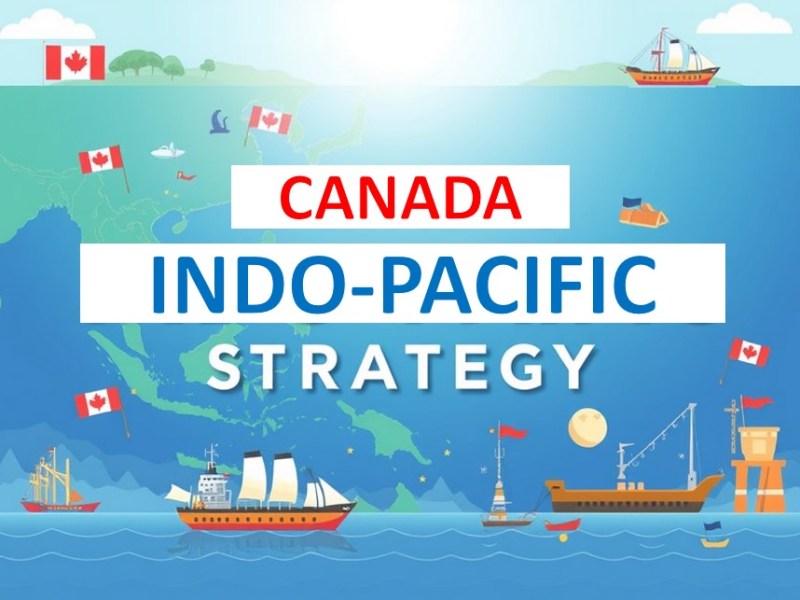
My YouTube Playlist on Canada and the Indo-Pacific
My YouTube Playlist on Japan and the Indo-Pacific
My YouTube Playlist on the US and the Indo-Pacific
Read more







![[The Reality of Middle Power] US and China: “Superpowers” and “Multiple Weak Powers” on Fuji BS’ Prime NEWS](https://nagystephen.com/wp-content/uploads/2026/03/image-7.png?w=1024)
 nagystephen.com
Leave a comment