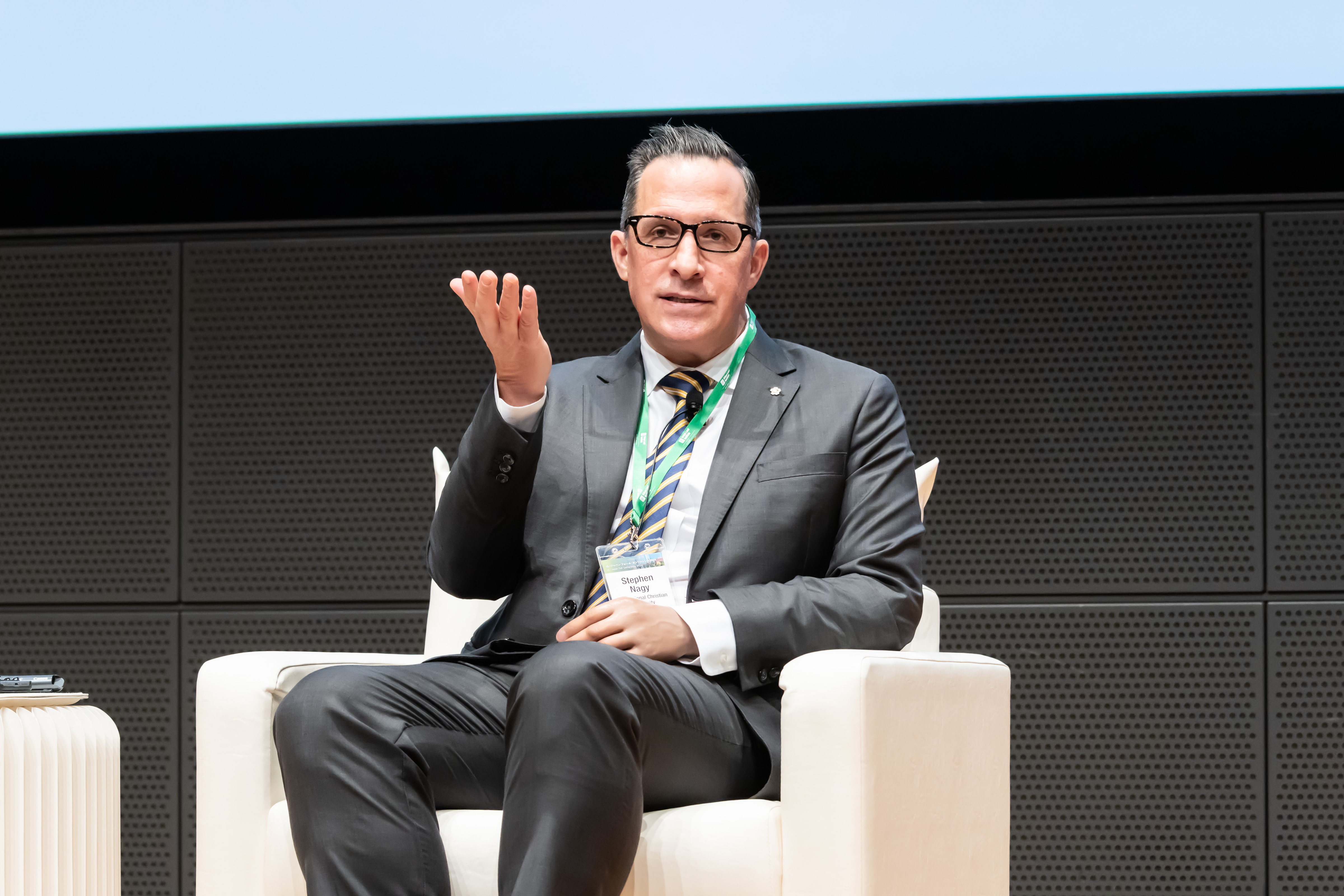
Interview with South China Morning Post’s Maria Siow
Born in the aftermath of World War II, the Five Eyes alliance had long operated in the shadows, sharing intelligence among its five members: the United States, Britain, Canada, Australia and New Zealand.
But in a world reshaped by growing geostrategic competition and US-China tensions, analysts say the group increasingly finds itself at a critical juncture, caught between its Cold War origins and the demands of a new geopolitical era.
The Five Eyes’ scope has widened in recent years – growing beyond intelligence-sharing to encompass security issues and human-rights concerns – but this broadening mandate, which some see as overreach, has come at a time of growing fractures among its members and external pressures that threaten its unity.
Late last month, reports emerged that Peter Navarro, a senior trade adviser to US President Donald Trump, had floated the idea of expelling Canada from the alliance amid the neighbouring nations’ brewing trade war.
Navarro was quick to dismiss the initial Financial Times report, which cited anonymous sources, saying he saw no reason to comment “on any story” that did not name the people it was quoting. “We would never, ever jeopardise our national security, ever, with allies like Canada,” he added.

Still, the report sparked a flurry of speculation about the Five Eyes’ direction, with critics questioning whether the alliance had strayed too far from its roots and risked diluting its core purpose by venturing into areas such as foreign policy and economic coordination.
Helen Clark, a former prime minister of New Zealand, was blunt in her assessment, telling local media that during her time in office from 1999 to 2008, the alliance was so secretive that “it was never confirmed nor denied” to exist. Now, she said, the grouping had “got a bit out of control”.
“Where it’s not helpful is as a coordination of foreign-policy positioning, and that’s where it’s heading,” she said, adding that it would be more useful “if it goes back to being a quiet intelligence-sharing pool”.
Indeed, the Five Eyes issued a joint statement in 2021 criticising that year’s Legislative Council election in Hong Kong. But such releases were later discontinued in favour of joint communiques between member nations – such as those issued by Canada, Australia and New Zealand on the war in Gaza – according to geopolitical analyst Geoffrey Miller.
Under Trump’s predecessor, Joe Biden, expansion of the alliance’s purview “may well have continued under the surface”, said Miller, who works with the Democracy Project at the Victoria University of Wellington in New Zealand.

But given the deepening rift between the US and Canada over tariffs, and Washington’s differences with the UK and others when it comes to Ukraine, he said that the alliance appeared likely to “remain in more of a holding pattern than expansion mode for now”.
“This would probably mean the Five Eyes would focus on its original intelligence-sharing function, which has been in the mutual interest of the five countries involved for the best part of 80 years and has survived crises in the past,” Miller said.
For the alliance to remain relevant, however, it must also navigate the growing complexities of US-China rivalry and an evolving security landscape.
Stephen Nagy, a professor of international studies at Japan’s International Christian University, warned that Five Eyes’ members such as Australia, which had been pursuing warmer ties with China in recent years, would have to adapt to Washington’s increasingly hawkish stance towards Beijing.
“If they decide to deviate from the Five Eyes, I think they will not be at the table, but on the menu in terms of how geopolitics reshapes the global economy, security, competition and challenges to the region,” he said.
The alliance has faced setbacks before, including the suspension of full intelligence-sharing with New Zealand in the wake of Wellington’s nuclear-free policy in the 1980s. Cooperation was fully restored only in 2009 under then-US president Barack Obama. But the stakes today are higher, with the alliance’s cohesion being tested by everything from trade disputes to disagreements over military aid to Ukraine.
The current Five Eyes debate in New Zealand mirrors a larger reckoning over the country’s foreign policy, Miller said. After decades of pursuing a more independent approach, Wellington has been drawing closer to the US and Australia, especially in response to China’s growing influence in the Indo-Pacific.
Still, “the secrecy of the grouping makes it challenging to make definitive judgments over the exact nature of the cooperation,” he said, while noting that there were signs of increased data sharing on issues like migration.
Nagy said former prime minister Clark’s remarks reflected her track record of being “relatively out of sync” with the rest of the Five Eyes – such as when she declined to send her country’s troops to join US, UK and Australian forces in the 2003 invasion of Iraq.

“[But] in reality, the New Zealand government has clearly identified the challenge of China in terms of the Indo-Pacific region, its future and what it means for a strong, punitive China to be the regional hegemon,” he said, citing a 2023 defence review in which Wellington explicitly named China as a potential threat.
As for Washington’s true thoughts on the alliance, Ian Hall, an international-relations professor at Australia’s Griffith University, said it was “telling” that Navarro had denied commenting on Canada’s membership.
“The US depends on intelligence collection and analysis done by the other Five Eyes, and it would lose out if serious harm was done to the arrangement,” he told This Week in Asia.
“That said, we have no idea how much damage President Trump is going to do to this arrangement, among many others. He has already done so many things that will weaken the US, its ability to defend its interests, and its relations with friends and allies.”
In recent days, the US president has paused intelligence sharing and military aid to Ukraine, saying he’d had “serious discussions with Russia” about a potential peace deal, following a fiery clash with his Ukrainian counterpart in the Oval Office late last month.
What happens next is uncertain, but one thing is clear: Five Eyes, an intelligence network that for years operated in the shadows, is now firmly in the spotlight.
![[The Reality of Middle Power] US and China: “Superpowers” and “Multiple Weak Powers” on Fuji BS’ Prime NEWS](https://nagystephen.com/wp-content/uploads/2026/03/image-7.png?w=1024)
 nagystephen.com
Leave a comment