
In today’s interconnected world, the security of one region is increasingly linked to the security of another. Japan, like many other countries, recognizes that what happens in distant theaters of conflict—whether in Ukraine, the Middle East, or Taiwan—can have profound consequences for its own stability. Confronted with growing authoritarianism in its part of the world, the Japanese understand that both Europe and the Indo-Pacific share a common interest in global order.
Japan has long been a watcher of global security dynamics, but the Russian invasion of Ukraine in 2022 sharpened Tokyo’s focus on threats to the global order. For Japan, the war in Ukraine is not just a European crisis but a global warning about the fragility of international norms and the dangers posed by authoritarian states. The Japanese government has condemned Russia’s actions in Ukraine, seeing broader implications if the aggression is not addressed.
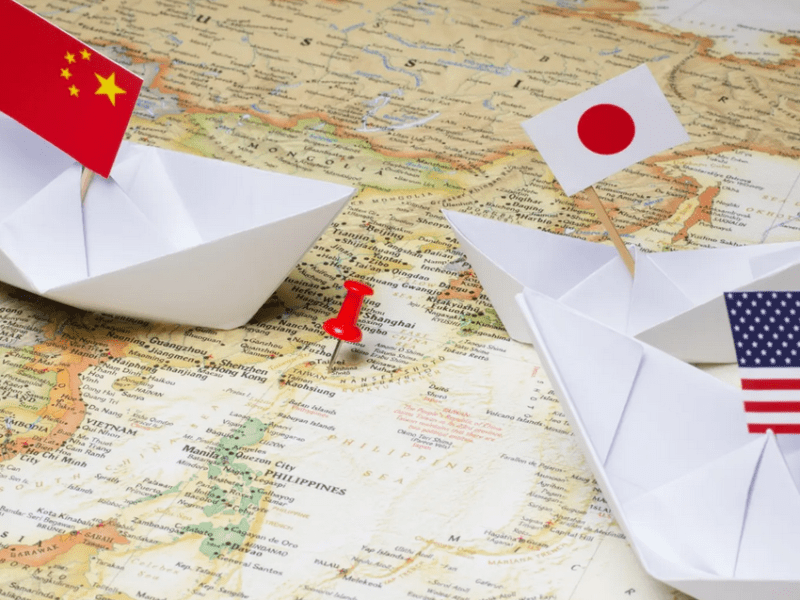
Tokyo sees parallels between Russia’s actions in Ukraine and China’s growing assertiveness in East Asia, particularly with regard to Taiwan and the South China Sea. Just as Russia is trying to undermine the international order in Europe, China’s growing militarization in the Indo-Pacific region poses a potential threat to Asian stability. The situation in Ukraine has prompted Japan to strengthen its alliances with like-minded countries such as South Korea, Australia, and the United States, and to deepen cooperation with European partners through fora such as NATO’s Asia-Pacific Partnership (AP4—Australia, Japan, South Korea, and New Zealand).
Japan’s commitment to NATO and its growing participation in joint military exercises are clear signals that it sees global security as a whole. Lessons learned from Europe’s response to Russian aggression have been incorporated into Japan’s security strategy, as Tokyo understands that instability in one region can encourage authoritarian forces in another.
Tokyo’s strategic calculations
Russia’s aggression in Ukraine has exposed global vulnerabilities that extend far beyond Europe’s borders. For Japan, Russia is not just a distant aggressor, but a neighboring power with significant influence in the Asia-Pacific region. Russia’s proximity to Japan—via their shared border on the Kuril Islands and Sakhalin—adds an extra layer of complexity to Japan’s security calculations. The dispute over the Northern Territories between Tokyo and Moscow has long been a point of tension, and Russia’s current isolation on the international stage only deepens those concerns.
From Japan’s perspective, Russia’s unpredictability poses a serious security risk, especially in the context of Sino-Russian cooperation. Tokyo is well aware that China, while not directly supplying arms to Russia, supports Moscow indirectly through economic ties and the purchase of Russian energy. This economic support helps the Kremlin continue its war, while also creating a strategic partnership with Beijing that significantly complicates Japan’s security landscape.
China supports Russia because it fears the country’s potential fragmentation. If a war in Ukraine leads to the Balkanization of Russia, the resulting chaos could spill over into the Indo-Pacific region. Russia’s disintegration into smaller states could weaken control over weapons of mass destruction, which would pose a serious global threat, including to Beijing. On the other hand, Japan is also interested in ensuring that a war in Ukraine does not lead to broader disruptions of global security, especially in regions that directly affect its own strategic interests.
European Security and Lessons for Asia
Russia’s invasion of Ukraine has taught Japan and other Asian countries important lessons about the importance of collective security and international cooperation. Just as Europe has come together to support Ukraine through economic sanctions and military aid, Japan sees a need for a similar level of cooperation in Asia to deter potential Chinese aggression and ensure regional stability. The Ukraine conflict has reinforced Japan’s understanding that multilateralism is essential to maintaining a rules-based international order, and close cooperation with European partners is a key element of this strategy.
Tokyo’s approach to collective security includes a strong emphasis on respect for international law. Japan sees Russia’s invasion of Ukraine as a direct challenge to the principles of sovereignty and territorial integrity, which are also at risk in Asia due to China’s claims over Taiwan and the South China Sea. Japan recognizes that failure to take decisive action against such a flagrant violation of the international order in Europe could encourage similar actions in Asia, undermining the stability of the Indo-Pacific region.
Another lesson for Japan and the rest of the world is that the war in Ukraine, in addition to its geopolitical effects, has significantly raised global food and energy prices. Many countries are unprepared to cope with multiple crises occurring simultaneously, leading to shortages of key resources such as grain, while also revealing critical gaps in their defense capabilities. This is also true for members of the European Union, as the past three years have clearly demonstrated.
Shaping the global order together
Japan’s role in shaping the global security order will continue to grow in the near future. As a developed economy with a solid security infrastructure, Japan is uniquely positioned to help shape a democratic response to rising authoritarianism and the erosion of international norms. Japan’s partnerships with the United States, Europe, and regional powers make it a key player in maintaining global stability.
One of Tokyo’s main challenges will be the difficult task of “navigating” its relationship with China while defending a system based on established standards of international law. While Japan seeks to counter China’s territorial ambitions, it recognizes that China can also play a constructive role, especially in “managing” Russia’s decline. Tokyo’s diplomatic efforts will likely focus on encouraging Beijing to engage more positively on issues of concern to the international community, while also discouraging China from supporting aggressive Kremlin actions.
Global security is an issue that Japan will emphasize strongly in its foreign policy. Whether through participation in NATO’s Asia-Pacific Partnership, cooperation with European partners, or leadership in the Indo-Pacific region, Tokyo is poised to become a central player in the ongoing effort to maintain a rules-based global order. The future of security depends on the ability of countries like Japan to work together, recognizing that what happens in one part of the world – Europe, for example – can have profound consequences for the rest, including Japan itself.
This article was first published in Polish at https://www.onet.pl/informacje/thinktank/japonskie-spojrzenie-na-europe-globalnosc-bezpieczenstwa/pp54kfd,30bc1058
Read more




![[The Reality of Middle Power] US and China: “Superpowers” and “Multiple Weak Powers” on Fuji BS’ Prime NEWS](https://nagystephen.com/wp-content/uploads/2026/03/image-7.png?w=1024)
 nagystephen.com
Leave a comment