
Abstract
Since 2012, Japan’s foreign policy under Prime Minister Abe has been characterized as assertive, welcome or provocative. By employing the fear of abandonment/entrapment theory as the analytical framework, this article finds that Japan’s regional foreign policy under Abe is characterized by consolidation and investment in broad-based multilateralism, proactive engagement with partners in the region, including China, and strategic hedging. Findings suggest that the current foreign policy under the rubric of ‘proactive pacifism’ will continue to expand as Japan endeavours to consolidate and invest in multilateralism and rule-based norms through regional trade agreements, and by playing a proactive role in international organizations and regional security operations that abide by Japan’s constitutional limitations.
Introduction
Prime Minister Abe’s first trip abroad after assuming office in December 2012, was in January 2013 to South East Asia during which he promulgated the ‘The Bounty of the Open Seas: Five New Principles for Japanese Diplomacy’. These principles focused on the promotion of: the so-called international norms of human rights; democracy and freedom of the press; rule-based freedom of navigation; free and open economics; and fruitful cultural exchanges among youth.
It is noteworthy that each of these five principles conveyed the sense that an exclusive group of like-minded countries was being formed and juxtaposed against China, the one country in the region that is perceived to not share the same interpretation of these principles.
This trip was followed by a flurry of diplomatic activity wherein Abe visited all Association of Southeast Asian Nations (ASEAN) countries, attended India’s national day, hosted PM Modi in Kyoto, while simultaneously strengthening security cooperation with Vietnam, the Philippines, Australia, India and the US.
Most consequentially, the passing of the divisive Collective Security Bill in September 2015 was representative of PM Abe’s diplomatic shift, in the region and globally. Diplomacy and security cooperation have been buttressed by the promotion of shared norms and trade, with the then-viable Trans-Pacific Partnership (TPP) being the most contemporaneous example of this. We have since seen: expanded security cooperation with South East Asian states such as the Philippines, Vietnam, Indonesia, Malaysia and Singapore; a December 2015 agreement with South Korea to arrive at a final settlement on the Comfort Women issue; a visit to Hiroshima by the then US President Obama; and reciprocal visits by PM Abe to Washington in April 2015 and Pearl Harbour in December 2016.
PM Abe’s proactive diplomacy and his focus on strengthening relations with both South East Asia and the US, to counter China’s growing influence in the region, contrast with his first tenure as PM in 2006 when his first overseas visit was to Beijing, to repair the damage done to Sino-Japanese relations by PM Koizumi’s repeated visits to the controversial Yasukuni Shrine.
The changed tenor of Sino-Japanese relations during Abe’s second tenure as PM reflects: the growing anti-China sentiment in Japan in the aftermath of the nationalization of the Senkaku/Diaoyu tai Islands; the perceived Chinese hubris in the wake of the Global Financial Crisis (GFC); and the growing concerns within Japan’s security community relating to China’s military build-up as evidenced by the successive National Defence Programme Guidelines (NDPG) from 2010 to the present wherein China is increasingly portrayed as being a serious security concern for Japan and the region.
We would be remiss in not also mentioning that the perceived threat of Chinese militarization and its perceived assertive behaviour have also been skilfully deployed by politicians in Japan to consolidate their domestic political dominance—which, as Smith asserts, has been a well-used tactic in post-WWII Japanese politics. PM Koizumi used this ploy to push through neo-liberal market reforms such as the privatization of the postal service.
Research Questions
Is this hyper-diplomatic activity ideologically driven by PM Abe’s nationalistic inclinations?
Are his diplomatic initiatives since 2012 China-centric?
Do these domestic insecurities relate to the strength of the US–Japan alliance and the American commitment to Japan?
Are they driven by domestic political instability?
Do the changes in security and diplomatic leanings represent an incremental shift in Japanese security policy or something more radical?
Main argument
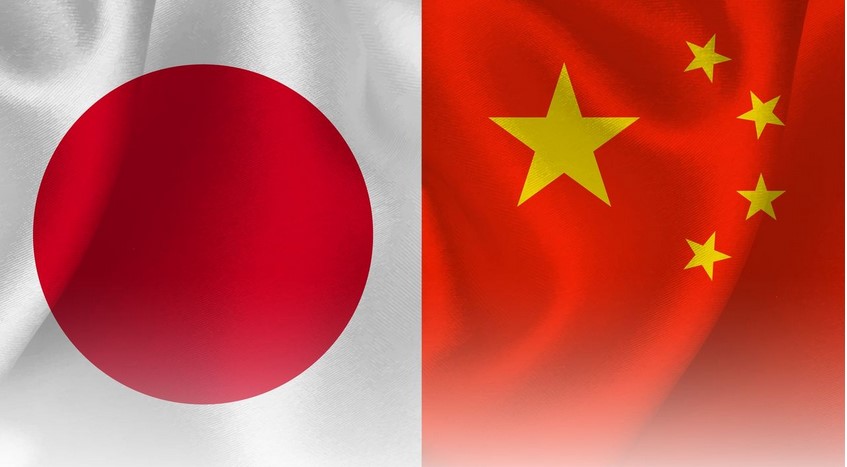
Rather than the singular fear of entrapment or that of the weakening of the US–Japan security alliance, it is the prolonged and intensifying security competition with China and domestic political stability that have prompted PM Abe to implement a more proactive diplomatic security agenda to counter Japan’s deteriorating security environment.
Japan has been able to pursue a more proactive security agenda as it complements, and in many ways is in synergy with, the US security agenda in the region. In this way, this article buttresses the arguments of scholars such as Mearsheimer who argue that we should expect a deepening of the cooperation between the US and the neighbours of China, as China’s development challenges American primacy through the reshaping of the power structure in the region.
We should understand that it is the complementary and synergistic nature of Japan’s more proactive diplomatic security agenda that gives it the political space to develop, whereas an agenda counter to American global interests would be strongly resisted by the US. In short, if Japan’s regional security activities continue to complement the US’ global security strategy, Japan will find a supportive advocate in Washington.
Research findings
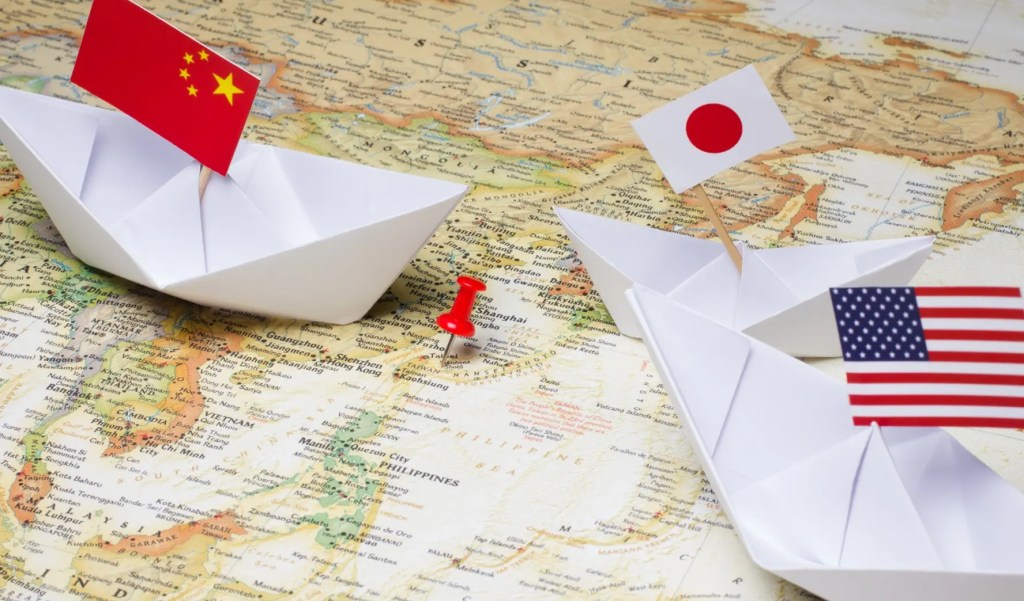
By applying the fear of abandonment/entrapment theory, this article finds that Abe’s foreign policy in the region is characterized by: consolidation and investment in multilateralism; a proactive engagement with partners in the region including China; and strategic hedging. The acceleration of this realist approach to structural change in the region has been driven by sustained domestic political stability and a sense of urgency regarding the necessity of countering China’s rise.
My YouTube Playlist on Japan and the Indo-Pacific
Related Posts


![[The Reality of Middle Power] US and China: “Superpowers” and “Multiple Weak Powers” on Fuji BS’ Prime NEWS](https://nagystephen.com/wp-content/uploads/2026/03/image-7.png?w=1024)
 nagystephen.com
Leave a comment