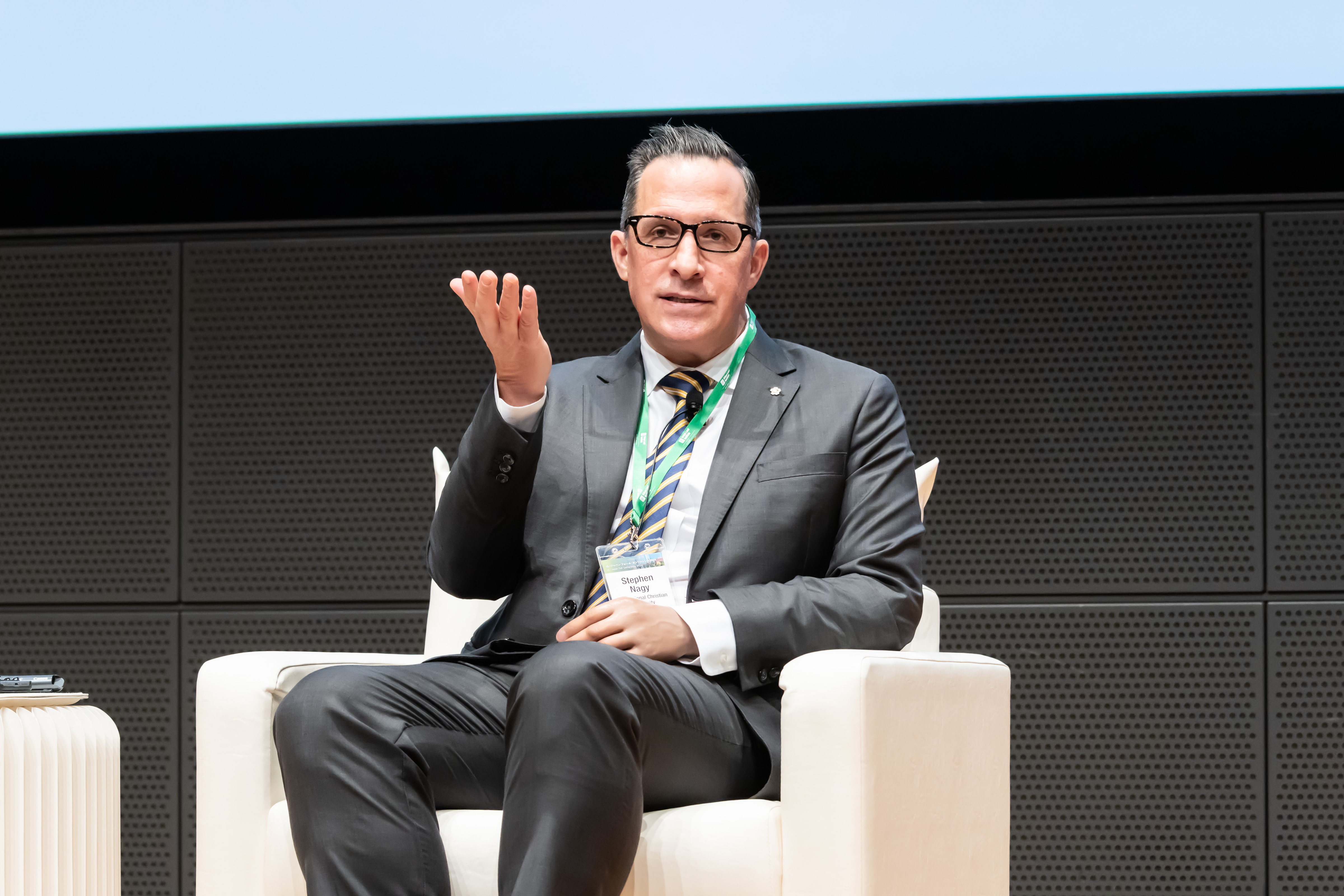
My portion at the 5th Symposium on Global Maritime Cooperation and Ocean Governance remotely
Which maritime community are we discussing?
The first question is crucial: which maritime community are we referring to? In the previous session, we discussed the Arctic and the Antarctic, but we also have other maritime communities such as the Indian Ocean, the East China Sea, the Sea of Japan, and the South China Sea. The Pacific Islands and other areas also come into play.
An interesting question arises: do we need to be everywhere at once, or should we adopt a regional focus to concentrate our resources on building capacity and creating public goods for stability in our immediate environments? In this sense, I believe we should consider a more regional approach to cooperation.
What are some potential formulas for cooperation or governance?
Is large-scale multilateral cooperation effective for managing regions like the Indian Ocean, the South China Sea, or the Pacific Islands? Or should we pursue a minilateral approach, involving immediate stakeholders to address regional issues?
Minilateral approaches generally allow for better alignment of shared interests and a regional focus, often benefiting from shared cultural and historical understandings. For instance, it’s easier to envision Southeast Asian countries, perhaps China and Japan, cooperating in the South China Sea due to their proximity and long history of trade and engagement. Their priorities continue to revolve around peace and stability in the sea lines of communication that traverse these regions.
What are some functional areas for cooperation?
What are the core areas of functional cooperation we could engage in through minilateral cooperation? A speaker from the Diplomatic Academy of Vietnam mentioned several, including illegal, unregulated, and undocumented fishing; search and rescue; humanitarian assistance; disaster relief; environmental cooperation; and development. These areas align with maritime community building.
When we shift from the Indian Ocean to the South China Sea and the Pacific Islands, we see that they have distinct needs, reinforcing the necessity for a regional approach to developing maritime communities.
What is the role of developing states in order-building
Developing countries can serve as important translators or interpreters of regional needs. For example, the Pacific Islands face existential threats from climate change, and their needs differ from those of countries in the South China Sea or the East China Sea and the Sea of Japan. Thus, it is essential to listen to Pacific island nations to understand their regional requirements and how we might assist them.
Educational exchanges are also important to foster mutual understanding, which can occur through our universities and people-to-people exchanges. In this context, I believe a minilateral approach to addressing maritime challenges and building maritime communities will remain crucial. Through consultations and by listening to regional stakeholders—especially developing countries—we can gain better insights into their challenges and aspirations.
Lastly, in terms of moving forward with building institutions to foster stability and enhance maritime community building, there’s a strong case for establishing a maritime cooperative initiative within various regions. This could take the form of an international association or a regionally-focused international organization that receives resources from larger countries, such as China, the United States, Japan, and the EU, but is managed by regional stakeholders. This structure helps avoid some of the great power political challenges we face and allows regional stakeholders—from the Pacific Islands to the South China Sea and the Indian Ocean—to develop regional solutions while leveraging resources from states with greater experience and capability.
To summarize, we need to define what the maritime community is, explore the formulas for cooperation—whether large-scale multilateralism or regionally-focused minilateralism—identify functional areas for cooperation, and listen to developing countries. Understanding their needs and empowering them as translators and interpreters for the challenges they face will be key in establishing a maritime cooperative initiative supported by larger, more developed countries but directed by developing nations to address their maritime community challenges.
![[The Reality of Middle Power] US and China: “Superpowers” and “Multiple Weak Powers” on Fuji BS’ Prime NEWS](https://nagystephen.com/wp-content/uploads/2026/03/image-7.png?w=1024)
 nagystephen.com
Leave a comment