
Excerpt from my article “Accommodation versus Alliance: Japan’s Prospective Grand Strategy in the Sino-US Competition”
Japan has benefited tremendously from the postwar rules-based order largely organized and sustained by the US. This order is now under tremendous strain from a Trump-led US that is increasingly unwilling and arguably unable to sustain the current rules-based order.
The rules-based order is under increased strain too from China’s reemergence as the dominant economy in the Indo-Pacific and as a near peer competitor to the US wishing to secure its core interests within its immediate periphery.
COVID-19 has further aggravated the strains on the rules-based order. Global supply chains have been disrupted, economies have shut down, and both the US and China have lost credibility in the eyes of many states for their inability to cooperate to deal with the pandemic and for their politicisation of it.
The responses of both have shattered the confidence in many states that the US and China can manage their own societies, let alone global issues with China badly mismanaging the initial response, and the US, under Donald Trump, having 170,000 deaths with no end in sight.
The trajectory of US-China relations is in the short to mid-term on a negative spiral and will increasingly be informed by what Scobel, et. al in their July 2020 Rand Report outline as four possibilities: 1) triumphant China, in which Beijing is remarkably successful in realizing its grand strategy; 2) ascendant China, in which Beijing is successful in achieving many, but not all, of the goals of its grand strategy; 3) stagnant China, in which Beijing has failed to achieve its long-term goals; and 4) imploding China, in which Beijing is besieged by a multitude of problems that threaten the existence of the communist regime.
While all four remain a possibility, Scobel et. al. argue that an ascendant China or stagnant China is the most likely outcome and that policy approaches should be informed with these expectations in mind.
The RAND report echoes findings that China’s economic outlook will likely be a midway point between ascendant China and stagnant China, especially in consideration of the economic impact of the COVID-19 pandemic.
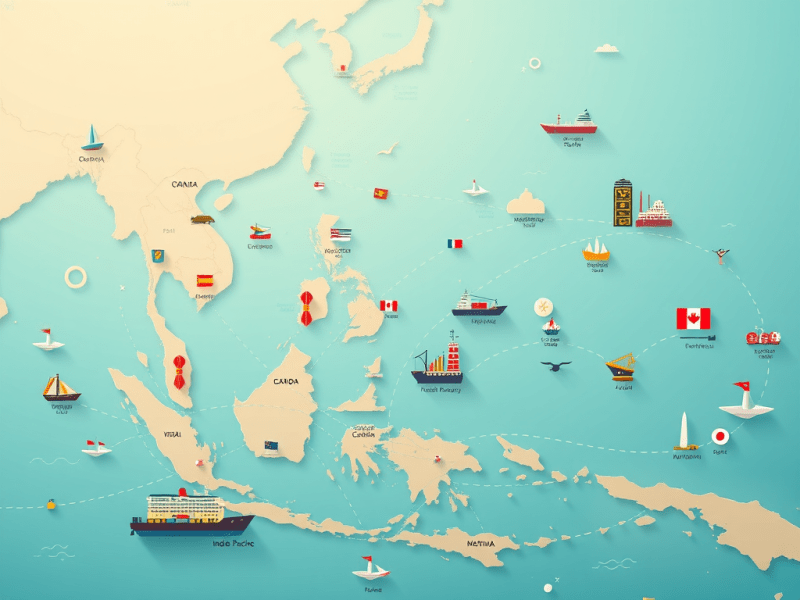
Japan’s grand strategy of securing a rules-based order that protects sea lines of communication and promotes Japan’s integration into Asian regionalism in a post-COVID-19 world would be informed by the aforementioned assessments and the need to ensure that any new international order is not defined by the US-China strategic rivalry.
Core goals include preserving a rules-based order, playing a leading role in building economic and expanded infrastructure and digital connectivity in the Indo-Pacific, and keeping a focus on non-traditional security issues in the maritime and terrestrial domains while at the same time developing the collective resilience to push back against egregious behavior.
These goals are consistent with the objectives of firmly enmeshing Japan economically into the Asian region, buttressing a rules-based order to protect SLOCs, and balancing pragmatic economic engagement with China and deepening military coordination with its security partner, the US.

Japan is now a “rule-shaper” through leading in multilateral agreements, taking on a larger burden within the Japan-US alliance structure, diversifying strategic partnerships in quality and quantity, and promoting a Free and Open Indo-Pacific (FOIP) that fosters regional integration based on transparent, sustainable trade, development, and connectivity.
Lastly, the development of national resilience is achieved through a mixture of economic statecraft and domestic self-strengthening reform, reflected in mechanisms to achieve strategicobjectives.
The recent Australian 2020 Defence Strategic Update understands the rules-based order as “the rules, norms and institutions that help maintain peace and security and guide global cooperation.” This is similar to Funabashi and Ikenberry’s definition of the rules-based order being “a set of rules, norms, and institutions that govern relations between states in an open manner, backed by hard power guaranteed by the United States. It has three pillars: the security order, the economic order, and the human rights order.”
Abe has been able to play a proactive and constructive role in buttressing the liberal international order since returning to power in December 2012. The July 2020 report Japan’s Leadership in the Liberal International Order: Impact and Policy Opportunities for Partners, outlines the domestic and international structural changes that have contributed to Japan’s ability to transform itself from a reactive player in international affairs to a proactive state, demonstrating its agency that can effectuate change or apply triage to the rules-based order as it faces the triple strains of a unilateralist US, a revisionist China, and slowbalization of the global economy due to COVID-19’s impact on supply chains, the movement of people, and political decoupling.
Tamaki (2020) argues that to preserve the rules-based order, Japan’s “method is classical as it includes a balance-of-power approach involving military expansion and alliances, and a diplomatic approach to making agreements with a variety of political regimes, whether democratic or authoritarian, including China.”
Proactive balance-of-power initiatives to buttress the rules-based order began with Abe’s return to power in December 2012, having recognized that despite the low point in Sino-Japanese relations in 2012 following the nationalization of the Senkaku Islands, resurrecting Japan from two decades of economic stagnation and a revolving door of prime ministers required economic pragmatism with China and stronger alliance relations with the US. Doing so would contribute to securing Japan’s inclusion into Asian regionalism and simultaneously help it achieve its security imperatives.
The first tranche in this process of buttressing the rules-based order was Japan’s agreement to join the original Transpacific Partnership (TPP). The election of Trump in November 2016 brought with it a 180-degree turn in many US foreign policy inclinations, including the sudden withdrawal from the TPP.
Abe soldiered up to pass the Comprehensive and Progressive Transpacific Partnership (CPTPP), leaving the door open for the US to rejoin but also for additional partners to be included.
This commitment to a 21st century, multilateral trade deal was in direct opposition to the threat Trump’s America First unilateralism was posing to the rules-based order from which Japan has and continues to benefit.
Japan’s commitment to a rules-based order was further evidenced by the signing of the Japan-EU Economic Partnership agreement, which came into force February 2019, and its continued commitment to complete the Regional Comprehensive Economic Partnership (RCEP), albeit one that was made on the assumption that India would join, which proved incorrect.

Japan has also been proactive in creating consensus on rules-based behavior in the maritime domain through participating in the Quadrilateral Security Dialogue (QUAD), by deploying its marine self-defense forces in the South China Sea (SCS) for maritime awareness activities, human capacity and inter-operability building, and humanitarian assistance and disaster relief activities.
Security plays a big part in Japan’s understanding of the new order. China is seen as threatening to the old order and the new framework Japan is forging with the US presence.
The need for buttressing rules in the economic and security spheres in the post-COVID19 era is increasingly critical. At one level, as Javorcik, Oldekop et al. and others have pointed out, the response by many states to the economic tsunami has been to put up protectionist walls, to begin a process of selectively decoupling from China, and to rebel against globalization.
As a manufacturing powerhouse and a state firmly wedded to trade, Japan cannot prosper if other states prop up protectionist walls. It needs to champion multilateral trade, complicated by tariffs associated with the US initiated US-China trade war, and the escalation by the Trump administration to stop China’s Made in China 2025 initiative to transform the economy into a world leading, high-tech powerhouse.
Japan continues to pragmatically adjust to increased Sino-US strategic competition through the logic of balancing, embracing various multilateral tracks to exclude no country and leverage its comparative advantages.
Trump persistent tweets question the usefulness of that Japan-US alliance and offer a chaotic approach to the FOIP. Tokyo’s response has been astute.
As Adam Liff argues, despite such concerns, Japan has doubled down on the alliance through investing in institutional and personal ties. This was well in evidence in the 2017 defense white paper, which stresses the importance of strengthening the Japan-US alliance. Japan increased the quantity of interlocutors in Washington, boosting institutional relations that cannot be easily fractured by an arbitrary tweet or misinformed pronouncement by Trump.
Japan has also demonstrated a willingness to increase its autonomy on the international stage, internationalizing the burden of securing SLOCs.
Japan’s increase in autonomy under Abe is evidenced by the expansion of strategic partnerships in the Indo-Pacific region and outside the region, including commitments to shared norms, principles of engagement, technological aid, economic incentives, the provision of coast guard vessels, surveillance technologies, etc.
Past partnerships with Southeast Asian countries include agreements “in principle to negotiate the transfer of defense equipment and technology from the Japan Self-Defense Forces to the Armed Forces of the Philippines (AFP)” among others.
Vietnam signed a memorandum in September 2015 to bolster-defense related cooperation. The provision of new marine patrol vessels is meant to buttress bilateral ties but also to meet overlapping security interests in the SCS.
Expanded strategic partnerships with Australia, India, Indonesia, and others all demonstrate that while Japan is doubling down on the Japan-US alliance, it is also independently building partnerships in and outside the region through capacity building, interoperability training, port visits, and joint maritime activities.
Importantly, these strategic partnerships enhance the numerous economic agreements in which Japan is participating.
Along with trade as a pillar of FOIP vision, infrastructure and connectivity were also identified as important components for a sustainable regional vision – even more critical in the post-COVID 19 period. This includes ports, bridges, roads, and digital connectivity through which citizens cannot only participate and benefit but also can access the internet for information, education, and global solutions to local developmental challenges.
A growing consensus is emerging that any infrastructure and connectivity project must be transparent and fiscally and environmental sustainability.
The “Partnership on Sustainable Connectivity and Quality Infrastructure between the European Union and Japan” and the “Australia-Japan-United States Trilateral Infrastructure Partnership” exemplify these principles.
The FOIP vision also focuses maritime capacity-building and regional interconnectivity projects promoting intra-ASEAN connectivity such as the East West Economic Corridor (EWEC) and the Maritime ASEAN Economic Corridor (MAEC).
In the post-COVID 19 period, Japan will be challenged to not overtly securitize its FOIP vision as Sino-US tensions deepen, supporting, where possible, ASEAN centrality in FOIP. Japan is the most trusted partner in Southeast Asia followed by the EU according to The State of Southeast Asia: 2020 Survey Report. The same survey found that both China and the US are distrusted the most.
These results provide Japan insight as to potential ways to strengthen FOIP in a post-COVID-19 era through the inclusion of trusted partners in the region.
Springboarding off the already established “Partnership on Sustainable Connectivity and Quality Infrastructure between the European Union and Japan, may seek to include the EU in FOIP initiatives, enhancing its ability to ensure that the region is not determined only by the Sino-US strategic clash.
Building national resilience to manage Sino-US strategic competition in a post COVID-19 world will require Japan to reshape its relationship with both countries. As part of that effort, Japan’s Supplementary Budget for FY2020 (MOF, 2020) includes subsidies to promote domestic investment in support of the supply chain [¥220.0bn], and of diversification of the global supply chain [¥23.5bn].
Funds for these purposes are understood not as decoupling from the Chinese market but as the first step in reshaping bilateral economic relations. The purpose is to make Japan less vulnerable to black swans events like COVID-19 and less exposed to the boomerang effects of Sino-US tensions as when Japanese businesses lately were subject to tariffs if their products were made in China.
Building more resilience into the Japanese economy makes it less vulnerable to exogenous forces that can impact its stability. Forging middle power solidarity will be imperative, alongside Australia, Canada, South Korea and other like-minded states.
Building economic security to combat economic coercion should be a key pillar of any collective resilience initiative focused on middle power alignment. A balancing approach would expand the current CPTPP members. This would help diversify the economic and trade portfolios of participating countries, so they are not so deeply affected by the deployment of economic coercion when they disagree with Beijing.
Download my full article:
My YouTube Playlist on Japan and the Indo-Pacific
My Audio Playlist on Japan and the Indo-Pacific
Latest Posts
![[The Reality of Middle Power] US and China: “Superpowers” and “Multiple Weak Powers” on Fuji BS’ Prime NEWS](https://nagystephen.com/wp-content/uploads/2026/03/image-7.png?w=800&h=600&crop=1)
Something went wrong. Please refresh the page and/or try again.
![[The Reality of Middle Power] US and China: “Superpowers” and “Multiple Weak Powers” on Fuji BS’ Prime NEWS](https://nagystephen.com/wp-content/uploads/2026/03/image-7.png?w=1024)
 nagystephen.com
Leave a comment