
Japan’s military is setting a record $500 billion for next year’s defense budget. The increase in spending aims to enhance Tokyo’s capabilities against regional threats. This has raised concerns about security issues near remote islands claimed by both Japan and China. Additionally, the Defense Forces are worried about escalating tensions between the mainland China and Taiwan. Japan’s plans include constructing five military ships, a submarine, and acquiring 12 F-35 fighter jets. They also aim to strengthen defense against cyber threats.
How does Japan’s defense spending compare to other countries in the region? It’s evident that when comparing defense budgets among China, South Korea, and Japan, China’s defense budget increased by 6.8% this year, South Korea’s by 5.8%, and Japan’s by 2.8%, which accounts for 2.8% of its total GDP. While the actual increase in Japan’s defense spending compared to its regional partners may not be significant, it aligns with the growing security demands within the region.
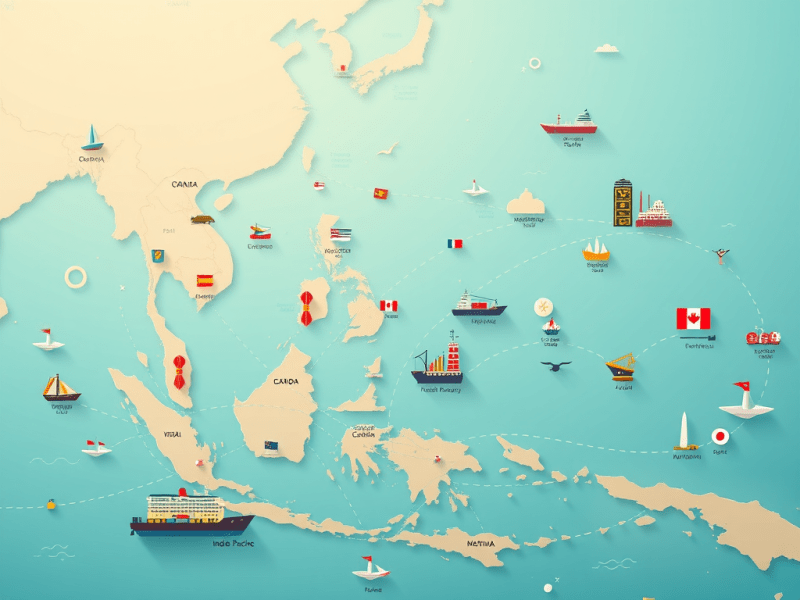
Japan is particularly focused on maintaining peace and stability in the Taiwan Straits, addressing concerns in the East China Sea and the Senkaku Islands, challenges in the South China Sea, and nuclear proliferation on the Korean peninsula.
Despite not being a substantial increase in military spending compared to its neighbors, Japan’s efforts to enhance its arsenal play a crucial role in addressing existing security issues in the region. Japan collaborates closely with the United States and has established strategic partnerships with countries like Australia, India, and European nations, serving as a force multiplier within the broader U.S.-Japan alliance and other regional partnerships.
Furthermore, Japan’s defense budget investments in cyber capabilities and maritime awareness align with key areas of concern for the Japanese defense establishment over the next five to ten years.
Japan is wary of China’s increasing assertiveness within the region, exemplified by its rejection of the 2016 Permanent Court of Arbitration decision on the South China Sea, gray zone tactics in both the East and South China Seas, and the enactment of a new Coast Guard Law allowing the Chinese Coast Guard to use force in its domestic waters. These actions challenge Japan’s vision of a free and open Indo-Pacific based on a rules-based order.
Japan believes that if China adhered to international law as agreed upon at the United Nations, the need for such a significant defense budget increase would be unnecessary. Therefore, Japan’s response to China’s perceived assertiveness in the region, particularly in critical sea lanes like the East China Sea, the Taiwan Straits, and the South China Sea, is essential to safeguarding its economic interests and maintaining regional stability.
Latest Posts
![[The Reality of Middle Power] US and China: “Superpowers” and “Multiple Weak Powers” on Fuji BS’ Prime NEWS](https://nagystephen.com/wp-content/uploads/2026/03/image-7.png?w=800&h=600&crop=1)



Something went wrong. Please refresh the page and/or try again.
![[The Reality of Middle Power] US and China: “Superpowers” and “Multiple Weak Powers” on Fuji BS’ Prime NEWS](https://nagystephen.com/wp-content/uploads/2026/03/image-7.png?w=1024)
 nagystephen.com
Leave a comment