
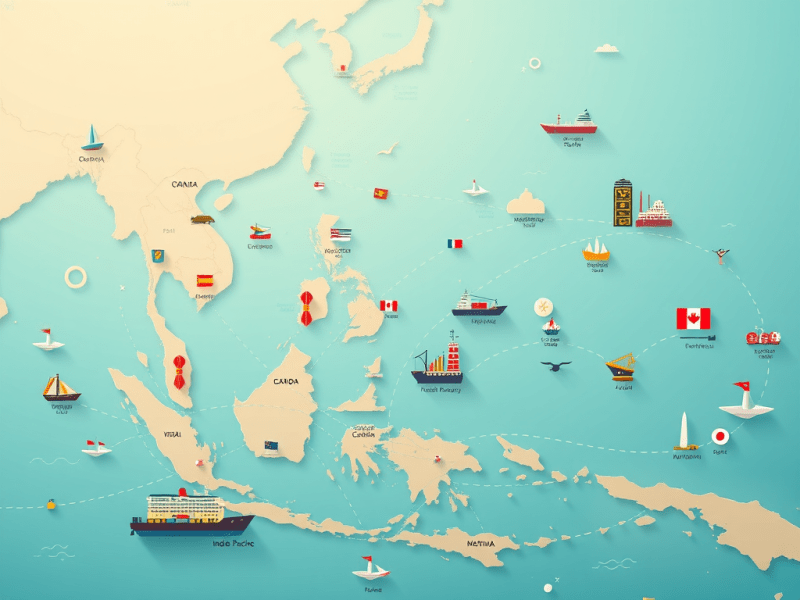
This article is premised on the understanding that a Japanese grand strategy is related to two perennial concerns: over open access to sea lines of communication (SLOCs) and over the integration of Japan into Asia (Asianism) with economics as the driving force. Without secure SLOCs, invaluable for the import and export of consumables, energy, and industrial resources, Japan’s economic and, subsequently, national security would be in jeopardy. The focus on SLOCs in Japan’s strategy remained unabated from the Meiji Restoration to the end of WWII, prosecuted through imperialism and war. Postwar, it was accomplished through supporting an international rules-based order organized and underpinned by the US. This system was reinforced by a web of like-minded countries which found the order suitable to meet their developmental needs, including some now challenging that order such as China.

Japan’s approach to negotiating the triangular relationship continues to be based on a balancing blueprint to meet its economic, regionalization, and security imperatives through strengthening its autonomy and deepening its alliance partnership with the US. Economics take Chinese production by Japanese firms and China’s market as indispensable, but lately add a security concern by diversifying necessary imports to other countries and preventing critical high technology from either coming from or going to China. Regionalization posits inclusiveness to counteract Sinocentrism, allowing cooperation if there is ASEAN centrality or if transparency is assured as in Japanese involvement in BRI infrastructure construction. Priority goes to security, agreeing to a level of interoperability with the US earlier unseen.

In the face of the intensification of Sino-US strategic competition, key features of Japan’s approach include: 1) buttressing the rules-based order in trade and security; 2) strengthening the US-Japan alliance and institutional ties; 3) diversifying both in quality and quantity strategic partnerships; 4) promoting the FOIP vision; and 5) building national and collective resilience. These pillars are firmly wedded to Japan’s perennial concerns over open access to SLOCs and over the integration of Japan into Asia (Asianism).
My YouTube Playlist on Japan and the Indo-Pacific
![[The Reality of Middle Power] US and China: “Superpowers” and “Multiple Weak Powers” on Fuji BS’ Prime NEWS](https://nagystephen.com/wp-content/uploads/2026/03/image-7.png?w=800&h=600&crop=1)



Something went wrong. Please refresh the page and/or try again.
![[The Reality of Middle Power] US and China: “Superpowers” and “Multiple Weak Powers” on Fuji BS’ Prime NEWS](https://nagystephen.com/wp-content/uploads/2026/03/image-7.png?w=1024)
 nagystephen.com
Leave a comment