
Excerpt from my chapter “Japan-Southeast Asia relations: Investing in security and strategic autonomy”
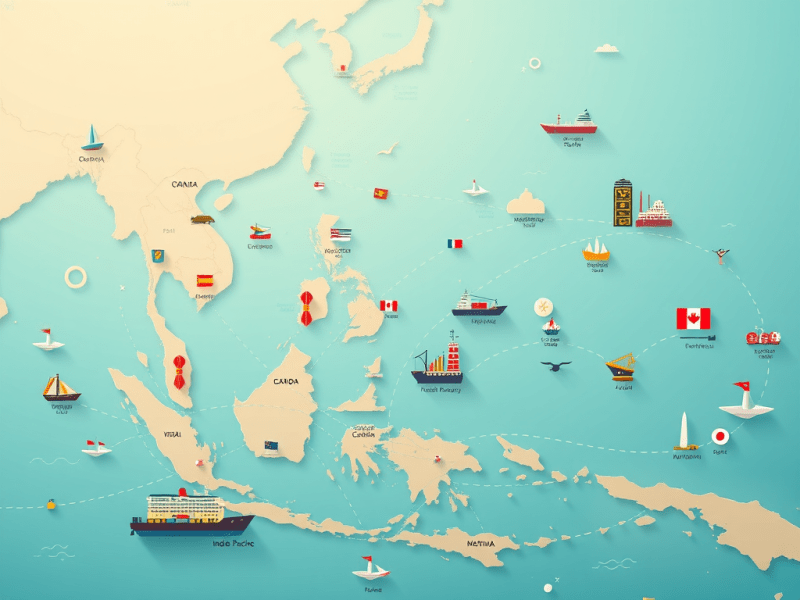
China’s engagement in the Southeast Asian region has been a fulcrum for change. Seen from Tokyo, Chinese behavior in the South China Sea (SCS) and its investments, including the Belt and Road Initiative (BRI) in ASEAN countries and South Asia are troubling.
First, Tokyo views Chinese artificial islands in the SCS and the rejection of the July 2016 decision by the Permanent Court of Arbitration (PCA) in the South China Sea Arbitration (The Republic of the Philippines vs. the People’s Republic of China) as a threat to the stability and rules-based management of sea lanes of communication (SLOCs).
Considered in tandem with the illegal and regular intrusions within Japan’s contiguous zone and territorial sea in the Senkaku islands region, Tokyo perceives Chinese behavior to be a threat to the rules-based order that has been the foundation of stability and development in the Indo-Pacific region.
Whereas security considerations in SLOCs are related to a potential disruption of critical trade routes that link Japan’s economy to the world, China’s growing diplomatic and economic footprint in ASEAN countries and South Asian countries is equally concerning.
Japan’s proactive diplomacy
At the first level, Tokyo sees Beijing’s diplomacy in ASEAN as one characterized by a pattern of fracturing ASEAN’s unity on issues that Beijing considers critical to its core interests. The most salient example of this is ASEAN agreeing to a shared statement on China’s assertive behavior in the SCS as well as a code of conduct influenced through Beijing’s active behind-the-doors lobbying of ASEAN member-states that are close to Beijing.
At the second level, Tokyo views the BRI as a geoeconomic project aimed at reconfiguring Asian’s regionalism away from one centered on ASEAN- centrality to one that creates a hierarchical and interdependent economic order extending from China throughout the Eurasian continent.
These concerns have led to Japan intensifying its economic and diplomatic investments in the region. For example, former PM Abe’s first trip abroad after assuming the premiership in December 2012 was to Southeast Asia in which he promulgated the “The Bounty of the Open Seas: Five New Principles for Japanese Diplomacy”.
On this voyage, he stressed five principles including: 1) the promotion of so-called international norms of human rights; 2) democracy and freedom of press; 3) rule-based freedom of navigation; 4) free and open economics; and 5) fruitful cultural exchanges and the promotion of cultural exchanges among youth.
If seen in isolation, the five principles seem to be more rhetoric more than substance. However, seen alongside PM Abe visiting all ASEAN countries, attending India’s national day, hosting PM Modi in Kyoto, and all while simultaneously strengthening security cooperation with Vietnam, the Philippines, Australia, India and the US, Japan’s investment into Southeast Asia and South Asia is substantial and part of a long track record of diplomatic and economic investments in the region.
During his short tenure, PM Suga Yoshihide visited Vietnam and Indonesia and the current PM Kishida Fumio has also prioritized visiting Southeast Asia, including Cambodia, Vietnam and Thailand. He hosted the Vietnamese PM Pham Minh Chinh in Tokyo as well in November 2021.
As China’s economy has continued to grow eventually surpassing Japan in 2010, so has its diplomatic, economic and security footprint in Southeast Asia and the Indo-Pacific. This influence comes in the form of increased FDI into the region, BRI projects, and predatory behavior such as the building and subsequently militarization of artificial islands in the South China Sea.
Countering China’s BRI influence
Japan’s Free and Open Indo-Pacific Vision (FOIP) is meant to provide a rules-based alternative to China’s efforts to reshape Asia’s regionalism into a modern-day Sino-centric regional order with Beijing at its apex. Focusing on building a rules-based order in the Indo-Pacific region, Japan has prioritized economic integration, infrastructure, and development along the littoral states of Indo-Pacific as well as ASEAN centrality in order to inculcate stability, sustainability and a shared vision of the region.

Prioritizing ASEAN centrality is critical if Japan is going to get buy-in from the Southeast Asian countries and other stakeholders throughout the Indo-Pacific region such as India. This is why there is overlap between the ASEAN Indo-Pacific Outlook and Japan’s FOIP vision.
De-securitizing the FOIP Vision is equally pivotal if Japan is going to seek support for its vision of the region. Simply, ASEAN states will not support any initiative in the region that requires them to choose a diplomatic posture that overtly securitizes their relationship with China, their biggest trading partner. In this sense, Japan’s interest in Southeast Asia is premised on balancing China’s re-emergence is the biggest economy in the region.
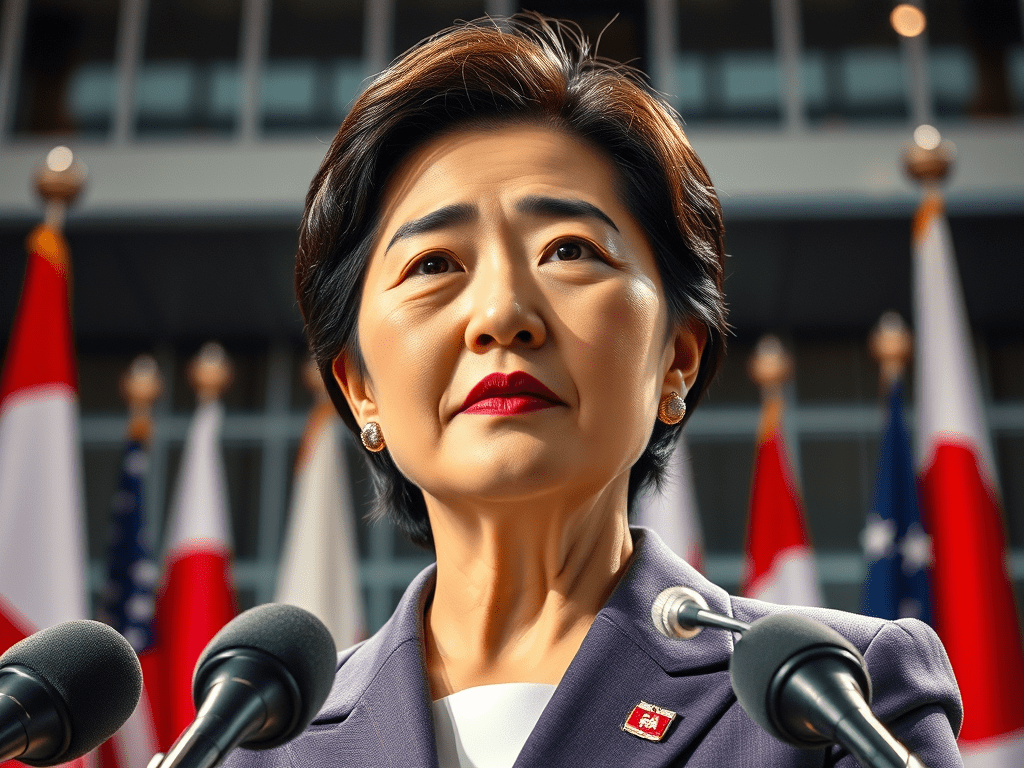
![[The Reality of Middle Power] US and China: “Superpowers” and “Multiple Weak Powers” on Fuji BS’ Prime NEWS](https://nagystephen.com/wp-content/uploads/2026/03/image-7.png?w=800&h=600&crop=1)

![[The Reality of Middle Power] US and China: “Superpowers” and “Multiple Weak Powers” on Fuji BS’ Prime NEWS](https://nagystephen.com/wp-content/uploads/2026/03/image-7.png?w=1024)
 nagystephen.com